Skeleton+

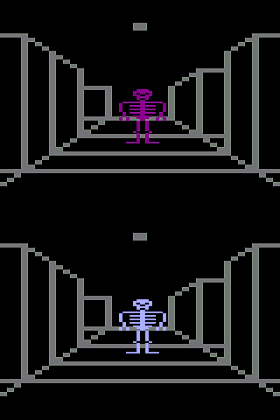
Skeleton+Buy this gameThe Game: You’re wandering through a dark, twisty maze. So are the dead, apparently, and these reanimated skeletons have a bone to pick with you. You have a single weapon with which to protect yourself, as well as a sensor that picks up on the proximity of nearby skeletons. Using the hints provided by that sensor, you must track down the living dead and dispatch them yet again – and hope they don’t get you first. (Eric Ball, 2003)

Memories: This fun little number is yet another of the current crop of newly-prorammed homebrew games by hobbyist authors. In this case, Eric Ball has brought the first-person shooter genre to the Atari 2600 with surprising success. Now, sure, it’s a first-person shooter by way of a Hunt The Wumpus-style game mechanic, but that makes it no less impressive.
Star Fire

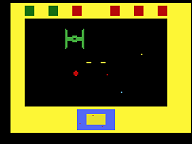
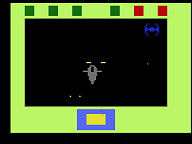
Star FireBuy this gameThe Game: This may sound awfully familiar, but you’re the lone surviving pilot of a space squadron decimated by enemy attacks. The enemy’s bow-tie-shaped fighters are closing in on you from all sides, and you must keep an eye on your own fighter’s shields and weapon temperature (overheated lasers don’t like to fire anymore), all while trying to draw a bead on those pesky enemy ships. You’re also very much on your own – nobody’s going to show up and tell you you’re all clear, kid. (Xype/AtariAge.com, 2003)

Star FireMemories: A nifty after-the-fact version of an oft-imitated arcade classic, Star Fire isn’t undiscovered 80s vaporware, but was rather programmed from the ground up by Manuel Polik, paying homage to and slightly expanding on the original game.
Kill The Attacking Aliens

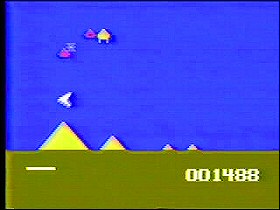
Kill The Attacking AliensAliens are attacking several idyllic locales on Earth, and it’s your job to fend off the attack. Not only are you charged with blasting the aliens themselves out of the sky, but you must intercept as much of their incoming fire as possible before it hits targets on the ground. If you save the various trees and cars and castles and trains and boats and whatnot, not only have you earned the gratitude of the human race, you get big bonus points too, and we all know which is more important. Your highly maneuverable ship is equipped with shields which allow you to absorb the impact of collisions with the alien ships, as well as protecting you from direct hits from their weapons. But each hit and collision takes a significant chunk out of your shields. You can replenish them with power-ups left behind by fallen aliens, but when your shields run out and your ship takes another hit, your alien-killing days are over. (Soren Gust [published by Packrat Video Games], 2004)

Memories: Let me go back and read that again. Shields and power-ups and scores into the thousands? Did I just write that about an Odyssey² game? Yes. Yes, I did. Five years in the making, Kill The Attacking Aliens (a.k.a. KTAA) is one of those projects that demonstrates everything that is good about homebrew games for classic consoles.

Capcom Classics Collection

Capcom Classics CollectionBuy this gameThe Game: Relive the golden years of arcades through the latest retro compilation disc, Capcom Classics Collection. CCC contains 22 classic arcade games along with tons of unlockable artwork, music and more. (Capcom, 2005, for Sony Playstation 2)

Memories: It is impossible to deny the impact retrogaming has had on the gaming industry. Those of us who spent our youth hanging out in smoke-filled arcades are now the prime videogame demographic. Many of us have spent hundreds if not thousands of dollars on games, and the companies from our childhood have figured out a way to tap into that cash flow – through retro compilation discs. It’s taken a while for companies to get the formula right; too few games or to high of a price, and consumers complain (or simply avoid) your package. Developers (particularly Sega) have experimented with “updated” versions of classic games, which have been met with mixed reviews. In 2005, manufacturers seem to have dialed in to what consumers want – arcade ports of 20 or more games for $20. Bonus features are a plus.

The Incredible Hulk: Ultimate Destruction

The Incredible Hulk: Ultimate DestructionOrder this gameThe Game: Hulk Smash. Okay, he runs, jumps, punches and throws stuff too in this action-packed game, but mostly he just smashes. Instantly theraputic for anyone who’s ever wanted to hit anything, The Incredible Hulk: Ultimate Destruction allows players to use the Hulk (and just about any item he comes across) to destroy his enemies and the environment around him. (Vivendi Universal, 2005)

Memories: Within five minutes of launching this game for the first time, I had destroyed a dozen tanks with my bare fists, knocked two helicopters out of the sky by throwing boulders at them, and killed an enemy soldier by beating him to death with a cow. If that’s not a recipe for fun, I don’t know what is.

Namco Museum: 50th Anniversary

Namco Museum: 50th AnniversaryBuy this gameThe Game: To commemorate their 50th Anniversary, Namco has released pixel-perfect translations of sixteen of their greatest classic arcade games, all on one budget-priced disc. (Namco, 2005)

Memories: Namco Museum: 50th Anniversary brings sixteen classic arcade games such as Pac-Man, Galaga and Dig Dug directly into your living room. All the games play exactly like their upright counterparts, and they should by now; this is at least the third time Namco has released ported versions of these arcade games to the home console market.

Tecmo Classic Arcade

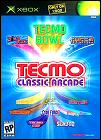
Tecmo Classic ArcadeBuy this gameThe Game: Turn your Xbox into a virtual 80’s arcade with Tecmo Classic Arcade, the newest retro compilation disc to hit home consoles. (Tecmo, 2005, for Xbox)

Memories: Someone has definitely not been saving the best for last. Tecmo Classic Arcade follows a long line of classic arcade compilations which have been released this summer, including Capcom Classics Collection, Namco Museum: 50th Anniversary, Taito Legends and Midway’s Arcade Treasures 3. Unfortunately, no matter how you slice it, Tecmo’s game collection simply doesn’t stand up against the competition.

Conquest Of Mars

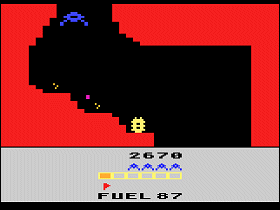
Conquest Of MarsBuy this gameThe Game: The enemy in an interplanetary war has gone underground, and you’re piloting the ship that’s taking the fight to him. But he hasn’t just hidden away in a hole; he’s hidden away in a very well-defended hole. As if it wasn’t already going to be enough of a tight squeeze navigating subterranean caverns on Mars, you’re now sharing that space with enemy ships and any number of other fatal obstacles. (Fortunately, the enemy also leaves copious numbers of helpful fuel depots for you too.) Once you fight your way to the bottom of the cave, you plant charges on the enemy mothership – meaning that now you have to escape the caverns again, and fast. (John Champeau / AtariAge.com, 2006)

Memories: As much as Caverns Of Mars caught fire on the Atari home computers, you’d think it would’ve been a shoo-in for the company’s consoles. Now, at least, 2600 owners who resisted stepping up to the mighty Atari 8-bit computers can reap the reward for 20+ years of patience. John Champeau, the programmer who finally made good on Coleco’s unfulfilled promise to bring the arcade sleeper hit Ladybug to the 2600, has struck again.

Mr. Roboto!

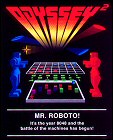
Mr. Roboto!Buy this gameThe Game: Robots, commanded by the CPU which is in turn commanded by you, take up positions on a battlefield grid. The two opposing armies converge, and if two robots lae square, the action zooms in on that portion of the battlefield so the two can fight it out. When one robot’s energy is exhausted by the other’s attacks or by coming into contact with energy pulses bouncing around the arena, that robot is forfeited and the action returns to the grid. The CPUs can transmit viruses to any enemy robot on the grid, stealing half of that robot’s speed or hit points, or halting it altogether. Robots can attack the enemy CPU, but the CPU has a more robust defensive mechanism at its disposal than the average robot… (Ted Sczcypiorski [published by Packrat Video Games], 2006)

Memories: Yet another Odyssey² homebrew is charting impressive new territory for a classic console that many consider to be underpowered. And yet, what we have here in Mr. Roboto! is essentially Archon – a classic computer game that didn’t appear on a console until the NES. And yet here it is running on one of the 8-bit era’s underdogs, and running quite nicely, thank you very much.

Lead (Atari 2600)

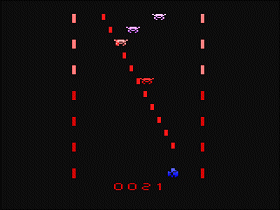
Order this gameThe Game: Players pilot a ship barrelling relentlessly down an enclosed tunnel. Turning around simply isn’t an option, and through various stages the player has to blast away at everything in sight, avoid everything in sight, and catch objects without blasting them. This all probably sounds easy, but the tunnels are rather twisty, and the ship is picking up speed constantly.

Memories: Bearing some resemblance to certain stages of games like Vanguard, Lead may not be the most original shoot-’em-up, but it’s one of the most addictive. With the Vanguard-inspired ability to keep exploring once the game has ended (at, naturally, the cost of zeroing out your score), Lead certainly has depth. But, strange as it may sound, the game’s audio makes it a whole different beast. An organically evolving techno beat pulses in the background, its rhythm and melody influenced by the player’s actions and performance.

Namco Museum Megamix

Namco Museum MegamixThe Game: Join Pac-Man as he rolls around the carnival-like grounds of the Namco Museum. Six “remixed” games are featured: Buy this gameGalaga Remix, Rally-X Remix, Gator Panic Remix, Pac ‘n’ Roll, Pac-Motos, Grobda Remix – as well as a healthy selection of Namco arcade classics: Cutie Q, Galaxian, Pac-Man, King & Balloon, Rally-X, Galaga, Bosconian, Super Pac-Man, Dig Dug, Xevious, Grobda, Motos, New Rally-X, Dig Dug II, Pac-Mania, Gaplus, Pac & Pal and Mappy. None of the games are hidden away as “unlockables,” achievements or Easter eggs, and all can be enjoyed freely. (Namco, 2010)
Memories: A Wii exclusive, Namco Museum Megamix elicits both suspicion and joy from this reviewer. On the “suspicious” side of things, the Wii has already had Namco Museum Remix, which had five of the six “remixed” games listed above, and maybe half of the arcade games that appear in Megamix; even Megamix‘s manual seems to acknowledge that you’ve already been suckered into buying Remix and therefore you already know the control scheme for the selection menu (which is almost a game unto itself). But on the good side, for the first time in quite a while, Namco has finally acknowledged something else: the media on which Namco Museum Megamix arrives has a much greater capacity than the 74-meg Playstation CD-ROMs that carried the first iteration of Namco Museum in the 1990s. Let’s fill that open space with… more games!

Tron Evolution: Battle Grids

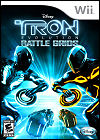
Tron Evolution: Battle GridsThe Game: In the era before Clu’s forceful takeover of the grid, Tron is kept busy with securing the digital world, leaving a vacuum from which a new champion can emerge in the grid games. Various factions have their own champions, who now battle each other on the game grid in various contests: light cycles, hyperball, disc battles, tank battles, and various vehicle races. (Disney Interactive, 2010)
Memories: Though tied into the new Tron movie, Tron Evolution: Battle Grids shows strong signs that its DNA is infused with the original movie and its associated games. Scenarios that didn’t even appear in Tron Legacy are front-and-center in Battle Grids, despite the story mode that sets up the era between the two movies.

Moon Cresta

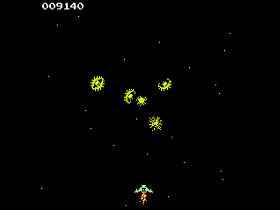
Moon CrestaThe Game: As commander of the three-stage fighter rocket Moon Cresta, your job is to ward off endless varieties of evasively weaving space attackers. Every time you knock out two consecutive screens of assailants, you’ll have an opportunity to dock your ship to another one of Moon Cresta’s three stages, until all three portions of the ship are combined to create one bad-ass weapons platform. But you can also lose stages very quickly, ending your game – a bigger ship makes a bigger and easier target. (AtariAge.com, 2011)
Memories: Quite simply one of the most superb arcade-to-console ports ever made on an Atari platform, whether cranked out professionally or as a homebrew, Moon Cresta is a knockout on the Atari 7800.

Venture

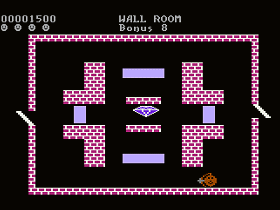
VentureThe Game: Trapped in a maze full of HallMonsters, you are adventurer Winky, on a mission to snatch incredible treasures from hazardous underground rooms inhabited by lesser beasts such as re-animated skeletons, goblins, serpents, and so on. Sometimes even the walls move, threatening to squish Winky or trap him, helpless to run from the HallMonsters. The deeper into the dungeons you go, the more treacherous the danger – and the greater the rewards. Just remember two things – the decomposing corpses of the smaller enemies are just as deadly as the live creatures. And there is no defense – and almost never any means of escape – from the HallMonsters. (unreleased prototype, 2017)

Memories: There may be nothing quite as bittersweet as an unreleased prototype that turns out to be awesome, we gladly would’ve paid full retail for it back in the day had it ever gone to market. It’s not that it was hard to find a good port of Venture back in the day – there was an excellent port on Colecovision and a more than passable version for the Atari 2600.