
theLogBook.com is a chronicle of how we used to imagine the future – an ever-expanding
logbook of what our entertainment, our culture, and even our brightest minds thought would happen.
It’s nostalgia – and some real history – that gives factual context to the fiction, cultural
context to the factual, and always looks to the future.
You can manually look up any date or any year, or go through the whole timeline.
Scroll down for today’s events in history.
The ongoing remodel of the site, the ongoing video series, and more are powered by your support!
Join our Patreon, get access to our Discord, and help the site grow!
Follow our socials or contact us:


Support us or buy stuff:


Featured Articles




Supplemental: Remembering Gene & Majel – Gene-ology: A Mission Log Look into Gene Roddenberry's Works

Explore theLogBook
It happened on this date…
(You can also manually look up any other date, browse a year, or go through the whole timeline.)
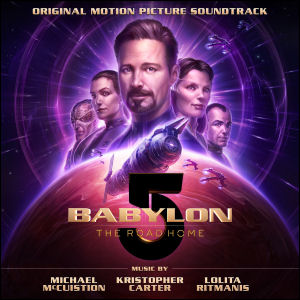 The soundtrack from the direct-to-video animated movie Babylon 5: The Road Home is given a digital release by Watertower Music, featuring the complete score by frequent WB Animation composers Kristopher Carter, Michael McCuistion and Lolita Ritmanis (Batman: The Animated Series).
 The CW airs the 100th episode of Legends Of Tomorrow, starring Caity Lotz, Jes Macallan, Tala Ashe, and Olivia Swann. Past cast members Arthur Darvill, Brandon Routh, and Victor Garber guest star.
This series is not yet chronicled in the LogBook. You could join theLogBook team and write this guide or support the webmaster’s efforts to expand the site.
 The CW airs the 41st episode of Batwoman starring Javicia Leslie, Rachel Skarsten, and Meagan Tandy.
The CW airs the fourth episode of Batwoman, starring Ruby Rose and Rachel Skarsten.
 Netflix releases the eighth episode of the second season of Stranger Things, created by the Duffer Brothers (Wayward Pines, Hidden) and starring Winona Ryder, David Harbour, Paul Reiser and Sean Astin.
 Netflix releases the seventh episode of the second season of Stranger Things, created by the Duffer Brothers (Wayward Pines, Hidden) and starring Winona Ryder, David Harbour, Paul Reiser and Sean Astin.
 Netflix releases the sixth episode of the second season of Stranger Things, created by the Duffer Brothers (Wayward Pines, Hidden) and starring Winona Ryder, David Harbour, Paul Reiser and Sean Astin.
 Netflix releases the fifth episode of the second season of Stranger Things, created by the Duffer Brothers (Wayward Pines, Hidden) and starring Winona Ryder, David Harbour, Paul Reiser and Sean Astin.
 Netflix releases the fourth episode of the second season of Stranger Things, created by the Duffer Brothers (Wayward Pines, Hidden) and starring Winona Ryder, David Harbour, Paul Reiser and Sean Astin.
 Netflix releases the third episode of the second season of Stranger Things, created by the Duffer Brothers (Wayward Pines, Hidden) and starring Winona Ryder, David Harbour, Paul Reiser and Sean Astin.
 Netflix releases the second episode of the second season of Stranger Things, created by the Duffer Brothers (Wayward Pines, Hidden) and starring Winona Ryder, David Harbour, Paul Reiser and Sean Astin.
 Netflix releases the first episode of the second season of Stranger Things, created by the Duffer Brothers (Wayward Pines, Hidden) and starring Winona Ryder, David Harbour, Paul Reiser and Sean Astin. The series continues its 1980s-set saga of a small Indiana town plagued by the supernatural side effects of experiments involving breaking into another dimension.
 The 67th episode of the science fiction comedy Red Dwarf airs on UK cable/satellite comedy channel Dave. This is the end of Red Dwarf XI, but back-to-back production has already begun on Red Dwarf XII, to premiere in 2017.
The CW airs the 19th episode of Legends Of Tomorrow, starring Arthur Darvill, Brandon Routh, Caity Lotz and Victor Garber.
This series is not yet chronicled in the LogBook. You could join theLogBook team and write this guide or support the webmaster’s efforts to expand the site.
 The 27th episode of The Flash, a modern-day reboot of DC Comics’ superhero starring Grant Gustin, airs on the CW. Victor Garber (Alias, Legends Of Tomorrow) and Amanda Pays (Max Headroom, The Flash) guest star.
This series is not yet chronicled in the LogBook. You could join theLogBook team and write this guide or support the webmaster’s efforts to expand the site.
 Cable channel Disney XD premieres the fourth episode of the series Star Wars: Rebels, a CGI animated storyline falling between the original and prequel trilogies of the Star Wars saga. Brent Spiner (Star Trek: The Next Generation) guest stars.
 Cable channel Syfy airs the third episode of the French-produced sci-fi anthology Metal Hurlant Chronicles, based on the French magazine Metal Hurlant (also the source material of the hit 1981 film Heavy Metal). Craig Fairbrass (Cliffhanger, One Piece) and Dominique Pinon (Alien: Resurrection) guest star.
 Cable channel Syfy airs the second episode of the French-produced sci-fi anthology Metal Hurlant Chronicles, based on the French magazine Metal Hurlant (also the source material of the hit 1981 film Heavy Metal). James Marsters (Buffy The Vampire Slayer) and Michelle Ryan (The Bionic Woman, Doctor Who) guest star.
 Cable channel Syfy airs the first episode of the French-produced sci-fi anthology Metal Hurlant Chronicles, based on the French magazine Metal Hurlant (also the source material of the hit 1981 film Heavy Metal). Scott Adkins (John Wick Chapter 4) and Michael Jai White (Spawn, The Dark Knight) guest star.
 The 13th episode of the Battlestar Galactica spinoff series Caprica, a non-space-based tale of the creation of the Cylons over half a century before the events seen in Galactica, premieres on cable channel Syfy. Teryl Rothery (Stargate SG-1) guest stars.
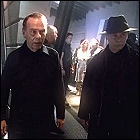 The Plan, a TV movie extension of Ronald D. Moore’s re-imagining of Battlestar Galactica, is released direct to DVD. (An edited version will air in 2010 on Syfy.) Series star Edward James Olmos reprises his role and directs.
 The 17th episode of The Sarah Jane Adventures airs CBBC, starring Elisabeth Sladen (Doctor Who).
 Sci-Fi channel airs the 38th episode of Ronald D. Moore’s re-imagining of Battlestar Galactica. Lucy Lawless (Xena: Warrior Princess) guest stars.
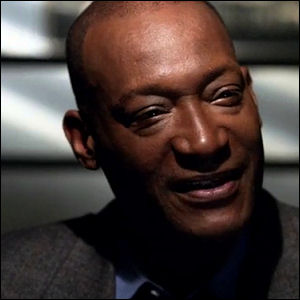 ABC airs the fifth episode of Frank Spotnitz’ sci-fi/horror series Night Stalker, a re-imagining of the 1970s series Kolchak: The Night Stalker, starring Stuart Townsend (The League of Extraordinary Gentlemen). Tony Todd guest stars.
 UPN premieres the first episode of the near-future sci-fi series Level 9, starring Fabrizio Filippo (Queer As Folk, Delilah & Julis), Kate Hodge (She-Wolf Of London), and Michael Kelly (House Of Cards). Carmen Argenziano (Stargate SG-1) and John Ventimiglia (The Sopranos) guest star.
This series is not yet chronicled in the LogBook. You could join theLogBook team and write this guide or support the webmaster’s efforts to expand the site.
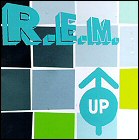 Warner Bros. Records releases R.E.M.‘s 11th album, Up, the first album without founding member Bill Berry.
 The week-long national syndication window opens for the 127th episode of Star Trek: Deep Space Nine. This episode continues the unprecedented six-episode story arc of the Dominion War.
 The national syndication window opens for the fourth episode of the posthumous Gene Roddenberry science fiction series Earth: Final Conflict. Majel Barrett Roddenberry (Star Trek) guest stars.
 The week-long national syndication window opens for the 51st episode of Xena: Warrior Princess.
 The 18th episode of Joss Whedon’s trend-setting supernatural series Buffy The Vampire Slayer, starring Sarah Michelle Gellar, airs on the WB network. Anthony Stewart Head, David Boreanaz, and Alyson Hannigan also star. James Marsters, Juliet Landau, and Armin Shimerman (Star Trek: Deep Space Nine) guest star.
This series is not yet chronicled in the LogBook. You could join theLogBook team and write this guide or support the webmaster’s efforts to expand the site.
 Parlophone Records releases the John Lennon compilation album Lennon Legend: The Very Best Of John Lennon, the first career retrospective to take in music that appeared on the posthumous 1984 album Milk & Honey.
 The week-long national syndication window opens for the 88th episode of J. Michael Straczynski’s science fiction series Babylon 5. This is actually the first episode produced for the fifth season, swapped out for the episode already filmed and intended to be the series finale, and features the message “Faith manages” at the end, signaling the end of Warner Bros.’ failed PTEN network venture and the end of the series’ syndicated run. The fifth season will be carried by cable network TNT in 1998.
 The 77th episode of Chris Carter’s modern-day science fiction series The X-Files airs on Fox, starring Gillian Anderson and David Duchovny. Pruitt Taylor Vince guest stars.
This series is not yet chronicled in the LogBook. You could join theLogBook team and write this guide or support the webmaster’s efforts to expand the site.
 The 71st episode of Lois & Clark: The New Adventures Of Superman airs on ABC, starring Dean Cain and Teri Hatcher.
More about Lois & Clark: The New Adventures Of Superman in theLogBook.com Store
 NBC airs the 78th episode of Donald Bellisario’s science fiction series Quantum Leap, starring Scott Bakula and Dean Stockwell. Morgan Weisser (Space: Above And Beyond) guest stars.
This series is not fully chronicled in the LogBook. You could join theLogBook team and write this guide or support the webmaster’s efforts to expand the site.
 CBS airs the 14th episode of Barney Cohen and James Parriott’s supernatural crime series Forever Knight, starring Geraint Wyn-Davies, Catherine Disher, Nigel Bennett, and John Kapelos. Lisa Howard (Highlander, Earth: Final Conflict) guest stars.
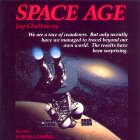 Narada Records releases a CD of Star Trek: The Next Generation composer Jay Chattaways’s music from the PBS documentary series Space Age. Though more percussive than his Star Trek scores, the documentary soundtrack bears strong similarities to his work on the hit science fiction series.
 The 27th episode of the science fiction crime drama Super Force is broadcast in syndication in North America, starring Ken Olandt, Larry B. Scott, and Patrick Macnee (The Avengers). Musetta Vander guest stars.
This series is not yet chronicled in the LogBook. You could join theLogBook team and write this guide or support the webmaster’s efforts to expand the site.
 The 82nd episode of the syndicated series Superboy, starring Gerard Christopher and Stacy Haiduk, airs.
This series is not yet chronicled in the LogBook. You could join theLogBook team and write this guide or support the webmaster’s efforts to expand the site.
The 56th episode of the syndicated series Superboy, starring Gerard Christopher and Stacy Haiduk, airs. Christine Moore guest stars.
This series is not yet chronicled in the LogBook. You could join theLogBook team and write this guide or support the webmaster’s efforts to expand the site.
 The fifth episode of Dracula: The Series airs in syndication, based very loosely on Bram Stoker’s literary vampire lore, starring Bernard Behrens (NPR’s Star Wars radio series), Geordie Johnson (Largo Winch, Copper), and Mia Kirshner (The L Word, Star Trek: Discovery, Defiance).
 Virgin Records releases
 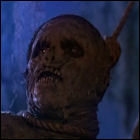 The fourth episode of Steven Spielberg’s anthology series Amazing Stories airs on NBC; this is effectively the series’ Halloween special. Bronson Pinchot (Perfect Strangers) stars.
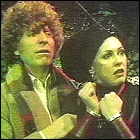 The 514th episode of Doctor Who airs on BBC1. Myra Frances and Geoffrey Bayldon guest star.
 The 18th episode of the live-action series based on Marvel’s comic The Incredible Hulk airs on CBS, starring Bill Bixby, Jack Colvin, and Lou Ferrigno. Mako guest stars.
This series is not yet fully chronicled in the LogBook. You could help change that.
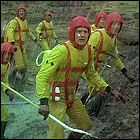 The ninth episode of the British-German science fiction series Star Maidens premieres on ITV in the UK. (Not all regional ITV affiliates carry the show at a specific time; this episode guide reflects the dates for the broadcast premieres of each episode on Scottish TV.)
 The 19th episode of The Bionic Woman, starring Lindsay Wagner and Richard Anderson, airs on ABC. Lee Majors, Martin E. Brooks, John Houseman (The Paper Chase), and Jack Colvin (The Incredible Hulk) guest star in the first part of another crossover event with The Six Million Dollar Man.
This series is not yet chronicled in the LogBook. You could join theLogBook team and write this guide or support the webmaster’s efforts to expand the site.
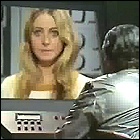 The sixth episode of the short-lived Canadian-made science fiction series The Starlost, …And Only Man Is Vile, premieres.
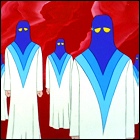 The eighth episode of the animated Star Trek series premieres on NBC.
 The unmanned NASA/JPL space probe Mariner 9 concludes its mission to map the surface of Mars. After spending more than a year as the first human spacecraft to orbit another planet in the solar system, Mariner 9’s fuel supply has run out, but not before it has obtained over 7,000 images of the surface of Mars, discovering gigantic volcanoes and huge canyons in the process. The detailed photography returned by Mariner 9 is a vitally important tool for scientists and mission planners already hard at work on a potential robotic landing mission to Mars, to be launched later in the 1970s. Though inactive, Mariner 9 remains in orbit of Mars.
Absolutely no generative AI was used in the creation of the content on this website.
It’s mostly just some guy named Earl.