Namco Arcade Classics 3: Galaga / Galaxian

Namco Arcade Classics 3: Galaga / GalaxianBuy this gameThe Game: A two-fer! In Galaxian, attacking formations break off from the usual rows and columns of invaders to dive-bomb you. And in its sequel Galaga, you’re up against another alien invasion, arriving in wave after unfriendly wave. Alien fighters resemble butterflies and bees, but the real prize is the handful of motherships which arrives with each wave. Capable of taking two hits – the first weakens them and turns them dark blue, the second destroys them – the motherships also come equipped with a tractor beam with which to snare your fighters. But if one of your fighters is captured, and you can destroy the mothership which is towing it, your wayward fighter will be returned, doubling your firepower. (Namco, 1995)

Memories: Along with the release of a newly revamped PC and Playstation edition of Galaga – one of Namco’s best-loved classic titles, a new Game Boy version of that game has arrived in stores as well.

This is not a review of that game.
Namco Classic Collection Volume 2

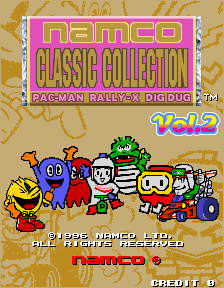
Namco Classic Collection Volume 2The Game: Three of the most popular games from Namco’s arcade heyday are brought back in the ’90s, both in their original forms and in “remixed” versions with updated sound and graphics and tweaks to the game play. Pac-Man Arrangement adds power-ups, new mazes, new graphics and a whole new breed of monsters to the most classic arcade game of the 80s, while Rally-X Arrangement refuels with power-ups and audiovisual enhancements of its own. Dig Dug Arrangement revamps the underground classic with a new breed of enemies – and a new variety of ways to eliminate them. (Namco, 1996)
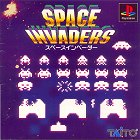
Memories: Building on the success of the Namco Classic Collection Volume 1 coin-op compilation, Namco returned here to the jewel in its crown. Not that Mappy or Xevious are anything to sneeze at, mind you, and Galaga certainly isn’t a minor entry in the arcade pantheon. But how can you possibly beat a revisitation of Pac-Man?

Space Invaders Collection

Space Invaders CollectionThe Game: You’re the pilot of a ground-based mobile weapons platform, and there are buttloads of alien meanies headed right for you. Your only defense is a trio of shields which are degraded by any weapons fire – yours or theirs – and a quick trigger finger. Occasionally a mothership zips across the top of the screen. When the screen is cleared of invaders, another wave – faster and more aggressive – appears. When you’re out of “lives,” or when the aliens manage to land on Earth… it’s all over. (Taito, 1997, for Playstation)
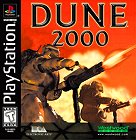
Memories: I can hear ’em already. “Okay, you’ve flipped your lid. There’s already a modern-day Space Invaders remake out there, there’s emulation, and then there’s the fact that Space Invaders has been emulated pretty faithfully all the way back to the Atari 2600 version. Why the heck do you need this version for the Playstation?”

Dune 2000

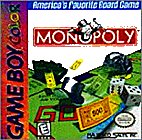
Dune 2000Dune 2000Order this gameThe Game: The Padishah Emperor has declared open season on the planet Arrakis – better known as Dune. With no rules and no limits, the Houses of Atreides, Harkonnen and Ordos are cordially invited to mine the precious Spice from Dune’s subsurface strata – and smash each other into smithereens with any and all weapons and technologies available. (Electronic Arts [developed by Westwood Studios], 1998)

Memories: Dune 2000 is an updated version of the Dune 2 computer game that has been around for a few years. I’ll warn you right now, and I’m only doing this because I feel it’s a valid warning…Dune 2000 is extremely addictive. It’s right up there with SimCity and the Ultima games – proving that complex computer games can eat up just as much time as any ultra-simple arcade-style action game.

Monopoly

MonopolyThe Game: Does anyone not know this game? You and quite a few other players make a mad dash around the Monopoly board, snatching up properties, railroads, and utilities, hazarding the fickle fortunes of the Chance and Community Chest spaces, and trying to avoid taxes and jail – not to mention bankruptcy – while building an empire that will make you rich. (Majesco Sales, 1999)
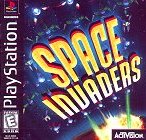
Memories: This is sort of like the Game Boy editions of Pac-Man and Space Invaders – it’s an excellent reason to own one of Nintendo‘s portable powerhouses o’ fun. The Parker Brothers board game classic is faithfully reproduced despite the small screen, and the game play is engaging. In many ways, I prefer the Game Boy version of Monopoly to the PC or Playstation versions for the same reason I’d take the Game Boy version of Who Wants To Be A Millionaire? over the Playstation version of that game: no cutscenes, no animations you can’t bail out of (or shut down from the options menu), no bull – the Game Boy has just enough room for the game. And I like it that way.

Space Invaders

Space InvadersBuy this gameThe Game: 21 years after the first relentless alien invasion of Earth, the Space Invaders are back – and so are you, in a vastly advanced version of the ubiquitous “tank” which was so critical to the defense of Earth in 1978. But the aliens have made some improvements to their hardware too, and they still outnumber you by at least 20 to 1. Handy survival tip: start blasting, and keep blasting. (Activision, 1999)

Memories: Now this retro revival surprised me. Updating Pac-Man and Q*Bert, that I could see. Those games had Saturday morning cartoons, vague plotlines of their own (in fine print on the arcade cabinets), and so they’re easy to update. Space Invaders, on the other hand, had a T-shirt, and a legacy of many wasted after-school hours spent on the Atari 2600. The only plotline one could assign to Space Invaders was that you could fight and fight and fight, but you’d eventually perish in the battle. It was inevitable. There were just too many of them. (And you thought UFO paranoia only blossomed in the age of The X-Files and Art Bell?)

Breakout

BreakoutBuy this gameThe Game: There exists, somewhere on a tropical isle, a species of paddle-esque life forms (not unlike the inhabitants of Pong), and their idyllic existence is shattered by the arrival of evil dictator Batnix. Batnix kidnaps fair Daisy and the rest of your friends, sequestering them in perilous dungeons around the world. As Bouncer the Paddle, you must break out of your own prison by smashing through the walls with steel balls, and then travel to various locales to free all of your friends. As you release your comrades, you can also play as them in certain rounds to make use of their special abilities in your quest to free Daisy and defeat Batnix once and for all. As always, keep an eye on your balls, for they are your greatest weapons. (Hasbro Interactive/Atari, 2000)

Memories: This game is proof positive that I can milk any video ping-pong game for an endless array of lowbrow “balls” jokes. It’s also proof positive that updated versions really do work sometimes.

Ms. Pac-Man Maze Madness

Ms. Pac-Man Maze MadnessBuy this gameThe Game: The evil witch Mesmerelda kidnaps Professor Pac-Man into her alternate dimension before Ms. Pac-Man’s very eyes. To rescue Professor Pac, Ms. Pac must retrieve the four crystals of virtue (what, is she gonna run into Lord British along the way or somethin’?) and defeat the countless evil minions of Mesmerelda, ranging from the usual pesky ghosts to fast-moving, whirling-dervish-type critters, fire-breathing dragons, a special guest appearance by Centipede, and more. Power pellets, of course, provide the universal solution to all of these problems: if it gets in your way, eat it! But the challenge becomes how to find that all-important next power pellet? (Namco, 2000)

Memories: I really liked the “maze mode” of last year’s Pacs-travaganza, Pac-Man World, and I can safely say this: those of us who enjoyed that aspect of Pac-Man World will get a big kick out of Ms. Pac-Man Maze Madness. Unlike her hubby’s retro revival game, which imbued Pac-Man with numerous new powers such as the rev-roll, the butt-bounce, and so forth, Ms. Pac just has herself. She can’t butt-bounce, rev-roll, or any of that strange stuff. She can only jump with the help of strategically-placed springy things, she can push movable blocks and crates of TNT around, and she can fly with the aid of magic carpets. No super-powers for Ms. Pac-Man – just her own resourcefulness…and, of course, yours.

Pipe Dreams 3D

Pipe Dreams 3DBuy this gameThe Game: Let’s get one thing straight – flooze is bad. Flooze is green, smelly and toxic, and you don’t want to spill any of it. You’re in charge of building a maze of pipes around various obstacles to carry the flooze from its point of origin to a drain that appears at a predetermined time, or when certain objectives have been met (such as running the flooze under a series of floating stars, or getting it to cross a bridge). As with other great puzzle games like Tetris, you can’t just build a great drainage system for the flooze – you’re stuck with whatever pieces are next in the random rotation. You do get a look at the next four pieces in the pipeline – literally – so you can plan ahead strategically. If you fail to keep a continuous run of pipe going, the flooze spills out, costing you points and eventually a life. (Empire Interactive, 2000 – for Playstation)

Memories: Essentially a bit of a rethink of Loco Motion, Pipe Dreams for the NES dispensed with the sliding-tile-puzzle basis of the game and substituted a very Tetris-esque random assortment in its place. The game was still maddeningly fun, and for its revival on the Playstation, not much was changed – just a somewhat gratuitous 3D view of the playing field.

Star Wars: Force Commander

Star Wars: Force CommanderOrder this gameThe Game: Brenn Tannor, Imperial Army officer, is in command of the might of the Empire, enforcing the Emperor’s will across the galaxy. From the safety of his Battlefield Control Holographic Interface, Tannor directs Stormtroopers, mighty walkers, and other exotic weaponry into battle. But as he becomes aware of the true nature of the evil Empire, Tannor struggles with a decision that could land him in the camp of the Empire’s most hated enemy, the Rebel Alliance. Will Tannor help the Empire enslave the galaxy…or help the Rebel Alliance free it? (LucasArts, 2000)

Memories: The long-anticipated real-time strategy game set in the Star Wars universe is finally here. After three years in development, Force Commander is on the shelf and armchair Imperial Warlords and Rebel Generals everywhere finally have the chance to see what they’re made of.

Star Wars: Rogue Leader – Rogue Squadron II

Star Wars: Rogue Leader - Rogue Squadron IIOrder this gameThe Game: A long time ago in a galaxy far, far away, the Rebel Alliance calls on the hotshot pilots of Rogue Squadron for the toughest assignments – and that means you. You and your wingmen take on the defenses of the Death Star, buy time for a Rebel retreat from Hoth, beat Imperial forces away from Cloud City, and take on other high-risk assignments. A variety of ships is at your disposal, though initially you start out with a choice of the trusty X-Wing and the robust Y-Wing; if you advance to later missions, A-Wings and B-Wings become available too, along with a few others. (LucasArts, 2001)

Memories: It was hard to decide whether this game should be classified as a Retro Revival Review because in so many ways, the early stages of this game are the 1983 Atari Star Wars arcade game, resurrected with the benefit of 18 years’ worth of graphical advancement.

3-In-1 Arcade Classics

3-In-1 Arcade ClassicsBuy this gameThe Game: Three classic Taito coin-ops are dragged into the modern day: the almost-text-based Crazy Balloon, the oft-copied Space Chaser (very similar to such games as Exidy’s Targ), and the abstract early ’80s classic Qix. Each game is presented with its original graphics, as well as new updated versions which – for once – just jazz up the existing 2-D graphics rather than dragging the whole mess into unnecessary 3-D. (Success Systems, 2002, for Playstation)

Memories: Between this and the already-reviewed Space Invaders Collection, the Namco Museum series, Irem Arcade Classics and the glorious Nichibutsu Arcade Classics, you may have gotten the impression that I really, really like how the Japanese put together retro arcade compilations. And you’d be absolutely correct in that assumption. There are two big reasons for this.

Haunted House II 3D

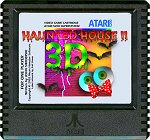
Haunted House II 3DThe Game: As with the original Atari 2600 game, you’re exploring a dark haunted house populated by ghosts, spiders, and even a few walking skeletons. Your task is to track down all the treasures hidden in the maze-like rooms of the house without allowing any of these creatures to touch you. If they get hold of you three times, game over. And if you find all the treasure before that happens? Well…you’ll just have to find out. (Mean Hamster Software, 2002; written by John Swiderski)

Memories: One of 2002’s bumper crop of homebrew Atari 5200 releases, Haunted House II 3D is a sequel to a favorite among many 2600 owners. But is it radically different from the original? No – and that’s a huge part of the game’s charm.

Ultima III: Exodus

Ultima IIIThe Game: Darkness has fallen anew upon Sosaria, and Lord British calls for your service again. You set out with four adventurers on a quest to gain the experience that will be necessary to survive the long voyage to a volcanic island where the source of all the evil plaguing the world is said to be. (Sven Carlberg, 2002)
Memories: Programmed as a homebrew project, this unofficial version of Ultima III ports the massive home computer RPG to the Game Boy Color. If even half of the game survives that translation intact, that’s a stupendous achievement. But how does it play?

Pac-Man Vs.

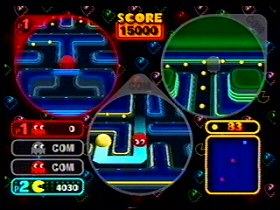
Pac-Man Vs.The Game: As a round yellow creature consisting of a mouth and nothing else, one player maneuvers around a relatively simple maze, gobbling small dots and evading four colorful monsters, up to three of which are controlled by his fellow players, who can eat Pac-Man on contact. In four corners of the screen, large flashing dots enable Pac-Man to turn the tables and eat the monsters for a brief period of time. Periodically, assorted items appear near the center of the maze, and Pac-Man can consume these for additional points as well. The monsters, once eaten, return to their home base in ghost form and return to the chase. If cleared of dots, the maze refills and the game starts again, but just a little bit faster. The game continues until a preset target score is reached, or until Pac-Man is caught by one of the monsters; the player controlling that monster is then handed the Game Boy Advance to take over Pac-Man’s role. (Namco, 2003 – for Nintendo Gamecube)
Memories: Let me just come right out and say that I have a bit of bias toward this game. Pac-Man is an all-time favorite of mine, the very reason I’m still as into video games now as I was 20+ years ago. You just can’t go wrong with Pac-Man – well, then again, maybe you can. In recent years, the character has gotten to star in a series of platform quest games, boldly going where Mario and Luigi have already gone before plenty of times themselves. As much fun as the original Pac-Man World could be, that game’s killer app was still, undoubtedly, that it could play the original arcade Pac-Man, or a slightly 3-D remake of it in “maze mode.” There hasn’t been a really good use of the Pac franchise in years – until now.

Skeleton+

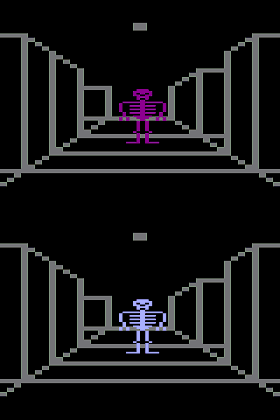
Skeleton+Buy this gameThe Game: You’re wandering through a dark, twisty maze. So are the dead, apparently, and these reanimated skeletons have a bone to pick with you. You have a single weapon with which to protect yourself, as well as a sensor that picks up on the proximity of nearby skeletons. Using the hints provided by that sensor, you must track down the living dead and dispatch them yet again – and hope they don’t get you first. (Eric Ball, 2003)

Memories: This fun little number is yet another of the current crop of newly-prorammed homebrew games by hobbyist authors. In this case, Eric Ball has brought the first-person shooter genre to the Atari 2600 with surprising success. Now, sure, it’s a first-person shooter by way of a Hunt The Wumpus-style game mechanic, but that makes it no less impressive.

Star Fire

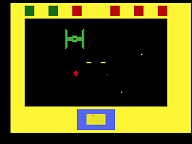
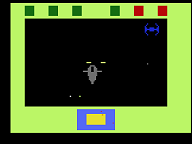
Star FireBuy this gameThe Game: This may sound awfully familiar, but you’re the lone surviving pilot of a space squadron decimated by enemy attacks. The enemy’s bow-tie-shaped fighters are closing in on you from all sides, and you must keep an eye on your own fighter’s shields and weapon temperature (overheated lasers don’t like to fire anymore), all while trying to draw a bead on those pesky enemy ships. You’re also very much on your own – nobody’s going to show up and tell you you’re all clear, kid. (Xype/AtariAge.com, 2003)

Star FireMemories: A nifty after-the-fact version of an oft-imitated arcade classic, Star Fire isn’t undiscovered 80s vaporware, but was rather programmed from the ground up by Manuel Polik, paying homage to and slightly expanding on the original game.

Katamari Damacy

Katamari DamacyOrder this gameYou control the pint-sized Prince, whose dad, the massive King of All Cosmos, seems to have inadvertently blotted out every star in the night sky. Now, your old man is sending you on a mission to go down to Earth – a planet blessed with a lot of stuff – to gather that stuff into large sticky clumps called katamari. You start out small, picking up tiny everyday items like pushpins and matchsticks, but as your katamari grows in size, it can pick up larger objects – frogs and mice, crabs, dogs and cats, people, cows, cars, trees, and eventually even things like buildings and giant squids. At the beginning of each stage, you’re tasked to accumulate enough stuff to grow your katamari to a predetermined diameter, and once the timer runs out for that stage, your katamari is either launched into the sky to become a new star (don’t ask us about the astrophysics on this one, because this game’s universe throws the whole hydrogen-and-helium thing out the window), or the King of All Cosmos returns to chide you for your puny efforts and makes you start again. There’s also a split-screen battle mode where two players can not only build up their katamari, but hurl their katamari at each other; a katamari of sufficient size can engulf your opponent and his katamari too! (Namco, 2004)

Katamari DamacyMemories: I love Namco. When I go looking up my favorite classic arcade games of all time, they’re almost all by Namco. And some of them are so strange. I mean, think about Pac-Man on a purely conceptual level. Or Dig Dug. Or Phozon. Now apply the same attempt at a logical explanation to Katamari Damacy. (Good luck.) Give up? Even a generation later, Namco’s still turning out some great, offbeat, innovative, fun games.
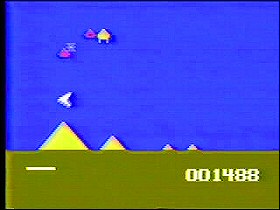
Kill The Attacking Aliens

Kill The Attacking AliensAliens are attacking several idyllic locales on Earth, and it’s your job to fend off the attack. Not only are you charged with blasting the aliens themselves out of the sky, but you must intercept as much of their incoming fire as possible before it hits targets on the ground. If you save the various trees and cars and castles and trains and boats and whatnot, not only have you earned the gratitude of the human race, you get big bonus points too, and we all know which is more important. Your highly maneuverable ship is equipped with shields which allow you to absorb the impact of collisions with the alien ships, as well as protecting you from direct hits from their weapons. But each hit and collision takes a significant chunk out of your shields. You can replenish them with power-ups left behind by fallen aliens, but when your shields run out and your ship takes another hit, your alien-killing days are over. (Soren Gust [published by Packrat Video Games], 2004)
Memories: Let me go back and read that again. Shields and power-ups and scores into the thousands? Did I just write that about an Odyssey² game? Yes. Yes, I did. Five years in the making, Kill The Attacking Aliens (a.k.a. KTAA) is one of those projects that demonstrates everything that is good about homebrew games for classic consoles.

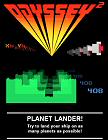
Planet Lander!

Planet Lander!Buy this gameThe Game: Your spaceship falls toward a forbidden, craggy landscape where there’s only one safe landing spot. Using your ship’s landing engine, you have to guide it down to the surface for a picture-perfect landing – not too fast, not at an angle, and without running out of fuel in the process. After each successful landing, you move on to another world, and another spaceship in need of your piloting skills. (Ted Sczcypiorski [published by Packrat Video Games], 2004)
Memories: So, another iteration of Lunar Lander for my amusement. You may be thinking to yourself, “I’m already trying not to crash-land my ship in Out Of This World!, so why would I want to do the same here?” The answer is simple – where the aforementioned classic Odyssey² spaceship-landing title gives you control of nothing but thrust, Planet Lander gives you the whole crap-your-pants-and-hold-your-breath-while-you-look-for-a-place-to-set-down-in-the-Sea-of-Tranquility shebang. So to speak. It’s on a par with Lunar Lander for replay value, and boasts unusually intricate graphics for an Odyssey² game, homebrew or otherwise.

The Incredible Hulk: Ultimate Destruction

The Incredible Hulk: Ultimate DestructionOrder this gameThe Game: Hulk Smash. Okay, he runs, jumps, punches and throws stuff too in this action-packed game, but mostly he just smashes. Instantly theraputic for anyone who’s ever wanted to hit anything, The Incredible Hulk: Ultimate Destruction allows players to use the Hulk (and just about any item he comes across) to destroy his enemies and the environment around him. (Vivendi Universal, 2005)

Memories: Within five minutes of launching this game for the first time, I had destroyed a dozen tanks with my bare fists, knocked two helicopters out of the sky by throwing boulders at them, and killed an enemy soldier by beating him to death with a cow. If that’s not a recipe for fun, I don’t know what is.

Star Wars Battlefront II

Star Wars Battlefront IIOrder this gameThe Game: Fight on the front lines of the Star Wars galaxy’s biggest battles. Choose your weapons or take control of a battle-ready vehicle. Battle across the ice fields of Hoth, the forests of Endor, the swamps of Dagobah, the Jedi Temple on Coruscant, the searing lava flows of Mustafar, and in the vastness of space. Play as a Clone Trooper, a Super Battle Droid, a Stormtrooper, a Rebel Soldier, a Jedi, and more. (Lucasarts, 2005)

Memories: This sequel to last year’s Battlefront promised a lot of improvements over that first game and whole new elements. The game delivers admirably on both accounts.

Celestia

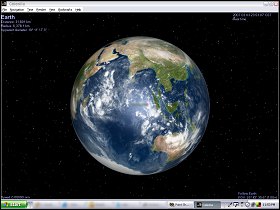
CelestiaThe Game: Not a game, but a powerful (and free) space simulator, Celestia lets you pick what celestial bodies you observe, from any distance or close-up. You can tell Celestia to put convenient labels on any or all of the heavenly objects, or none of them, and even pick a minimum magnitude for background stars. But they’re not just wallpaper – you can click on and travel to any one of them, and you can follow them in a variety of ways. Add-on packages offer everything from updated imagery and orbital information for real planets, moons, comets and vehicles, as well as fictional add-ons for those who are feeling a bit fanciful. (Celestia Development Group, 2006)
Download this gameMemories: When I was a teenager, at the height of the Halley\s Comet craze in 1985, the top notch solar system simulation on a home computer was a simple game called The Halley Project, released for the Apple II and Commodore 64. Now, some 22 years later, though, instead of having to navigate 12 whole constellations to find my way to large white featureless blobs that have a handful of smaller featureless blobs orbiting them, an open-source PC solar system simulator called Celestia has finally delivered the space exploration program I’ve always wanted – for free, no less.

Conquest Of Mars

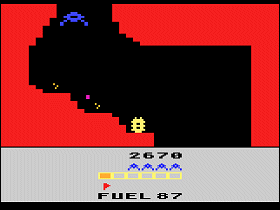
Conquest Of MarsBuy this gameThe Game: The enemy in an interplanetary war has gone underground, and you’re piloting the ship that’s taking the fight to him. But he hasn’t just hidden away in a hole; he’s hidden away in a very well-defended hole. As if it wasn’t already going to be enough of a tight squeeze navigating subterranean caverns on Mars, you’re now sharing that space with enemy ships and any number of other fatal obstacles. (Fortunately, the enemy also leaves copious numbers of helpful fuel depots for you too.) Once you fight your way to the bottom of the cave, you plant charges on the enemy mothership – meaning that now you have to escape the caverns again, and fast. (John Champeau / AtariAge.com, 2006)

Memories: As much as Caverns Of Mars caught fire on the Atari home computers, you’d think it would’ve been a shoo-in for the company’s consoles. Now, at least, 2600 owners who resisted stepping up to the mighty Atari 8-bit computers can reap the reward for 20+ years of patience. John Champeau, the programmer who finally made good on Coleco’s unfulfilled promise to bring the arcade sleeper hit Ladybug to the 2600, has struck again.

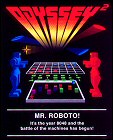
Mr. Roboto!

Mr. Roboto!Buy this gameThe Game: Robots, commanded by the CPU which is in turn commanded by you, take up positions on a battlefield grid. The two opposing armies converge, and if two robots lae square, the action zooms in on that portion of the battlefield so the two can fight it out. When one robot’s energy is exhausted by the other’s attacks or by coming into contact with energy pulses bouncing around the arena, that robot is forfeited and the action returns to the grid. The CPUs can transmit viruses to any enemy robot on the grid, stealing half of that robot’s speed or hit points, or halting it altogether. Robots can attack the enemy CPU, but the CPU has a more robust defensive mechanism at its disposal than the average robot… (Ted Sczcypiorski [published by Packrat Video Games], 2006)

Memories: Yet another Odyssey² homebrew is charting impressive new territory for a classic console that many consider to be underpowered. And yet, what we have here in Mr. Roboto! is essentially Archon – a classic computer game that didn’t appear on a console until the NES. And yet here it is running on one of the 8-bit era’s underdogs, and running quite nicely, thank you very much.

Puzzle Piece Panic

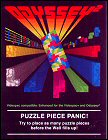
Puzzle Piece Panic!The Game: Interconnecting puzzle pieces are spewed out of the sky by the Tetrad Ejection Device (T.E.D.) and drift down the screen in a pre-defined area. You can rotate them for better placement (or at least rotate them to achieve the least worst effect); filling an Buy this gameentire horizontal line clears that line and lowers the amount of clutter left on the screen. As more lines are cleared, the pieces fall faster – and it doesn’t get any easier for you to catch up. (Ted Szczypiorski / PackratVG.com, 2007)
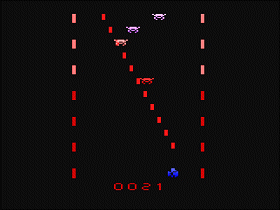
Memories: It doesn’t take a master’s degree to see that this game is clearly a version of Tetris for the almost 30-year-old Odyssey² console, but that doesn’t make it any less fun. Puzzle Piece Panic is a combination of a great game with a fond tribute to the finest Magnavox/Philips tradition of changing the name and some minor details to create a “near-beer” version of a popular title. (In the interest of full disclosure, I’ll admit to having had a hand in some of these homages to the hyperbolic Magnavox marketing style, including the game’s name.)

Lead (Atari 2600)

Order this gameThe Game: Players pilot a ship barrelling relentlessly down an enclosed tunnel. Turning around simply isn’t an option, and through various stages the player has to blast away at everything in sight, avoid everything in sight, and catch objects without blasting them. This all probably sounds easy, but the tunnels are rather twisty, and the ship is picking up speed constantly.

Memories: Bearing some resemblance to certain stages of games like Vanguard, Lead may not be the most original shoot-’em-up, but it’s one of the most addictive. With the Vanguard-inspired ability to keep exploring once the game has ended (at, naturally, the cost of zeroing out your score), Lead certainly has depth. But, strange as it may sound, the game’s audio makes it a whole different beast. An organically evolving techno beat pulses in the background, its rhythm and melody influenced by the player’s actions and performance.

Doctor Who: The Adventure Games, Episode 1 – City Of The Daleks

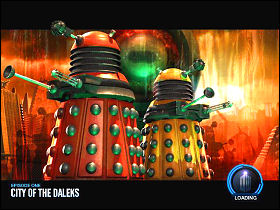
The Game: Promising to take his time-traveling sidekick Amy Pond to London in 1963, the Doctor is shocked when the TARDIS actually gets there – and London, and the rest of Earth, is in ruins. The human race is extinct and the Daleks have taken over. Completely unarmed (except for the Doctor’s trusty sonic screwdriver), the Doctor and Amy have to avoid the unstoppable Dalek patrols, make their way back to the TARDIS, and do whatever it takes – no matter the risk – to defeat the Daleks and set history back on its proper course. This means setting the TARDIS on a course for the heart of Dalek power: Kaalann, the capitol city of the Dalek planet Skaro. (BBC, 2010)
Buy this gameMemories: Offered for free in the UK and Wales (and for a fee everywhere else), Doctor Who: The Adventure Games not only sets out to bring an interactive component to the spectacularly revived long-running British science fiction series, but it also aims to make the games an official part of the show’s ongoing story, and tries to stick to the underlying premise of the series – namely, that the Doctor employs wits and words in lieu of weapons. And for the first time in the history of the franchise, we have, in City Of The Daleks, a game that succeeds spectacularly on all of these fronts.

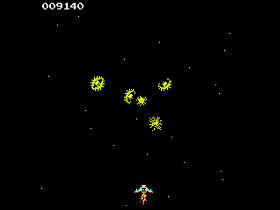
Moon Cresta

Moon CrestaThe Game: As commander of the three-stage fighter rocket Moon Cresta, your job is to ward off endless varieties of evasively weaving space attackers. Every time you knock out two consecutive screens of assailants, you’ll have an opportunity to dock your ship to another one of Moon Cresta’s three stages, until all three portions of the ship are combined to create one bad-ass weapons platform. But you can also lose stages very quickly, ending your game – a bigger ship makes a bigger and easier target. (AtariAge.com, 2011)
Memories: Quite simply one of the most superb arcade-to-console ports ever made on an Atari platform, whether cranked out professionally or as a homebrew, Moon Cresta is a knockout on the Atari 7800.

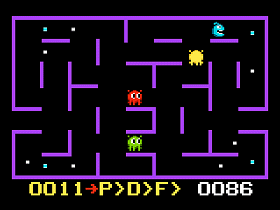
K.C. Munchkin

K.C. MunchkinThe Game: As a small blue spherical creature whose sole sensory organs consist of two eyes, two antennae and an enormous mouth, you are on a mission to eat twelve dots which are floating around a small maze. Pursuing you are three multicolored jellyfish-like horrors who will gobble you up on contact. (AtariAge.com, 2015)

Memories: The Atari 7800 was the Rip Van Winkle of the classic console world. Put into deep freeze by the incoming Tramiel administration, the 7800 was awoken by that same management regime when the whole “Atari does computers now, not video games” strategy didn’t work out; when the 7800 – developed and market tested in 1984 – was revived, it was thrust into a late-‘80s world where it had the more powerful Nintendo Entertainment System for competition.