
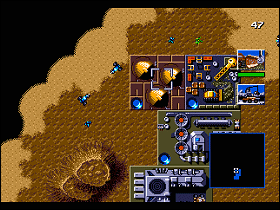
 The Game: Three Houses – Atreides, Harkonnen and Ordos – converge on the planet Dune, intending to consolidate their power and eliminate one another from the business of mining the spice melange from the planet’s sandy surface. Players pick a House and then take command of both the mining and military efforts, directing and managing each, and facing stiff opposition from the other Houses. As long as spice is being extracted from Dune, the player can summon or build whatever resources are needed to continue the mission and crush the opposing forces. The only path to victory is the destruction of the other Houses and complete control of the planet. (1993, Westwood Studios / Virgin Interactive)
Memories: The first console adaptation of Westwood’s genre-defining point-and-click real time strategy game released in 1992, Dune II has a strong game as its inspiration and, on the Genesis, a decent platform to bring it to life. The only way Westwood could screw it up would be in the execution – mainly the user interface.



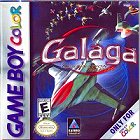
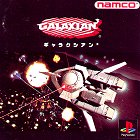 The Game: An alien war fleet is closing in on Earth, armed with a powerful weapon that can eradicate the entire planet. You (and, if you happen to have some fellow gunners, four others) man the artillery batteries of an armed-to-the-teeth ship on a mission to take the fight to the aliens before they can bring it to Earth. If you successfully complete that mission, you can also move on to a second mission to defend the planet Gourb from the Galaxian fleet. (Namco, 1995)
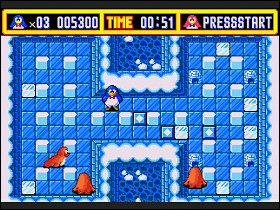 The Game: Pengo the penguin is trapped in an ice maze with seals, walking snowmen and other predators. Pengo can defeat his enemies by pushing ice blocks toward them, crushing them in the process. Pengo can also create new ice blocks via some biological process that’s perhaps best left unexplored (and if he doesn’t leave the spot where he generates ice blocks immediately after starting that process, he’ll be temporarily frozen to that spot); those blocks can also become ammo in a pinch. Treats such as dollar signs and popsicles – both valuable commidities to penguins – appear from time to time. Defeating all enemies on a given level advances Pengo to the next screen. (Sega, 1995, for Japanese market only)

 The Game: No one said it was easy being Mainframe’s Guardian, and this game is proof. You’re Bob the Guardian, trying to protect the citizens of Mainframe from a series of deadly tears unleashed upon the unsuspecting populace by an unholy alliance between Megabyte and Hexidecimal. Various characters show up along the way, like Mike TV, to offer advice, but aside from some vital health power-ups, you’re on your own. As you advance from level to level, a new ReBoot adventure is gradually revealed until you reach the end of the story – but if you fail in your mission to protect Mainframe, that episode’s going to come up short. (Electronic Arts, 1997)
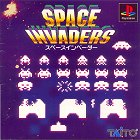 The Game: You’re the pilot of a ground-based mobile weapons platform, and there are buttloads of alien meanies headed right for you. Your only defense is a trio of shields which are degraded by any weapons fire – yours or theirs – and a quick trigger finger. Occasionally a mothership zips across the top of the screen. When the screen is cleared of invaders, another wave – faster and more aggressive – appears. When you’re out of “lives,” or when the aliens manage to land on Earth… it’s all over. (Taito, 1997, for Playstation)
 The Game: In a first-person space shooter set in the Star Control universe, the player is charged with maintaining order in the spaceways, a job made a little more difficult by rival warlords trying to stake their claims on the interstellar shipping lanes. Your patrol ship is armed to the teeth, which is good – because so are their ships. (Accolade, 1998 – never released)
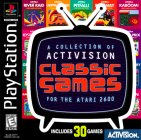 The Game: Old Atari cartridges taking up too much space in your apartment? Have no fear – a huge portion of Activision’s catalog of titles for the 2600 have been squeezed onto a single CD. (Activision, 1999)
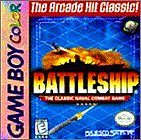 The Game: Two fleets of four warships conduct long-distance naval warfare, randomly firing torpedoes (and occasionally some higher-powered ordnance) at each other, guessing at the positions of their targets. Whoever sinks the entire opposing fleet first is the victor. (Hasbro Interactive, 1999)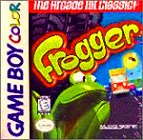
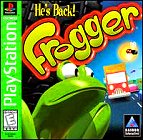
 ever to come down the pike, and yet finding a decent port of it over the years has proven to be almost as difficult as getting the amphibious one across the road in the game’s sixth level. But ask anyone about favorite video games from the early 80s, and you’re almost certain to hear Frogger in that list. The popularity of the original Frogger is borne out by the fact that a series of licensees has attempted to turn out a modern-day descendant of Frogger, and while some of those have been fun in their own right, they’ve also barely lived up to the simple joy of the original.
  The Game: Smash your way though half a dozen cities as one of several incarnations of Godzilla. (Sega, 1999)
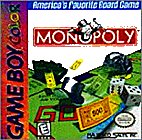 The Game: Does anyone not know this game? You and quite a few other players make a mad dash around the Monopoly board, snatching up properties, railroads, and utilities, hazarding the fickle fortunes of the Chance and Community Chest spaces, and trying to avoid taxes and jail – not to mention bankruptcy – while building an empire that will make you rich. (Majesco Sales, 1999)
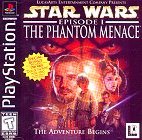 Memories: As various heroic characters from the days when Jedi Knights still enforced justice in that galaxy far, far away, you must expose the danger posed to peaceful Naboo by the Trade Federation’s army of battle and destroyer droids, and escort



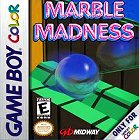 The Game: You control the speed and direction of a marble which is racing other marbles to reach the finish line. Obstacles along the way include marble-eating creatures, treacherous cliffs and drawbridges, and the game’s own unreliable controls! (Midway, 2000)