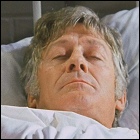
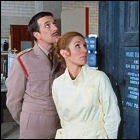
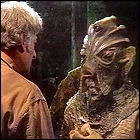
 The 254th episode of Doctor Who airs on the BBC, the first of the series’ seventh season. Nicholas Courtney returns as the Brigadier, now a series regular, while Caroline John makes her first appearance as the Doctor’s companion, Liz Shaw. As of this story, the Doctor is exiled on Earth indefinitely by the Time Lords, unable to travel in space or time in the TARDIS. This is Jon Pertwee’s first episode as the Doctor, and the first Doctor Who episode filmed in color. Due to a BBC studio strike, the story is filmed entirely on location, a rarity for Doctor Who.

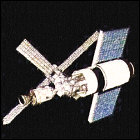 NASA formally cancels the planned Apollo 20 mission to the moon’s Copernicus crater in order to begin converting the upper stage of the mission’s Saturn V rocket into the Skylab space station, to be launched in the early 1970s. Construction of the Apollo command/service module and lunar module scheduled to fly this mission was halted before either vehicle was completed. The crew would have consisted of Stu Roosa, Paul Weitz and Jack Lousma; ironically, Weitz was transferred to the first Skylab crew, while Lousma was part of the second Skylab crew. Both later flew on shuttle missions.
 ABC airs the 42nd episode of Irwin Allen’s sci-fi series Land Of The Giants, starring Gary Conway, Don Matheson, Deanna Lund, and Don Marshall. Torin Thatcher guest stars.
 The third episode of children’s fantasy series The Owl Service is broadcast by British broadcast Granada Television. The series is adapted by novelist Alan Garner from his own novel.
  ITV airs the 15th episode of the mystery/spy-fi series Strange Report in the U.K., starring Anthony Quayle, Kaz Garas, and Anneke Wills (Doctor Who). (The series is an international co-production and airs in the United States on NBC.)
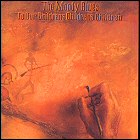 Decca Records releases the
  The
The 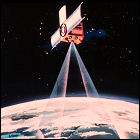 NASA and ESSA launch the ITOS satellite, also known as TIROS-M, a next-generation weather satellite intended to take over from the constellation of short-lived ESSA weather satellites. With a configuration that is, for the first time, significantly different from the TIROS/ESSA satellites, the TIROS-M design’s shakedown cruise is a short and bumpy one: after system failures force a shutdown of the satellite’s attitude control system, it is shut down in mid-
 The
The 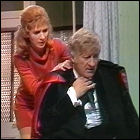 The
The 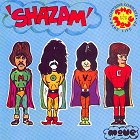 Regal Zonophone Records releases the second album by Birmingham rock group
 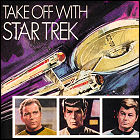 Picked up in syndication by Kaiser Broadcasting’s station group and other independent TV stations across America – often those with no newscast of their own – Star Trek sees its ratings skyrocket. The Kaiser stations run it directly opposite local and network newscasts at 6:00pm in most markets. Paramount Television runs an ad in Broadcast Magazine, claiming that New York City independent station WPIX has shown a 96% gain in ratings over the previous programming in the same time slot. In Los Angeles, KCOP’s nightly Star Trek reruns boost ratings 77%. It is from this culture – the nightly reruns of the 79 episodes reaching saturation point – that Star Trek fandom truly arises, gradually leading to an outcry for new material that gets Paramount’s attention later in the ’70s. With most of the cast battling typecasting, the conventions prove to be a lucrative draw for the show’s stars (and creator Gene Roddenberry, who becomes a popular speaker at conventions).
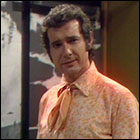
 BBC1 airs the second episode of Doomwatch. This episode no longer exists in the BBC’s archives.
 The
The