
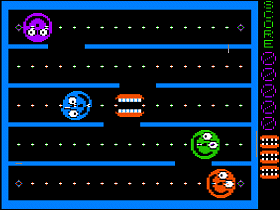
 The Game: Ever had a sweet tooth? Now you are the sweet tooth – or teeth, as the case may be. You guide a set of clattering teeth around a mazelike screen of horizontal rows; an opening in each row travels down the wall separating it from the next row. Your job is to eat the tasty treats lining each row until you’ve cleared the screen. Naturally, it’s not just going to be that easy. There are nasty hard candies out to stop you, and they’ll silence those teeth of yours if they catch you – and that just bites. Periodically, a treat appears in the middle of the screen allowing you to turn the tables on them for a brief interval. Sierra On-Line, 1982
Memories: Faced with the threat of imminent legal action from Atari, Sierra – known by its original name, On-Line Systems – yanked the very Pac-Man-like Jawbreaker off the market, replacing it with a new version that was less obviously attempting to copy the game mechanics of Pac-Man. Those familiar with the Atari 2600 edition of Jawbreaker will find this game familiar: the maze is out, and the horizontal rows of dots with “sliding doors” are in. Though there are still elements similar to Pac-Man – at this point, really just the power pellet-like energizers in the four corners of the screen – the whole thing is different.
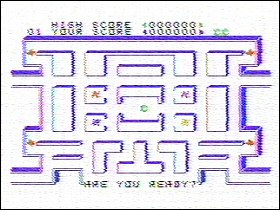 The Game: You control a round creature consisting of a mouth and little else. When the game begins, you’re given about two seconds’ head start to venture into the maze before blobby monsters are released from their cages and begin pursuing you. As you move, Munch Man leaves a trail in his wake; you advance to the next level of the game by “painting” the entire maze with that trail. (Texas Instruments, 1982)
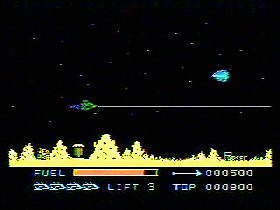 The Game: You control a space patrol fighter cruising over the surface of a planet. Alien attackers swarm on the right side of the screen and strafe you, and you must get out of the way of their laser fire and return some of your own; the more enemy ships you allow to safely leave the screen, the more you’ll have to deal with when they re-enter from the right side of the screen. Avoid their fire, avoid colliding with them, and avoid slamming into the ground, and you might just live long enough to repel the invasion. (Texas Instruments, 1982)
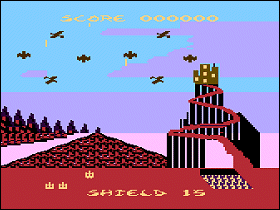 The Game: Hellish flying demons try to formation-dive your well-armed, devil-fryin’ vehicle at the bottom of the screen. Each time you knock one of this gargoylesque beasties out of the sky, they drop a piece of a bridge you must drag over to the appropriate spot on the screen. When you’re close to completing the bridge, the Prince of Darkness sends in some heavier artillery – a spooky floating demon head who spits fire at your cannon – to do away with you. Once you’ve toasted the flying meanies out of the sky and cross the bridge, it’s time to do battle with Satan himself. (CBS Video Games, 1982)
 The Game: Players control a caterpillar, hungrily navigating a twisty maze of twigs and branches to eat leaves. Sometimes the player’s caterpillar will have reached a dead end, but this is not revealed until the leaf covering that dead end is consumed. Other insects swarm around the caterpillar, trying to catch and eat it for themselves. At the beginning of each “life” the player can press a button, giving the caterpillar a brief bug-zerker rage, allowing it to eat its enemies for a change, but this change is short-lived; special flowers must be consumed to regain the ability. Once all of the leaves have been eaten in an entire maze (which takes up more than a single interlinked screen), a “home” appears, into which the caterpillar must be successfully guided for transformation into a butterfly. Then the player is given a new caterpillar to guide and a new maze to navigate. (Valadon Automation [under license to Iti S.A.], 1983)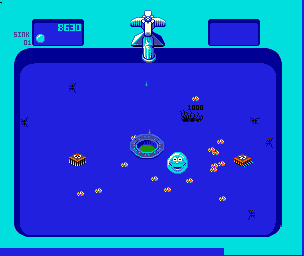

 The Game: Enemy fighters arrive, wave after wave, attempting to outflank the player’s fighter jet and trap it in the path of their fire. The player can only move the jet side to side to avoid incoming fire and attempt to line up a shot on the enemy fighters. Each new wave of enemies brings new tactics, new weapons to evade… and a new batch of targets. (Thunderbolt [under license to Orca], 1983)
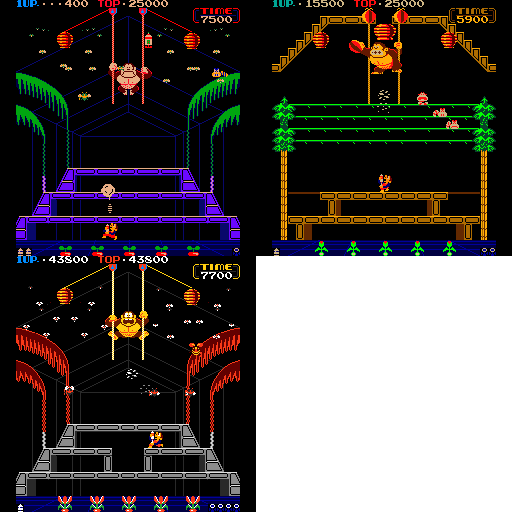 The Game: As Stanley the gardener, you’re trying to repel a swarm of pests unleashed by that meanest of pixellated gorillas, while also using your pesticide to propel him off the screen. Protect your flowers and yourself, and wear plenty of Off. (Nintendo, 1983)
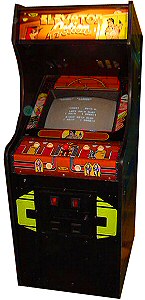 The Game: Love in an elevator, it’s not. As a daring spy, you break into a top secret enemy facility, trying to grab vital secrets and evade or kill as many enemy agents as you can. Your only means of getting from floor to floor through most of the game is via the elevator – which gives you an advantage and also makes you vulnerable. (Taito, 1983)
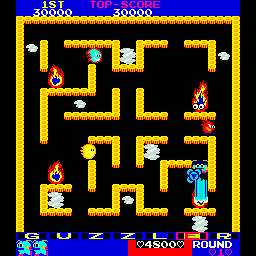 The Game: As a fluid little fellow, you zip around a maze flooded with flaming foes who’ll fry you with fire without fair warning. However, since water can put out fire, you can belch forth a mighty stream of water at your enemies, extinguishing them instantly. However, you’re only a little Guzzler, so you only contain a certain amount of water. You replenish yourself very slowly, but you can gobble up clouds full of moisture or drink from a fountain that occasionally appears at the center of the maze to refill yourself more quickly. And some fires are bigger than others, and putting them out will accordingly take more out of you. And you do eventually run out of clouds… (Tekhan, 1983)
 The Game: A huge, Big Brother-like head pops up and says “The law: no jumping!” to your little robot, and naturally, the cocky little automaton has other ideas (replying “Oh yeah!”). And so your mission begins, guiding the robot over ramps, around narrow catwalks, and leaping across huge chasms. If the all-seeing eye opens while your robot it jumping, however, a blaster turns your hero into a heap of spare parts. If you successfully claim all of the red area on the screen, you have a narrow “launch window” in which to jump across to the eye’s platform and destroy it. The your robot launches into space, blowing away obstacles in his path, avoiding saucers and solid objects, and eventually landing on another series of ramps and catwalks to begin the quest anew. And if that doesn’t do it for you, you can put in another quarter and relax in Doodle City. (Atari, 1983)
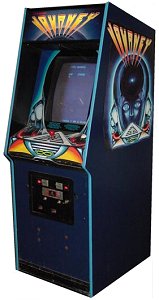 The Game: Just another day in the life of the rock group Journey, as you help Steve Perry, Neal Schon, Ross Valory, Jonathan Cain and Steve Smith evade alien “groupoids” intent on keeping them from reaching their next gig. (Bally/Midway, 1983)
 The Game: Marvin built a maze on two levels, with habitrail-style tunnels to take him from the first floor to the second and back again, and all was well until the Robonoids moved in and took over. Now they’re out to evict Marvin from his own turf! It’s up to you to guide Marvin through his maze, using cunning one-way bridges to escape from the Robonoids and find the power-ups he needs to zap them. Marvin moves on to the next maze (and the next level of difficulty) only by clearing this maze of power-ups and dots. (SNK, 1983)
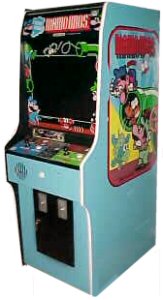 The Game: Twin brothers Mario and Luigi give up the illustrious life of ape-chasers and damsel-rescuers for their original line of work… plumbing. But this doesn’t mean the job’s any less dangerous. Killer lobsters and turtles abound in the sewer system (well, isn’t it that way everywhere?), along with airborne fireballs not unlike the foxfires in the original Donkey Kong. Another key event in this game? Nintendo solidifies its near-total dominance of the video game industry for the better part of the following decade and a half. (Nintendo, 1983)
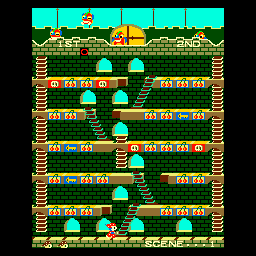 The Game: As cuddly clown Mr. Do, you’re scrambling to squish all the unicorns who are invading your castle. You can repel them momentarily with your clown hammer, but you can only squish them permanently by knocking a brick out from the floor above. Most bricks contain cherries, but some also contain keys that unlock the door at the top. When that door is completely unlocked, touching it will transform the unicorns into letters that make up the word EXTRA. As with Mr. Do!, collecting all five letters merits an extra “life.” Clearing the screen of monsters or cherries advances you to the next level. (Universal, 1983)
 The Game: You control a “Chemic,” a free-floating object while can adhese itself to passing Moleks, but is vulnerable to the Atomic. Within a limited amount of time (charted by a meter at the bottom of the screen), gather and repulse Moleks around your Chemic until you’ve duplicated the example shape shown in the center of
 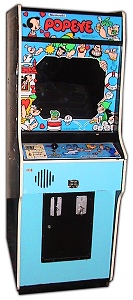 The Game: Well, blow me down! Popeye the sailor man gets his own video game. On level one, you’re trying to catch Olive Oyl’s falling hearts before they descend to sea level and are lost, while ducking Bluto’s punches at the same time. A can of spinach appears every so often, giving you the opportunity to read the big bully the riot act (comic strip-style, of course). On level two, the falling hearts are replaced by falling musical notes, and you’ll need Wimpy’s hefty help to keep Swee’Pea from drifting away on a balloon. (Nintendo, 1983)
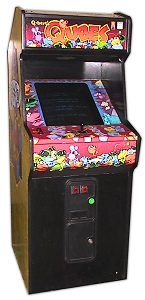 The Game: Q*Bert is back, hopping around from cube to cube, rotating the cubes 90 degrees with every hop…but a nasty bouncing rat and his minions are out to get the big Q. If one of the rat’s henchmen hops onto a cube whose top surface is the same color as its skin, it melts into the cube harmlessly. Q*Bert must change at least one row of cubes to the target color to advance to the next level – and there aren’t any flying discs this time! (Mylstar Electronics, 1983)
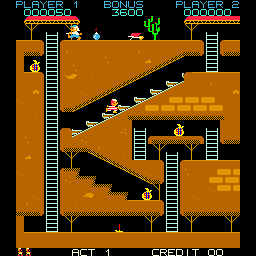 The Game: As in the original Bagman, you’re a crook trying to heist all the gold out of an underground mine as a bunch of pesky cops try to catch up with you. What’s different in this sequel? You can also find a loaded gun in the subterranean caverns and take out your pursuers…but this only intensifies their determination to find you. (Stern/Seeburg [under license from Valadon Automation], 1983)
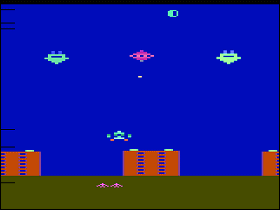 The Game: Players fly a fighter jet that can somehow maintain perfect altitude and lateral control despite constantly flying with its nose pointed straight up. Oncoming invaders, resembling UFOs, upside-down houses, upside-down stick figures (presumably the residents of the upside-down houses) and other airplanes appear; the player can either shoot them down, let them pass (with no apparent damage to the structures that the player’s jet is apparently protecting) or be blown to bits. (Men-A-Vision, 1983)
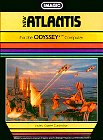 The Game: Hostile spacecraft are bombing the underwater paradise of Atlantis from above. Manning two cannons, you can knock the attacking ships out of the sky – or try to hit them at close range if they dive to bombing altitutde. When all of Atlantis’ landmarks have been wiped out, the game is over. (Imagic, 1983)
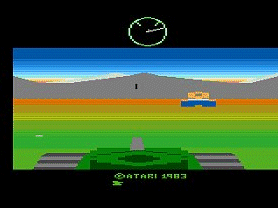 The Game: As the pilot of a heavy tank, you wander the desolate battlefield, trying to wipe out enemy tanks and landing vehicles. (Atari, 1983)
 The Game: You’re piloting a balloon-toting brat around an amusement park. Ride the rides! Slide down the slide! Crawl under the trees and play! But watch out for that balloon – the thing is vital to your survival! Don’t let it get popped against the trees, or the rides, or the walls of the amusement park. Worse yet, a cloud may appear at the side of the screen and blow your balloon away, forcing you to run after it and catch it before it collides with something and pops. Birds will also fly over the park, and they can pop your balloon too. Even if you’re not holding onto it at the time, the balloon popping ends your game. (Frankly, this reliance on the balloon seems to be a bit unhealthy, and will probably lead the game’s kid to be a shut-in with another inflatable friend by the time he’s 40.) (Phillips, 1983)
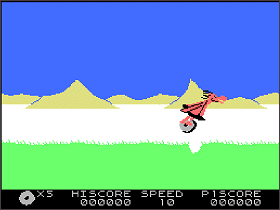 The Game: As beleaguered caveman B.C., you’ve just discovered the wheel. That’s the good news. The bad news is that, on the same day that you harness mechanical motion for the first time, you’re also going to discover the traffic accident. Jump over holes in the ground, rocks and rolling boulders, and duck under tree limbs – and then you’ve got to survive showing your new evolutionary step off to the Mrs.! (Sierra On-Line, 1983)
 The Game: You’re alone in a maze filled with armed, hostile robots who only have one mission – to kill you. If you even so much as touch the walls, you’ll wind up dead. You’re a little bit faster than the robots, and you have human instinct on your side…but even that won’t help you when Evil Otto, a deceptively friendly and completely indestructible smiley face, appears to destroy you if you linger too long in any one part of the maze. The object of the game? Try to stay alive however long you can. (Atari, 1983)
 The Game: You are the intrepid, barbershop-quartet-suited J.J. (hey, it’s better than being O.J.!), out to save a damsel in distress from a pursuing monster. How does a guy in a little striped suit do this? By building a mobile, tennis-ball-launching contraption to dispatch said dastardly monster, naturally. The catch? The eight pieces of your mechanical creation are hidden somewhere among ten little houses in a maze – and those houses that don’t contain parts of your machine contain a bomb that must be dumped into the bomb pit immediately (else they’ll explode and kill J.J.). Critters also roam the maze to annoy you, including one pesky monster who will prematurely jump on the “start” button, rattling your still-unfinished machine to bits. If you don’t build your Rube Goldberg gizmo in time, the monster catches the damsel and you lose a life. (CBS Electronics, 1983)
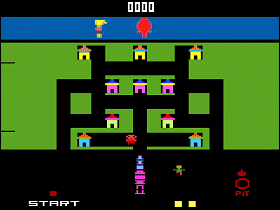 The Game: You are the intrepid, barbershop-quartet-suited J.J., out to save a damsel in distress from a pursuing monster. How does a guy in a little striped suit do this? By building a mobile, tennis-ball-launching contraption to dispatch said dastardly monster, naturally. The catch? The eight pieces of your mechanical creation are hidden somewhere among ten little houses in a maze – and those houses that don’t contain parts of your machine contain a bomb that must be dumped into the bomb pit immediately (else they’ll explode and kill J.J.). Critters also roam the maze to annoy you, including one pesky monster who will prematurely jump on the “start” button, rattling your still-unfinished machine to bits. If you don’t build your Rube Goldberg gizmo in time, the monster catches the damsel and you lose a life. (CBS Electronics, 1983)
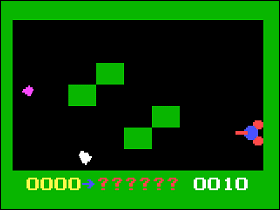 The Game: Amoeba-like monsters spawn and grow in an enclosed space with moving platforms. Players control a very mobile cannon, tasked with the mission of destroying these creatures, or at least trying to keep their population under control. The newly-spawned creatures pose no threat to the cannon – they’ll simply attach themselves to it, slowing it down unless it can shake them off. But the creatures rapidly grow in size and change colors; when a creature turns red, it is capable of destroying the cannon on contact. The cannon’s shots regress the creatures into earlier evolutionary stages; firing on a creature that has been regressed to its newly-spawned stage will destroy it. Both the cannon and the creatures can hitch a ride across the screen – either to safety or into the jaws of the enemy – aboard the platforms. (GST Video, 1983)
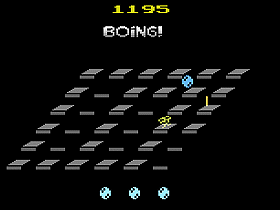 The Game: You’re a bubble bounding around a series of platforms, changing the color of every segment on which you land. Your job is to change the color of the entire playing field while avoiding everything else, including an equally mobile needle that has a point to make. If you run into your adversaries too many times, I hate to burst your bubble, but the game’s over. (First Star Software. 1983)
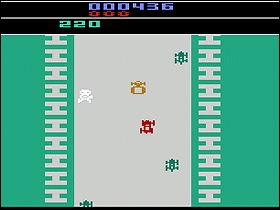 The Game: The race is on, and no moves are off-limits – bump your competitors off the road (and into apparently highly volatile vegetation that causes them to explode), or jump over them and any other obstacles that get in your way, including areas of water that cover the road. If you survive the race, you live on to the next round – at least until you run out of cars. (M Network, 1983)