
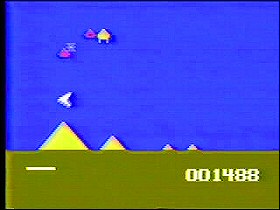
 Aliens are attacking several idyllic locales on Earth, and it’s your job to fend off the attack. Not only are you charged with blasting the aliens themselves out of the sky, but you must intercept as much of their incoming fire as possible before it hits targets on the ground. If you save the various trees and cars and castles and trains and boats and whatnot, not only have you earned the gratitude of the human race, you get big bonus points too, and we all know which is more important. Your highly maneuverable ship is equipped with shields which allow you to absorb the impact of collisions with the alien ships, as well as protecting you from direct hits from their weapons. But each hit and collision takes a significant chunk out of your shields. You can replenish them with power-ups left behind by fallen aliens, but when your shields run out and your ship takes another hit, your alien-killing days are over. (Soren Gust [published by Packrat Video Games], 2004)
Memories: Let me go back and read that again. Shields and power-ups and scores into the thousands? Did I just write that about an Odyssey² game? Yes. Yes, I did. Five years in the making, Kill The Attacking Aliens (a.k.a. KTAA) is one of those projects that demonstrates everything that is good about homebrew games for classic consoles.
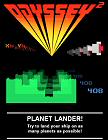

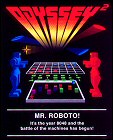
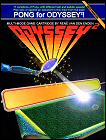 Travel back in time to the dawn of interactive electronic games. Pong For Odyssey² offers a standard two-player version of the classic video table tennis game, as well as electronic recreations of the analog version of the game available on the first home game


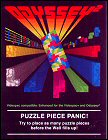 The Game: Interconnecting puzzle pieces are spewed out of the sky by the Tetrad Ejection Device (T.E.D.) and drift down the screen in a pre-defined area. You can rotate them for better placement (or at least rotate them to achieve the least worst effect); filling an
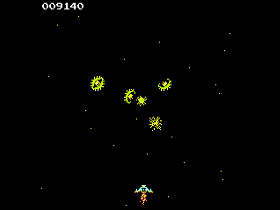 The Game: As commander of the three-stage fighter rocket Moon Cresta, your job is to ward off endless varieties of evasively weaving space attackers. Every time you knock out two consecutive screens of assailants, you’ll have an opportunity to dock your ship to another one of Moon Cresta’s three stages, until all three portions of the ship are combined to create one bad-ass weapons platform. But you can also lose stages very quickly, ending your game – a bigger ship makes a bigger and easier target. (AtariAge.com, 2011)
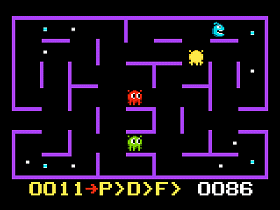 The Game: As a small blue spherical creature whose sole sensory organs consist of two eyes, two antennae and an enormous mouth, you are on a mission to eat twelve dots which are floating around a small maze. Pursuing you are three multicolored jellyfish-like horrors who will gobble you up on contact. (AtariAge.com, 2015)
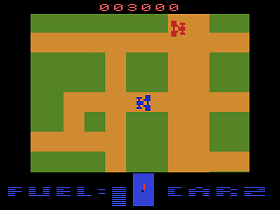 The Game: As the driver of a high-powered race car, you rocket around corners and down straightaways, trying to pick up every yellow flag in the maze-like course and avoiding deadly collisions with pursuing red cars. Watch out for rocks and oil spills, and use your smokescreen only when necessary to distance yourself from the red cars. (AtariAge.com, 2015)
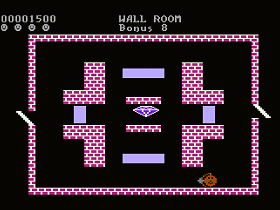 The Game: Trapped in a maze full of HallMonsters, you are adventurer Winky, on a mission to snatch incredible treasures from hazardous underground rooms inhabited by lesser beasts such as re-animated skeletons, goblins, serpents, and so on. Sometimes even the walls move, threatening to squish Winky or trap him, helpless to run from the HallMonsters. The deeper into the dungeons you go, the more treacherous the danger – and the greater the rewards. Just remember two things – the decomposing corpses of the smaller enemies are just as deadly as the live creatures. And there is no defense – and almost never any means of escape – from the HallMonsters. (unreleased prototype, 2017)