
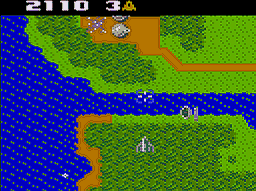
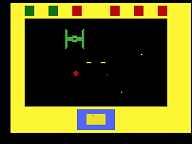
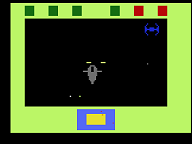
 The Game: As the commander of a sleek Solvalou fighter, you’re deep into enemy territory, shooting their disc-shaped fighters out of the sky, bombing ground installations and artillery nests, bombing tanks, and trying to destroy the mothership. As you progress further behind enemy lines, heavier aircraft and more versatile and deadly ground-based defenses become the norm. Also look out for tumbling airborne mirrors – they’re impervious to your fire, but you’re toast if you fly right into them. (Atari, 1984; released circa 1987)
Memories: Y’know, the more games I get for my trusty little 7800 – admittedly a recent acquisition in my gallery of classic consoles – the more I’m convinced that the Tramiel regime at Atari did the video game indsutry (and the consumers and players) a vast disservice by mothballing the 7800 and then not unveiling it until the NES had dominated the landscape.
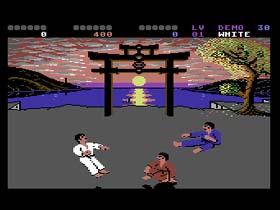 The Game: Face not one but two simultaneous opponents in what many consider the apex of Commodore 64 fighting games. IK+ supports one or two players, eighteen different moves, and more fighting action than all of Jean-Claude Van Damme’s movies combined. (System 3, 1987)
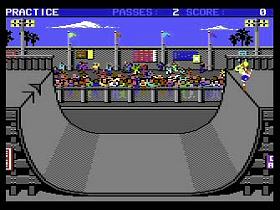 The Game: Don’t be a poseur! Skate hard or die trying in the ultimate skateboarding game for the Commodore 64. Practice or compete in five separate events that will lead you over ramps, down streets and even into abandoned pools. (Electronic Arts, 1987)
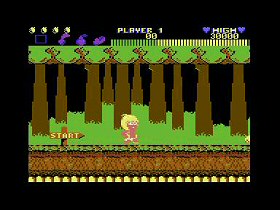 The Game: Wonderboy’s girlfriend Tanya has been abducted and it’s up to you to get her back. You’ll have to be pretty crafty to avoid the dangers of Wonderland in this classic Sega platformer. (Activision, 1987)
 The Game: An adorable kitten (and his twin, in the case of two-player games) runs and jumps around a maze of obstacles, trying to stay out of the clutches of such enemies as an insect in a lab coat, a large and angry-looking tomato, and a crocodile that walks upright. (Further levels add new and even stranger enemies to avoid.) The kitten(s) can push the blocks making up the maze, hopefully smashing an enemy against another block or one of the playfield’s outer walls in the process, temporarily removing that enemy from play. A defeated enemy drops numerous items, including coins, diamonds, and one of several keys needed to open a door allowing access to the next level of the game. (Konami, 1988)

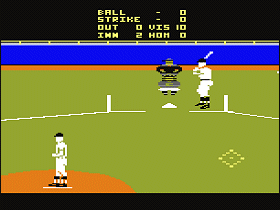 The Game: Batter up! We’re live from the baseball diamond with TV sports-style camera angles that switch to show you where the action is. (Absolute, 1988)
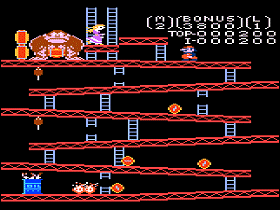 The Game: An oversized gorilla kidnaps Mario’s girlfriend and hauls her up to the top of a building which is presumably under construction. You are Mario, dodging Donkey Kong’s never-ending hail of rolling barrels and “foxfires” in your attempt to climb to the top of the building and topple Donkey Kong. You can actually do this a number of times, and then the game begins again with the aforementioned girlfriend in captivity once more. (Atari, 1988)
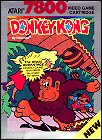 Memories: Before Nintendo made its own inroads in the American home video game market, it happily let homegrown companies take the license and run with it. Coleco won the license for Donkey Kong for the cartridge-based console market, while Atari snagged the rights to release Donkey Kong for various computer systems. When Coleco folded (after the expensive Adam Computer debacle), Atari did the corporate equivalent of going through Coleco’s wallet and picking up its licenses.
 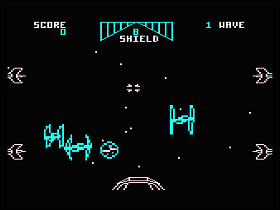 The Game: You’re an intrepid X-Wing pilot participating in the last-ditch Rebel attempt to destroy the Death Star – before it destroys the Rebel base on Yavin IV. TIE Fighters try to intercept you, but you can destroy them (as well as use your own lasers to blast their incoming fire out of the sky). Then you move in to attack the Death Star itself, with its incredibly hazardous system of gunnery towers and bunkers. Once you’ve gotten past the surface defenses, you dive into the trench that will lead you to an exhaust port which is the only means of destroying the Death Star – but there are defenses in the trench as well, and your deflector shields can only take so much… (Domark / Zeppelin Games Ltd., 1988)
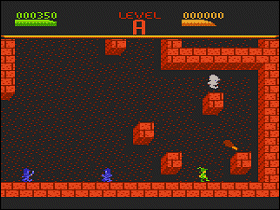 The Game: You control a lone adventurer on a quest through twisty mazes and open battlegrounds, descending through the dungeon depths in search of treasure (and a chance to escape in one piece with that treasure in hand). Zombies, ghosts, and monsters naturally roam through the dungeons as well, more than happy to attack any treasure-hunting interlopers such as yourself. (Atari, 1988)
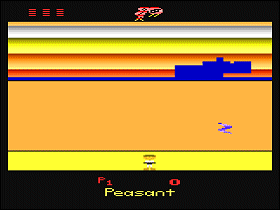 The Game: A worm-like dragon taunts you from atop a multi-colored wall, one which you must topple to reunite your divided village. To accomplish this task, you must bounce hurled projectiles into the wall. Collecting power-ups along the way will affect the behavior of the projectile, from making it a weapon capable of wiping out large portions of the wall to making it return to you repeatedly, like a boomerang. You advance to the next level by eliminating the wall. (Atari, 1989)
 The Game: Chef Peter Pepper is back, and boy, is he kawaii. As in the original Burgertime, the chef has to climb ladders and cross levels – while being chased by deadly ingredients – all in the pursuit of building the perfect giant burger. If he drops the burger on them, the chef’s opponents can become part of the meal. He can also spray them with pepper, as in the original game, or grab bonus weapons (such as a frying pan with which to brain them) from the sides of the screen when they intermittently appear. If enemies are on a bun, patty, etc. when it’s dropped, they’re temporarily taken out of play. Players advance a level by completing construction of all of the burgers. (Data East, 1988?)
 The Game: Two frogs, Bull and Pip, set out on a hazardous journey…to find some flies to eat. They must grab yummy flies while avoiding several lanes of poisonous spider “traffic”, and they also have to cross the occasional river on the backs of turtles and logs, snatching more flies out of the air without falling into the water. Each screen is cleared by the frogs eating the required number of flies. (Sega, 1991)
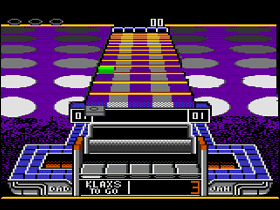 The Game: It is the nineties, as the intro screen says, and there is time for this home version of Klax, in which players try to stack colored bricks according to on-screen instructions: horizontal, vertical and diagonal rows may be required. The conveyor belts carrying the bricks gradually speed up until the bricks are zipping toward the bottom of the screen at a dizzying pace. Allowing too many bricks to slide off the bottom of the screen without catching them will forfeit the game, as will failing to come up with the configuration of stacked bricks demanded by the on-screen instructions. (Atari, 1990)
 The Game: As a round yellow creature consisting of a mouth and nothing else, you maneuver around a relatively simple maze, gobbling small dots and evading colorful monsters who can eat you on contact. Large red dots enable you to turn the tables and eat the monsters for a brief period. Periodically, assorted items appear in the maze, and you can consume these for additional points and power-ups. (Semicom, 1995)
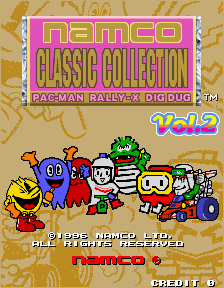 The Game: Three of the most popular games from Namco’s arcade heyday are brought back in the ’90s, both in their original forms and in “remixed” versions with updated sound and graphics and tweaks to the game play. Pac-Man Arrangement adds power-ups, new mazes, new graphics and a whole new breed of monsters to the most classic arcade game of the 80s, while Rally-X Arrangement refuels with power-ups and audiovisual enhancements of its own. Dig Dug Arrangement revamps the underground classic with a new breed of enemies – and a new variety of ways to eliminate them. (Namco, 1996)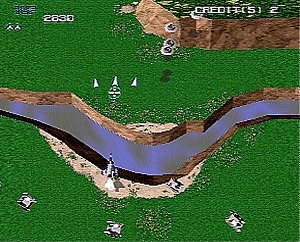
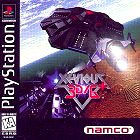 Memories: This somewhat obscure Namco title updates and revives their classic arcade title Xevious, which accumulated a cult following in 1983 when the game was released Stateside by Atari. Truth be told, Xevious 3D/G+ doesn’t rewrite the book or reinvent the wheel. For the most part, the game simply puts the original Xevious in a vaguely third-person 3-D perspective, adds some weapons and enemies (most notably the enormous and hard-to-kill Bosses), and kicks ass graphically. I liked this a lot. It has a great deal of respect and reverence for its source material.
  The Game: You’re alone in a maze filled with armed, hostile robots who only have one mission – to kill you. If you even so much as touch the walls, you’ll wind up dead. You’re a little bit faster than the robots, and you have human instinct on your side…but even that won’t help you when SmileyBot, a deceptively friendly and completely indestructible smiley face, appears to destroy you if you linger too long in any one part of the maze. The object of the game? Try to stay alive however long you can. (John Dondzila Classic Gaming Creations, 1998)

 The Game: Strap yourself into the very fast, very dangerous world of pod racing. Rocket through dozens of different courses, facing off against opponents who


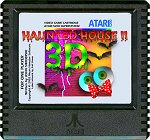 The Game: As with the original Atari 2600 game, you’re exploring a dark haunted house populated by ghosts, spiders, and even a few walking skeletons. Your task is to track down all the treasures hidden in the maze-like rooms of the house without allowing any of these creatures to touch you. If they get hold of you three times, game over. And if you find all the treasure before that happens? Well…you’ll just have to find out. (Mean Hamster Software, 2002; written by John Swiderski)
 The Game: Remember those BASIC programming how-to books in the 70s and 80s with the do-it-yourself minigames you could type in and run? They’re back. Daniel Bienvenu’s tribute to those classic games has a twist though: it’s running
  The Game: 25 choice cuts of Intellivision goodness are crammed into something about the size of a modern-day console controller. Games include Astrosmash, Body Slam Super Pro Wrestling, Buzz Bombers, Chip Shot Super Pro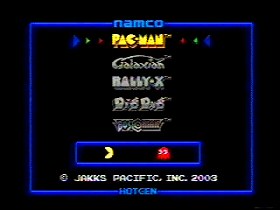
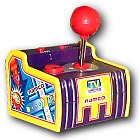 Memories: After I reviewed the dandy Techno Source Intellivision 25-in-1 TV Game, at least one e-mail suggested that I wasn’t being critical enough in my review. I praised that dandy self-contained gadget for capturing the flavor of those 25 classic Intellivision games, even if a lot of the finer details were left out. Those of you who thought I was going easy on that game should just stop reading this review now. Because I kinda dig this quintet of Namco goodness – with some significant reservations.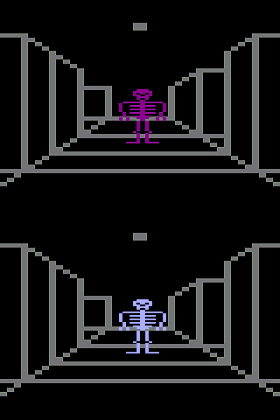
 Memories: A nifty after-the-fact version of