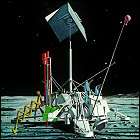
 NASA begins soliciting studies from contractors for an unmanned robotic spacecraft to land on the moon. Intended to carry scientific instruments and television cameras to examine the moon from ground-level, the Surveyor landers are intended to reap their own benefit in the form of scientific data, but they will also serve as advanced scouting support missions for possible later manned landings on the moon.

 NASA’s first attempt to soft-land an unmanned space probe on another body in the solar system ends with a perfect landing:
 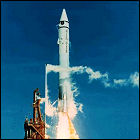 Three days after lifting off from Earth, NASA’s
 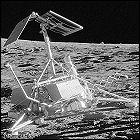 NASA’s robotic explorer
 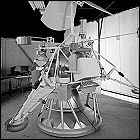 For the second time, one of NASA’s robotic Surveyor space probes fails to make it to the moon intact. Launched three days before,
 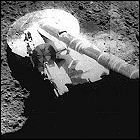 Despite an in-flight fuel pressure glitch that threatens to make this the third failure for the Surveyor program,
 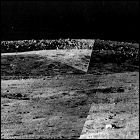 NASA’s robotic explorer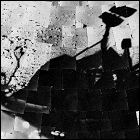
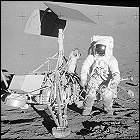 Astronauts Pete Conrad and Alan Bean land on the moon in the Apollo 12 lunar module Intrepid, a mere 600 feet away from the 1967 landing site of the unmanned Surveyor 3 probe. Pieces of Surveyor 3 are gathered for return to Earth to study the effects of prolonged exposure to the lunar environment. Conrad and Bean conduct two moonwalks, each lasting nearly four hours.