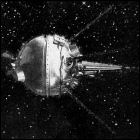
 Less than a year after launching the first Earth-orbiting artificial satellite, the Soviet Union makes its first attempt to launch an unmanned space vehicle toward the moon. The flight of Luna E-1 #1 lasts a mere 92 seconds before its launch vehicle explodes in mid-air. Further attempts will be made by Sergei Korolev’s team of engineers to launch a lunar spacecraft, giving the escalating international space race a new (if somewhat obvious) target for both unmanned and crewed space flights over the next decade.

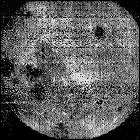 The Soviet Union’s Luna 3 unmanned probe is launched toward the moon, where it transmits the first images of the moon’s far side back to Earth – a sight that has never been seen by humans before since the moon’s near side is tidally locked toward Earth. Luna 3’s closest pass to moon brings it to within 4,000 miles of the lunar surface, and despite low signal strength and data errors during transmission, nearly 20 images of the moon’s far side are sent back to Soviet scientists via a process not unlike sending a fax.
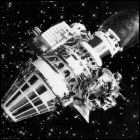 An unmanned Soviet lunar lander, Luna 4, is launched from the USSR’s Baikonur Cosmodrome. Unlike Luna 2, which intentionally crashed into the moon with no attempt to slow its approach, Luna 4 is the first atempt at a vehicle intended to survive its descent to the lunar surface and make observations from the ground. A failed course correction engine burn leaves the 3,000-pound vehicle in a wide, looping orbit around the Earth, unable to reach the moon at all. The Soviet Union, after several more attempts, will eventually achieve the first unmanned soft landing on the surface of the moon three years later.
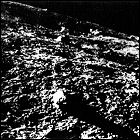 The Soviet Union lands a palpable hit in the space race, claiming the first intact soft-landing of a man-made probe on another body in the solar system.
 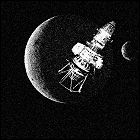 The Soviet Union launches unmanned space probe Luna 10 toward the moon, where it becomes the moon’s first artificial satellite. Luna 10 remains functional for two months, during which a pre-recorded signal from it becomes one of the highlights of the 23rd Congress of the Soviet Communist Party. Luna 10 does not take photos of the moon from orbit, but does find varying concentrations of mass within the lunar surface. This is the last of the original “large” Luna probes, with later orbiters taking on a more compact form, and later large Luna probes containing landers and sample return rockets.
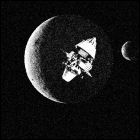 The Soviet Union launches unmanned space probe Luna 11 toward the moon, the first of a new, smaller generation of Luna probes designed to survey the moon from orbit. Unlike its predecessor, Luna 11 is equipped with cameras, and like NASA’s Lunar Orbiter, Luna 11 is tasked with mapping the moon in advance of a presumed attempt to land cosmonauts there. However, an attitude control problem points Luna 11’s cameras away from the moon, unable to transmit useful imagery back to Earth. Luna 11 remains functional in orbit of the moon for six weeks.
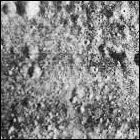 The Soviet Union launches unmanned space probe Luna 12 toward the moon, a near-identical twin of the earlier Luna 11 spacecraft. Luna 12 returns images and observations from lunar orbit for three months until its batteries are exhausted.
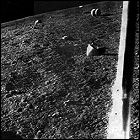 The Soviet Union launches unmanned space probe Luna 13 toward the moon, where it becomes the third space vehicle to successfully make a soft landing on the lunar surface. Larger than its Soviet predecessor, Luna 9, Luna 13 measures the temperature, radiation, and hardness of the moon’s surface, all useful information to have in advance of a manned landing. After operating on the lunar surface for four days, the Luna 13 lander’s batteries are exhausted and the mission is over.
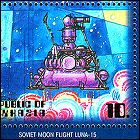 The Soviet Union launches unmanned space probe Luna 15 toward the moon, the Soviet space program’s last attempt to claim a victory in the race to the moon. Intended to land on the moon and gather a core sample of lunar soil which will then be rocketed back to Earth, hopefully ahead of the arrival of lunar soil samples from the concurrent American Apollo 11 moon landing attempt, Luna 15’s lander detaches and attempts its landing on July 20th…only to crash into the moon’s surface, losing all contact with Earth, while NASA astronauts Neil Armstrong and Buzz Aldrin prepare to depart with their soil samples intact. In a rare display of international cooperation, the Soviets shared basic orbital parameters of Luna 15’s flight with NASA to avoid any navigational hazards for Apollo 11.
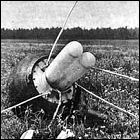 The Soviet Union launches unmanned space probe Luna 16 toward the moon, the first success in the Soviet space program’s ongoing attempt to mount a robotic sample return mission. The lander’s drill-equipped sample collection arm gathers a 35 millimeter, 100-gram core sample of lunar soil, which is then packed into a shielded return capsule for direct return to Earth (seen here after landing). Now claiming that they advocate robotic sample return missions without putting human lives at risk, the Soviets can at last claim a lunar first – the first robotic return to Earth of a soil sample from another body in the solar system.
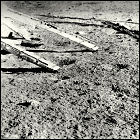 The Soviet Union launches unmanned space probe Luna 17 toward the moon, carrying with it the first automated moon rover, Lunokhod 1. Solar-powered and deployed to the surface via a pair of ramps, the wheeled rover operates for eleven months, more than double the expected operational life span. Unlike Luna 16, Luna 17 and Lunokhod perform their studies of the lunar surface without returning any soil samples to Earth.
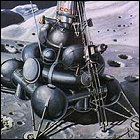 The Soviet Union launches unmanned space probe Luna 18 toward the moon, intended to repeat Luna 16’s feat of gathering and returning a sample of lunar soil to Earth. After spending nearly a week in orbit, Luna 18 descends to the surface, but ground controllers have directed it toward a hazardous mountain region, and contact is lost at the moment the vehicle signals contact with the ground – very likely a sign of a crash landing. No further communication is received from Luna 18, nor is the sample container ever sent back to Earth.
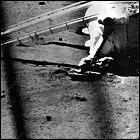 The Soviet Union launches unmanned space probe Luna 21 toward the moon, carrying the Lunokhod 2 robotic rover. Like Lunokhod 1, this rover is solar-powered and can operate independently of its lander, though ground controllers push this vehicle further. Five months into its mission, Lunokhod is driven into a crater from which it is unable to escape; the mission is declared over a month later. This mission is not intended to return lunar soil samples to Earth.
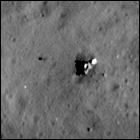 The Soviet Union launches the unmanned space probe Luna 23 toward the moon, intended to gather surface samples from the Mare Imbrium region for return to Earth. The sample collection hardware is unable to complete its task after landing, and ground controllers are only able to receive partial scientific data from the lander, whose batteries run out within three days of landing. It won’t be until 2012, when NASA’s Lunar Reconnaissance Orbiter photographs Luna 23’s landing site from orbit, that the truth will be learned: the lander tipped over on its side during a descent mishap, leaving it intact but unable to gather a soil sample.
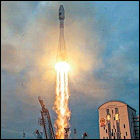 Russia launches the Luna 25 uncrewed spacecraft on a mission to land near the south pole of the moon. This is the first mission in the Luna program, which has been dormant since the 1970s; if successful, the mission will be the first Russian soft-landing on the moon in almost 50 years. Much like India’s
 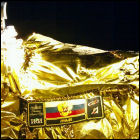 Russia’s Luna 25 mission to the lunar south pole ends unsuccessfully when an engine burn intended to lower the vehicle’s orbit around the moon into its final landing orbit goes awry. Luna 25 instead crashes into the moon as the result of the engine firing longer than expected. Contact with Luna 25 is not recovered following what the Russian space agency describes as an “abnormal situation”. The mission was Russia’s first attempt at a lunar landing in nearly 50 years.