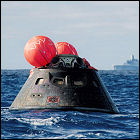
 NASA launches Exploration Flight Test 1, the maiden unmanned voyage of the next-generation Orion space vehicle which is intended to assume the Space Shuttle’s place as NASA’s primary manned spacecraft. Heavily instrumented, Orion is boosted to a high altitude of 3,600 miles during its second orbit, and returns to Earth at 20,000mph, the fastest return of a man-rated spacecraft since the Apollo lunar missions. The flight profile of the EFT-1 mission is similar to that of 1967’s Apollo 4 mission, though ongoing budget constraints force NASA to launch Orion atop a Delta IV Heavy booster rather than the Space Launch System booster for which Orion has been designed. This budget crunch also prevents the Orion program from moving forward at the pace of Apollo: the next Orion flight will not take place for several years. Orion EFT-1 is also the first American spacecraft to be recovered from sea after a splashdown since 1975’s Apollo-Soyuz mission.

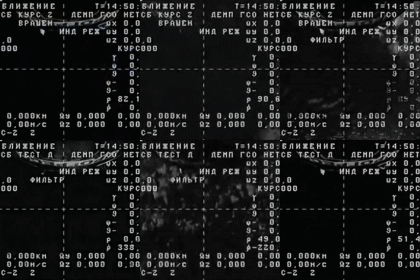 An unmanned Progress cargo vehicle, designated Progress M-27M, is launched by Russia to ferry 6,000 pounds of supplies, equipment and experiments to the International Space Station. But Progress ends up in the wrong orbit, tumbling out of control, with Russian ground controllers unable to send remote commands to the vehicle. Plans to dock the Progress capsule to the ISS are called off as further attempts are made to regain control; since the Progress is in the wrong orbit, it poses no present danger to the station.
 Commercial spaceflight operator Blue Origin, owned by Amazon.com founder Jeff Bezos, launches its first New Shepard flight, a booster and capsule which the company hopes will eventually carry paying passengers on short suborbital flights into space. The uncrewed (but human-rated) capsule comes in for a soft landing near Blue Origin’s Texas launch facility, though the booster – also intended to land and be refurbished for future reuse – does not land intact. This is the first in a series of uncrewed tests of the New Shepard launch system and suborbital vehicle; further tests will be flown over the next few years.
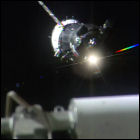 Russia launches three international crew members to the International Space Station aboard Soyuz TMA-17M. Upon reaching orbit, cosmonaut Oleg Kononenko and astronauts Kjell Lindgren and Kimiya Yui discover their spacecraft has a familiar problem: one of the Soyuz solar panel “wings” has failed to extend. As the vehicle is on a five-and-a-half-hour fast-track trajectory to the station, the mission continues and the Soyuz docks at the ISS without incident. After docking, the stuck solar panels extend fully, as happened in 2014’s Soyuz TMA-14M mission. The new visitors to the station will spend four months as part of the Expedition 44 crew.
 Commercial spaceflight operator Blue Origin, owned by Amazon.com founder Jeff Bezos, launches its second New Shepard flight. The uncrewed (but human-rated) capsule and its single-stage suborbital booster come in for soft landings near Blue Origin’s Texas launch facility, after refinements are made to the system of aerodynamic fins designed to keep the booster upright as it returns to the ground for a survivable landing. This is the first intact return of a space-flown booster to Earth. This is the first flight for the second New Shepard reusable capsule, as well as the first flight for the second New Shepard reusable booster; both will be reused again.
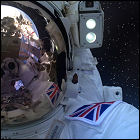 A relatively routine spacewalk at the International Space Station is cut short when astronaut Tim Kopra notices a globule of water in the helmet of his spacesuit. Perhaps mindful of
  Commercial spaceflight operator Blue Origin, owned by Amazon.com founder Jeff Bezos, launches its third New Shepard flight. The uncrewed (but human-rated) capsule and its single-stage suborbital booster come in for soft landings near Blue Origin’s Texas launch facility, marking the first reflight of an already-flown booster. This is the second flight for the second New Shepard reusable capsule, as well as the second flight for the second New Shepard reusable booster; both will be flown again.
 On the eve of the 45th anniversary of the Apollo 14 moon landing, astronaut Edgar “Ed” Mitchell dies at the age of 85. The sixth human being to set foot on the moon, Mitchell accompanied Alan Shepard to the lunar surface aboard the Apollo 14 lander. Following his visit to the moon, Mitchell had become interested in researching human consciousness and extra-sensory perception, but later surrounded himself with controversy by claiming that he was certain that UFOs had visited Earth.
 Having traveled to the International Space Station as part of the Expedition 43 crew, astronaut Scott Kelly and cosmonaut Mikhail Korniyenko return to Earth after their heavily-publicized “One-Year Mission”, along with cosmonaut Sergey Volkov. Though the duration of the “One-Year Mission” is closer to 11 months, Kelly has broken the American record for continuous time spent in space. NASA hopes medical data gathered during his stay will help to keep future astronauts healthy, both physically and mentally, on long-term flights to such future destinations as Mars.
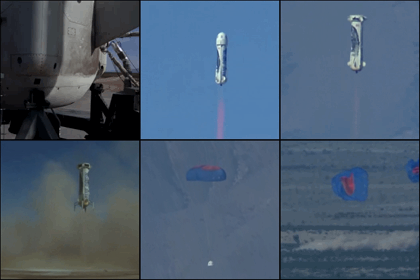 Commercial spaceflight operator Blue Origin, owned by Amazon.com founder Jeff Bezos, launches its fourth New Shepard flight. The uncrewed (but human-rated) capsule and its single-stage suborbital booster come in for soft landings near Blue Origin’s Texas launch facility. This is the third flight for the second New Shepard reusable capsule, as well as the third flight for the second New Shepard reusable booster; both will be flown again later in 2016.
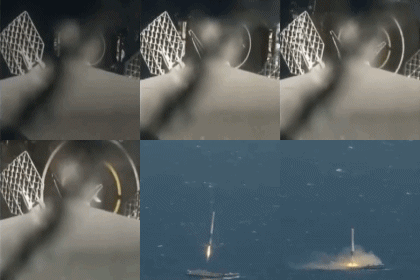 SpaceX launches the unmanned Dragon CRS-8 (Commercial Resupply Mission 8) to the International Space Station, carrying supplies and experiments, as well as delivering via its cargo trunk the Bigelow Expandable Activity Module (BEAM), the first new addition to the ISS since 2011. The flight is a success, and for the first time, the Falcon 9 first stage returns intact to an unmanned drone barge in the Atlantic Ocean, where it can be refurbished and reused. Though SpaceX has previously brought an intact booster down on dry land, this is the first success in several attempts to recover the spent first stage at sea.
 For the first time since the final
 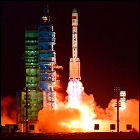 China launches its second space station, Tiangong-2, into orbit, ahead of a Shenzhou flight scheduled to carry the station’s first crew in October. Weighing over nine tons, Tiangong-2 is larger than its
 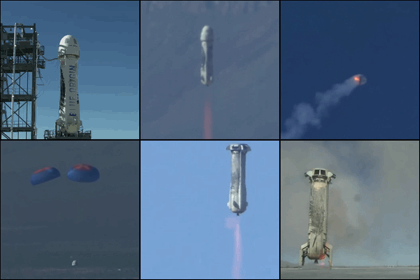 Commercial spaceflight operator Blue Origin, owned by Amazon.com founder Jeff Bezos, launches its sixth New Shepard flight. To conduct a live test of survivability of the launch abort system, the capsule is commanded to blast free of its booster at Max-Q (the moment of maximum aerodynamic pressure on the combined vehicle). The uncrewed (but human-rated) capsule survives the simulated emergency separation and lands safely, but surprisingly, the single-stage suborbital booster also recovers from the stress of the abort test and lands safely near Blue Origin’s Texas launch facility. This is the fifth and final flight for the second New Shepard reusable capsule, as well as the fifth and final flight for the second New Shepard reusable booster. Flight tests will resume in late 2017 with a new booster and capsule.
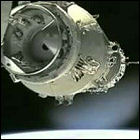 China’s Shenzhou 11 mission is launched, the country’s sixth crewed flight, with a two-man crew consisting of Jing Haipeng (veteran of the Shenzhou 7 and Shenzhou 9 missions) and rookie taikonaut Chen Dong. The vehicle’s destination is the
 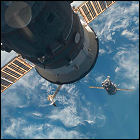 The second uprated Soyuz MS vehicle is launched from Baikonur Cosmodrome. The crew of Soyuz MS-02 are International Space Station Expedition 49 crew members Sergey Ryzhikov, Andrei Borisenko, and Shane Kimbrough; these three will become the Expedition 50 crew in November, and will return to Earth in February 2017 aboard the same vehicle.
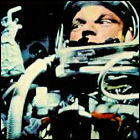 The last living member of the original Mercury astronaut group, former Senator John Glenn, dies at the age of 95. Born in 1921, Glenn was a decorated combat pilot who flew during World War II and the Korean War, before turning his piloting skills to testing experimental aircraft. This brought him to NASA’s attention, and he made
 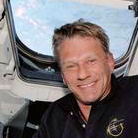 British-born shuttle astronaut Piers Sellers dies of pancreatic cancer at the age of 61. A veteran of over 559 hours in space as a crew member of shuttle missions
 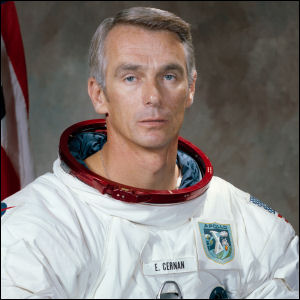 Apollo 17 Commander Eugene Cernan, the last human to leave the surface of the moon in the 20th century, dies at the age of 82. One of the members of NASA’s second astronaut class, recruited in 1963 to take part in the Gemini program, Cernan first flew into space aboard Gemini 9 in 1966, a mission in which he became the second American spacewalker, though his assigned tasks outside the Gemini spacecraft proved to be dangerously exhausting. His second flight, as the lunar module pilot for Apollo 10, saw him flying a lunar lander to within miles of the moon’s surface in May 1969, a dress rehearsal for the upcoming Apollo 11 mission. He commanded the final Apollo moon landing mission, Apollo 17, in December 1972, where he earned the title of “last man on the moon” by being the last astronaut to leave the lunar surface to re-enter the Apollo 17 lander. He later wrote an autobiography about his spaceflight experiences, and was frequently outspoken about his disappointment that no one walked on the moon again in his lifetime.
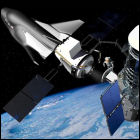 Though it has yet to actually go to space, the Sierra Nevada Dream Chaser spacecraft is floated as a possible savior for the Hubble Space Telescope, with a very preliminary mission proposal for a repair mission to the telescope which has now been operational in orbit for over a quarter of a century. The possible mission is brought forth as an example of increasing high-profile cooperation between NASA and private space companies. The Dream Chaser’s earliest orbit test flights are not expected to take place prior to 2019; if the mission takes place in 2020 at the earliest, Hubble will by then be 30 years old.
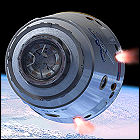 Private aerospace company SpaceX announces that a crew of two – not publicly identified by the company – have booked a private circumlunar flight scheduled to take place in 2018 aboard a SpaceX Dragon v2 capsule. The flight will utilize a free-return trajectory to the moon, around its dark side, and back to Earth, without orbiting or landing. At the time of the announcement, Dragon v2 has yet to fly into space, either with or without a crew, and the booster that would be required for this flight, the Falcon Heavy, has yet to be test-flown, either with or without a crew.
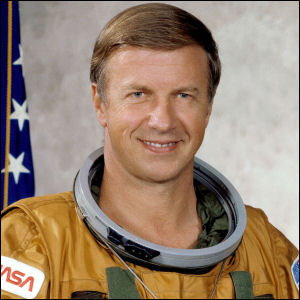 Former NASA astronaut Paul J. Weitz dies at the age of 85 after battling cancer. Originally assigned to an
 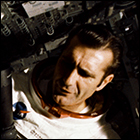 Gemini and Apollo astronaut Richard “Dick” Gordon dies at the age of 88. A veteran of the record-setting Gemini 11 mission (during which he undertook a spacewalk at the unprecedented altitude of 850 miles above Earth’s surface) and the Apollo 12 mission (during which he manned the command module Yankee Clipper while crewmates Pete Conrad and Alan Bean walked on the moon), Gordon was a naval aviator who eventually graduated to test pilot duties, eventually specializing in the F4H Phantom II fighter and teaching other pilots how to fly it. After his Apollo flight and retirement from NASA, Gordon kept working in the technology and engineering industries, but also diversified, becoming Executive VP of the New Orleans Saints football team.
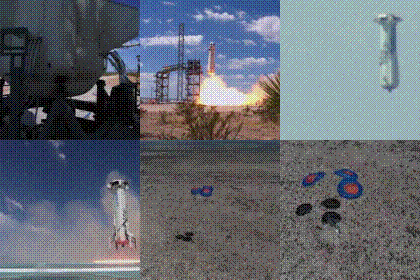 Commercial spaceflight operator Blue Origin, owned by Amazon.com founder Jeff Bezos, launches its eighth New Shepard flight. The uncrewed (but human-rated) capsule includes several commercial and research payloads, as well as a telemetry test dummy nicknamed “Mannequin Skywalker”, designed to record potential spaceflight stresses on future human passengers. An apogee of 351,000 feet is reached for the first time. As with past missions, both the capsule and its single-stage suborbital booster come in for soft landings near Blue Origin’s Texas launch facility. This is the second flight for the third New Shepard reusable capsule, as well as the second flight for the third New Shepard reusable booster.
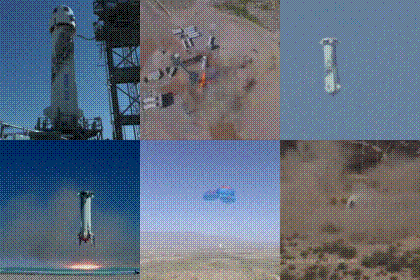 Commercial spaceflight operator Blue Origin, owned by Amazon.com founder Jeff Bezos, launches its ninth New Shepard flight. The uncrewed (but human-rated) capsule includes several commercial and research payloads, but serves primarily as a test of the ascent escape engine system designed to pull a crewed New Shepard capsule clear of a booster in the event of an anomaly during launch. As with past missions, both the capsule and its single-stage suborbital booster come in for soft landings near Blue Origin’s Texas launch facility. This is the third flight for the third New Shepard reusable capsule, as well as the third flight for the third New Shepard reusable booster.
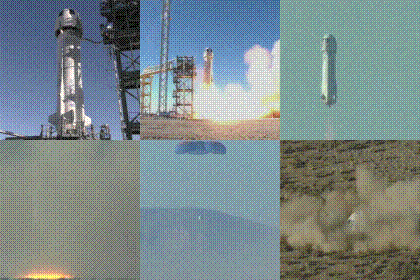 Commercial spaceflight operator Blue Origin, owned by Amazon.com founder Jeff Bezos, launches its tenth New Shepard flight. The uncrewed (but human-rated) capsule includes several payloads designed by NASA’s Flight Opportunities Program. As with past missions, both the capsule and its single-stage suborbital booster come in for soft landings near Blue Origin’s Texas launch facility. This is the fourth flight for the third New Shepard reusable capsule, as well as the fourth flight for the third New Shepard reusable booster.
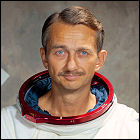 Skylab and Space Shuttle astronaut Owen K. Garriott dies at the age of 88. Born in Oklahoma, former U.S. Navy electronics officer Garriott went on to Stanford University to pursue a doctorate, and returned to Stanford to teach physics and electronics until
  Having already visited and returned from the International Space Station in a successful uncrewed test flight, SpaceX’s Crew Dragon is set up for a critical ground test of its launch abort system, utilizing the capsule’s built-in SuperDraco engines – and explodes. While no injuries result from the explosion, the major setback results in delays to the Crew Dragon program, which would have flown the first astronauts from American soil since 2011 by the end of 2019 if all had gone as planned. SpaceX does not publicly discuss the specifics of the incident for well over a week until a company spokesman is repeatedly asked by the press about it at a publicity event for an uncrewed Falcon rocket launch.
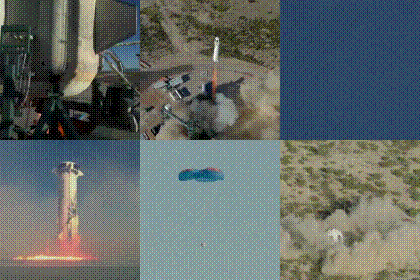 Commercial spaceflight operator Blue Origin, owned by Amazon.com founder Jeff Bezos, launches its eleventh New Shepard flight. The uncrewed (but human-rated) capsule includes 38 experimental payloads, some of them designed by NASA, New Century Technology High School, and MIT’s Media Lab Space Exploration Initiative. As with past missions, both the capsule and its single-stage suborbital booster come in for soft landings near Blue Origin’s Texas launch facility. This is the fifth flight for the third New Shepard reusable capsule, as well as the fifth flight for the third New Shepard reusable booster.
 Cosmonaut Alexei Leonov, the first human being to perform extravehicular activity (or, as it has become more commonly known, a spacewalk) outside his spacecraft, dies at the age of 85. He was among the 20 Soviet Air Force pilots selected to undergo cosmonaut training in 1960, and undertook the historic first spacewalk on March 18th, 1965, aboard the