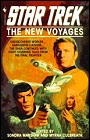
 Bantam Books publishes Star Trek: The New Voyages, edited by Sondra Marshak and Myrna Culbreath, an anthology of fan-written Star Trek fiction, with accompanying introductions by several of the show’s cast and Gene Roddenberry himself.

Bantam Books publishes Star Trek: The New Voyages, edited by Sondra Marshak and Myrna Culbreath, an anthology of fan-written Star Trek fiction, with accompanying introductions by several of the show’s cast and Gene Roddenberry himself.
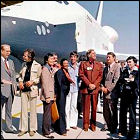 On schedule, the Space Shuttle Enterprise is rolled out of the Rockwell International plant in Palmdale, California to much public fanfare, a ceremony including Star Trek creator Gene Roddenberry and most of the cast who played the crew of the Enterprise’s fictional namesake (William Shatner was conspicuously absent). The timing of the rollout, ironically, was intended to roll the test shuttle – originally named Constitution – out of the hangar on Constitution Day during the bicentennial year.
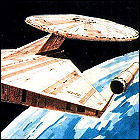 Having tried to find a suitable script for a big-screen relaunch of Star Trek virtually since the cancellation of the television series, Paramount – riding the coattails of the much-publicized unveiling of the Space Shuttle Enterprise – issues a press release announcing that the first Trek movie is finally underway – in this case, a still-in-development script called Star Trek: Planet Of Titans, featuring a radically redesigned Enterprise concept by illustrator Ralph McQuarrie, whose other recent genre work – designs for the yet-to-be-released Star Wars – has yet to make him a household name.
After spending months in development, the much-publicized big-screen relaunch of Star Trek is cancelled by Paramount. Unable to find a satisfactory script, and having great difficulty negotiating with the stars of the TV series, Star Trek: Planet Of The Titans is dumped by the studio, with no other plans to revive Star Trek in the works. Mere weeks later, a record-breaking movie not originating from Paramount convinces the studio to get back into the big-budget science fiction space race.
 No sooner has Paramount’s movie arm axed Star Trek‘s big screen comeback than the studio’s television division announces the unthinkable: Paramount will form its own network, to premiere in February 1978, taking on ABC, CBS, and NBC in prime time. Leading off the new network’s first night will be a two-hour, made-for-TV Star Trek movie starring William Shatner and most of the original cast (with Leonard Nimoy notable by his absence), who will then go on to star in a weekly series chronicling the further adventure of the Enterprise. Gene Roddenberry will return as the creator of the new series. But within just a few weeks, it becomes apparent that the “big three” networks are ready to play hardball to keep Paramount’s network off the air, from leaning on their advertisers to avoid buying ad time on the new network, to quietly threatening to stop picking up Paramount-produced series for their own fall schedules.
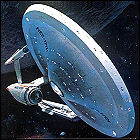 At a meeting at Paramount, studio head Michael Eisner formally cancels plans for a Star Trek television series reuniting the original cast (a decision made easier by the other networks strong-arming potential advertisers into freezing out Paramount’s network startup attempt) and sets the wheels in motion to revamp the pilot script, Alan Dean Foster’s In Thy Image, into a feature film. Contracts for the series are renegotiated (or in some cases cancelled) for the movie, but scriptwriters and designers continue to work on Trek TV scripts just in case the movie leads to a small-screen resurgence. The impetus for finally getting the long-stalled Star Trek movie underway? 20th Century Fox’s runaway success with Star Wars.
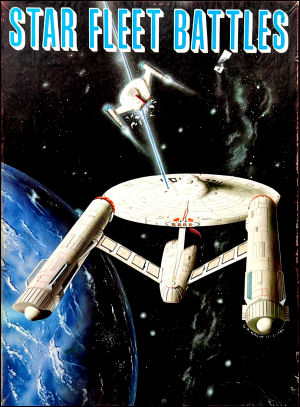 Task Force Games publishes the tabletop wargame Star Fleet Battles, based on the 1960s TV series Star Trek (though not initially released as a licensed product). The game is created by Allen D. Eldridge & Stephen V. Cole, working under the collective name of the “Amarillo Design Bureau”, and will be reissued and updated in many guises in the years to come, taking in future additions to Star Trek lore from movies and television series yet to be released. Star Fleet Battles will also inspire later computer games such as Interplay’s Star Trek: Starfleet Command.
 CBS Records releases an LP of selections from Jerry Goldsmith’s soundtrack from Star Trek: The Motion Picture, one of the earliest fully-digitally-recorded albums of any kind, soundtrack or otherwise. Thanks mainly to Goldsmith’s energetic main title, the album becomes a best-seller; many fans start to regard the music as the best part of the movie. Two reissues follow, culminating in a fan-pleasing 2012 release of the complete score.
 Days before the film’s theatrical premiere, Pocket Books publishes Gene Roddenberry‘s novelization of the movie Star Trek: The Motion Picture, the Star Trek creator’s sole foray into Star Trek print fiction.
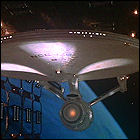 After a tortured development history dating back to aborted early 1970s attempts to relaunch Star Trek on the big screen, Paramount premieres the much-anticipated (and much hyped) Star Trek: The Motion Picture in theaters. At over two hours, and boasting one of Jerry Goldsmith’s best movie scores, the movie bewilders viewers as much as it thrills them. Paramount claims not to make a profit on the movie at all – primarily by including all of the development costs of years of early movie attempts and the never-made Star Trek Phase II television series as part of the movie’s price tag – but, despite its assertion that the movie lost money, the studio begins making plans for a sequel.
 Midway releases the arcade video game Gorf, a collection of space-shoot-’em-up themed minigames with voice synthesis. The game started its development cycle as a licensed arcade game based on Star Trek: The Motion Picture.
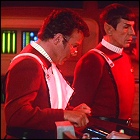 Produced and co-written by Harve Bennett (The Six Million Dollar Man, The Invisible Man) and directed by Nicholas Meyer, Star Trek II: The Wrath Of Khan debuts in theaters. The story follows up on the first season TV episode Space Seed, bringing back Ricardo Montalban (who is now a star thanks to his stint on ABC’s Fantasy Island) as Khan and introducing Kirstie Alley as a new member of the Enterprise crew. With faster pacing, increased action, and a more contemporary military sci-fi feel, the sequel is a hit that guarantees future sequels, as well as gradually increasing interest on Paramount’s part to return the franchise to television years later.
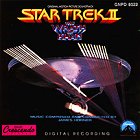 Atlantic Records releases an album of selections from James Horner‘s soundtrack to Star Trek II: The Wrath Of Khan. (The same album will receive a CD re-release from GNP Crescendo Records at a later date.)
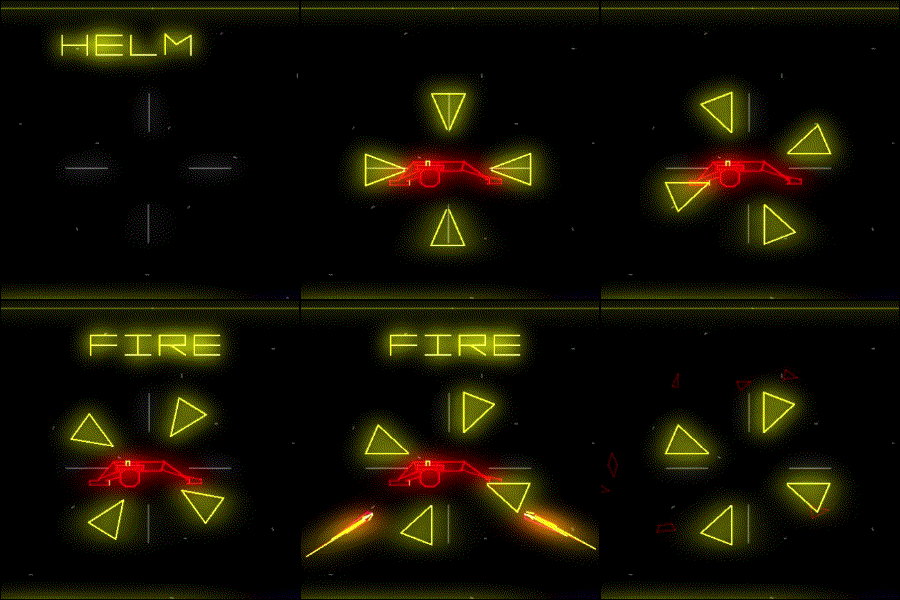 Segaa releases the arcade game Star Trek: Strategic Operations Simulator in American arcades. The vector graphics coin-op, simulating the “tactical views” seen on the Enterprise in the first two Star Trek movies, is the first officially licensed Star Trek video game. It also reflects some corporate synergy: Sega was, at the time, also owned by Paramount Pictures parent company Gulf + Western.
 Atlantic Records releases James Horner‘s soundtrack from Star Trek III: The Search For Spock, including an instrumental “pop version” of the movie’s main theme. (The same album will be given a compact disc release at a later date by GNP Crescendo Records.)
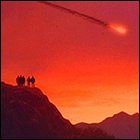 With producer Harve Bennett now firmly in creative control of the movie franchise, Star Trek III: The Search For Spock premieres in theaters, directed by Leonard Nimoy (who, since his character is being searched for, plays only a small role as an actor in the film). The movie is a direct sequel to the events of the previous film, and sets up story developments for the fourth Star Trek movie, effectively serving as the middle chapter of a trilogy. The movie’s success confirms Nimoy’s graduation from actor to director.
 Varese Sarabande releases an album of re-recorded orchestral suites recreating the music from the 1960s TV series Star Trek, arranged and conducted by original series composer Fred Steiner and performed by the Royal Philharmonic Orchestra.
 GNP Crescendo releases the first-ever CD of Alexander Courage’s music from the original Star Trek television series, presenting selections from the two pilot episodes, The Cage and Where No Man Has Gone Before. This is the first time that music from the original series has been presented, other than countless recordings and remakes of the main title theme.
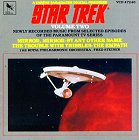 Varese Sarabande releases the second volume of re-recorded orchestral suites recreating the music from the 1960s TV series Star Trek, arranged and conducted by original series composer Fred Steiner and performed by the Royal Philharmonic Orchestra.
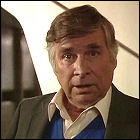 Four days after a party at Paramount Pictures to celebrate the 20th anniversary of the original Star Trek, the studio sends Trek creator Gene Roddenberry a memo detailing its plans to restart Star Trek on television with a new cast. The studio is aware that a new Trek series has an even chance of succeeding or failing, and challenges Roddenberry to come up with a better idea than the studio’s in-house concept of putting the movie Enterprise in the hands of a team of Starfleet cadets (a concept Roddenberry greatly dislikes). Roddenberry pitches a different concept back to the studio, involving the crew of a starship Enterprise set further in the future than Captain Kirk’s era. With the pitch approved and a new contract in hand, Roddenberry begins recruiting fellow behind-the-scenes veterans of the original series to refine his ideas.
 Paramount’s television division makes an announcement that sparks geek wars for years to come: Star Trek is coming back to television, but with a new cast and set in a different century, as Star Trek: The Next Generation. With Gene Roddenberry at the wheel once more, the new show – which will circumvent the network system completely by being sold directly to stations in syndication – will be set further in the future than the original series, with a new Enterprise and a budget of over one million dollars per episode. Paramount has decided on the risky syndication route after overtures to the three major networks provoke little enthusiasm; the new Fox network is more interested, but is unwilling to risk money on an order of more than a dozen episodes.
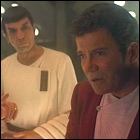 Directed by Leonard Nimoy, who also has a hand in development of the story, Star Trek IV: The Voyage Home premieres in theaters. Directly following up on events in the prior two movies, Star Trek IV closes out a trilogy, and by bringing the action to 20th century Earth, complete with fish-out-of-water comedy, becomes a solid hit with an embedded ecological message. The movie’s success caps off a year-long celebration of Star Trek’s 20th anniversary
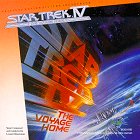 MCA Records releases Leonard Rosenman’s soundtrack from the movie Star Trek IV: The Voyage Home, featuring tracks by the Yellowjackets.
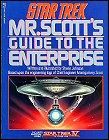 Pocket Books releases the in-universe reference book Star Trek: Mr. Scott’s Guide To The Enterprise, with text and illustrations by Lora Johnson. The book is a guide to the fictional lore and workings of the movie-era version of the starship Enterprise.
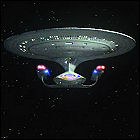 The national syndication window opens for the two-hour premiere of Star Trek: The Next Generation, Encounter At Farpoint. Written by Trek creator Gene Roddenberry and original series story editor D.C. Fontana, this episode introduces the fan favorite nemesis Q, as played by John de Lancie. Though it’s not tied to any network, some of the stations carrying TNG in syndication – including major-market stations – air TNG in prime-time in place of their usual network programming.
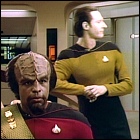 The week-long national syndication window opens for the second episode of Star Trek: The Next Generation. This episode becomes an immediate lightning rod of criticism since it almost duplicates a popular episode of the original Star Trek (and even points this out in the course of its story). Data also shows Lt. Yar that he is fully functional.
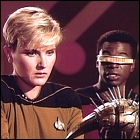 The week-long national syndication window opens for the third episode of Star Trek: The Next Generation. This is the only episode of any of the Star Trek spinoffs whose soundtrack was composed by a veteran of the original series’ music department (in this case, composer Fred Steiner).
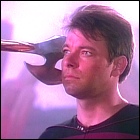 The week-long national syndication window opens for the fourth episode of Star Trek: The Next Generation. This is the first episode featuring a new alien race devised by Gene Roddenberry, the scheming, money-hungry Ferengi.
 The week-long national syndication window opens for the fifth episode of Star Trek: The Next Generation, Where No One Has Gone Before. This is the first episode featuring the Traveler, as well as Wesley Crusher’s ascension to acting ensign.
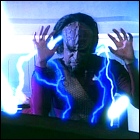 The week-long national syndication window opens for the sixth episode of Star Trek: The Next Generation. This is the first episode after Encounter At Farpoint to feature future Star Trek: Deep Space Nine regular Colm Meaney as a yet-to-be-named crewman.