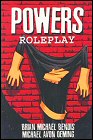

Powers: Roleplay

Powers: RoleplayOrder this bookStory: A group of college students impersonate Powers in a live action role playing game, breaking the laws that prohibit non-Powers from wearing costumes. When several of them are murdered, Walker and Pilgrim get the case. The trail leads to a long inactive former associate of suspected criminal Johnny Stompinato. The detectives’ efforts to enlist Stompinato’s cooperation go seriously awry, threatening the investigation and Pilgrim’s career.

Review: The second Powers collection is an interesting follow-up to Who Killed Retro Girl? The aftereffects of that story still clearly linger over the entire city, and the roleplaying imitators open up an interesting perspective on how regular humans make sense of a world with superhuman beings floating around. One of my favorite exchanges in the series actually covers that topic and takes place in this story, as Walker and Pilgrim banter about the nature of time and subjective sensory perception. But Bendis makes it a lot more entertaining than that last sentence might suggest.
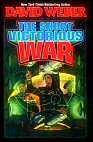
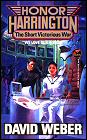
The Short Victorious War

The Short Victorious War (new cover)The Short Victorious War (original cover)Order this bookStory: Having recovered from the serious injures she sustained in the battle to protect Grayson, Captain Honor Harrington is assigned to her new command – the battlecruiser Nike, fresh out of Manticore’s shipyards and ready to take its place at the head of the fleet. Nike’s shakedown cruise is a little bumpy, however, delaying the ship’s participation in fleet wargames near the remote Hancock Station outpost – and giving Honor time to become friendly with Captain Paul Tankersley, overseeing Nike’s repairs at Hancock. But the wargames are in danger of becoming the real thing as the signs begin to point toward a sudden escalation in aggressive territorial moves from Manticore’s enemy, the People’s Republic of Haven. Eager to quell civil unrest within its own empire, the Havenite military plans a bold strategy to start a war with Manticore – intending all along to make it look like Manticore is the attacker.

Review: Whereas the first two books in the Honor Harrington series are more or less self-contained, with the universe’s backstory and a few tendrils connecting them, “The Short Victorious War” is clearly setting us up for big stuff down the road, while also giving the reader more than enough action to stay awake for. But this book shakes things up where storytelling in the Honorverse is concerned in other ways.

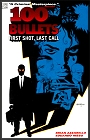
100 Bullets: First Shot, Last Call

First Shot, Last CallOrder this bookStory: Three stories are connected by the presence of the mysterious Agent Graves. Graves approaches a person to whom some injustice has been committed and gives him or her a briefcase. The briefcase contains a photo of the person who committed the injustice, evidence against that person, information as to their whereabouts, a gun – and one hundred completely untraceable bullets. No law enforcement agency can touch the owner of that gun and those bullets – from that moment on, they are above the law, free to determine how they will use the power and information they have been given.

Review: The premise of this series is unbelievably cool, and Azzarello does not disappoint in exploring it. His plotting is very strong, with layers of intrigue, plotting and betrayal. You don’t find out a lot about Agent Graves, or the organization that he works for, in this book, but there are hints of at least subplots that will connect the tales of the different recipients of the gun.

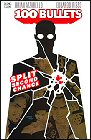
100 Bullets: Split Second Chance

Split Second ChanceOrder this bookStory: Agent Graves continues to offer victims of injustice an opportunity for retribution in the form of a gun and 100 untraceable bullets. He must also deal with the Trust, a group that has played a heavy and apparently corrupt role in American history and has already tried to kill Graves once. His recent actions have alerted the Trust to their failure, and they’re ready to resume the hunt. But Graves is not without allies of his own.

Review: This second collection of 100 Bullets is even stronger than the first. Azzarello could quite easily mine his premise for years, giving us disconnected short story arcs that explore different people’s response to Graves’ gift. But “Split Second Chance” makes clear that this is not merely an anthology title; the titular gift is only one element of an overarching plot that should draw in fans of conspiracy and espionage stories. Graves’ obsession with justice and retribution is a personal quest; his job appears to be as leader of a group of operatives known as the Minutemen. The Minutemen, in turn, are somehow connected to the Trust. Here Graves begins putting his own pieces into play – for exactly what purpose isn’t yet clear. And somewhere in all of this figures Mr. Shepherd, who may be working with or against Graves.

100 Bullets: Hang Up on the Hang Low

Hang Up on the Hang LowOrder this bookStory: “Loop” Hughes is a young black man growing up in the inner neighborhoods of Philadelphia, living on the outskirts of gang life and trying not to get drawn in. Agent Graves shows up with his attache case of untraceable bullets, puts Loop on the trail of his father Curtis – a man Loop has never known – and gives him a choice: he can get revenge, or he can, at last, try to build a relationship with the man. Loop chooses the latter, which draws him further into the criminal world; Curtis Hughes is an enforcer for a local loan shark, and soon the son is following his father on his rounds, with results that are both better than Loop could have hoped for and straight from his worst fears.

Review: If you’re expecting the third 100 Bullets collection to shed more light on the Minutemen, the Trust, and the assorted conspiracies hinted at in “Split Second Chance,” you will be disappointed. “Hang Up On The Hang Low” collects a single story arc that initially seems disconnected from the overall plot of the series, and even when Azzarello shows that this is decidedly not the case, there are no answers to be found here – only more questions.

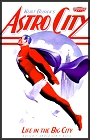
Astro City: Life in the Big City

Life in the Big CityOrder this bookStory: This collection of standalone stories illuminates different corners of the fictional universe of Astro City. Among the stories: The city’s leading superhero tries to be everywhere at once, and berates himself for every wasted second as he longs for just a moment of his own. A small-time hood learns a hero’s secret identity, and tries to figure out how to profit from the knowledge. A beat reporter gets some advice from his editor on his first day on the job. A young woman tries to balance the demands of her family with her own hopes and desires.

Review: There are many smart people in comics who argue that the superhero genre is totally spent, stuck recycling old stories and old archetypes and doomed to tell superficial power fantasies, no matter how much the hot new creators of the moment try to dress them up.

Kurt Busiek’s Astro City proves these critics wrong. In Astro City, Busiek, Anderson and Ross have created a wonderfully rich setting, a city with a history and character of its own that feels as real and as diverse as any American city. The only difference is that Astro City is full of superpowered individuals, and has been for at least 75 years. Some of these characters are allegories for established heroes published by DC and Marvel – analogues for Superman, Wonder Woman and the Fantastic Four (among others) appear in this volume. Others are wholly original creations, allowing Busiek to take various archetypes in new directions.

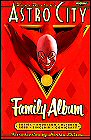
Astro City: Family Album

Family AlbumOrder this bookStory: Another set of short stories from Astro City, including two Eisner Award winners. In this volume: A single father brings his two daughters across the country to rebuild their lives in the City. A ten-year-old superheroine tries to escape to a normal life. A thief gets away with the perfect crime – perhaps too perfect. The arrival of would-be heroes from the future forces a present-day inventor and hero to reassess his career. Willed to life by an audience’s belief, a cartoon star finds fame and fortune all too fleeting.

Review: As the American comics industry shifts from a periodical market to a book market, some readers have decried a tendency to “write for the trade,” padding out stories to four, six, or more chapters in order to make a complete volume. This collection of Kurt Busiek’s Astro City proves that collections of shorter stories, connected only by theme or setting, can be more than worthwhile additions to the bookshelf.

Astro City: Confession

ConfessionOrder this bookStory: A young orphan named Brian Kinney takes a bus from the country to Astro City, determined to make a mark in the world and earn the respect of those around him – something he feels his father failed to do. He works at the periphery of the hero scene, working as a busboy at establishments that cater to the superpowered community. He catches the eye of the Confessor, a nighttime vigilante who agrees to train him, and Brian soon assumed the role of Altar Boy. It’s not the best of times to be a hero, however. A series of unsolved murders in the Shadow Hill section of town has the citizens on edge, and a number of heroes have had run-ins with the media. When the mayor demands that heroes register with the government, he fans the anti-hero sentiment and eventually declares all costumed activity illegal. Brian finds his attention divided between many mysteries, chief among them being: Is there a larger threat looming behind these events? Who is the Confessor, really? Can Brian trust him? And why is he trying so hard to be a hero in the first place?

Review: This six-chapter arc is probably Busiek’s crowning achievement to date on the Astro City series. The complex plot builds well, with several mysteries raised and solved along the way, and readers of the two previous volumes will note payoffs for what may have seemed throwaway events in those earlier short stories. As always, Busiek’s focus in this series is on character, and Brian Kinney/Altar Boy is a good one – a determined, talented and truly heroic young man who might be doing the right things for the wrong reasons. Brian’s dead father, a doctor who offered his services willingly without much thought of his own financial well-being, looms over the story; Brian feels his father let himself appear weak and be taken advantage of, and Brian is determined not to let the same thing happen to him. The son trying to avoid and overcome the mistakes of the father is certainly not a novel theme, but it’s so used so often because it works, and it works because it’s so often true. Certainly, I have no trouble relating to such stories when told by a writer as skilled as Busiek.

Invisibles Book 1: Say You Want a Revolution

Say You Want a RevolutionOrder this bookStory: The Invisibles are a secret society that has fought for centuries to free humankind from the mental shackles imposed on it by forces of authority and control. The enemy is fond of torture and lobotomies to keep us in line; where that doesn’t work, magic and microwave transmissions will have to do. The turn of the millennium draws closer, and as King Mob, the leader of one Invisibles cell, says, “We’re in the final furlong of a race between a never-ending global party and a world that looks like Auschwitz.” To help turn the tide of that battle, King Mob’s cell recruits a juvenile delinquent as its newest member; after he spends some time being trained (without realizing he’s being trained), the group uses magic to project their psyches back in time to revolution-era France and ask the Marquis de Sade if he wouldn’t mind popping back with them to the twentieth century.

Review: “Say You Want a Revolution,” the first Invisibles collection, is one of the most truly creative pieces of writing I’ve ever seen. Grant Morrison packs so many ideas in here that there’s almost a palpable sense of your brain going places it’s never gone before – it’s easy to get swept up in the exhilarating rush from one idea to the next and then back again, and the sense of never quite being sure when the rug’s going to get pulled out from under you.

Invisibles Book 2: Apocalipstick

ApocalipstickOrder this bookStory: King Mob’s Invisibles cell makes its way back to the 20th Century after its retrieval of the Marquis de Sade. Their opponents have moved in for the kill, and a maimed Jack Frost decides to make a run for it on his own. The conspiracy is on the move elsewhere, as a British aristocrat uses the downtrodden as hunting quarry and Chicago corporate leaders get their kicks from killing and re-animating inner-city crack users. Lord Fanny and King Mob’s search for Jack leads them to trouble, and gives Fanny reason to recall her journey from Central America.

Review: In many ways, the three chapters between Jack’s departure and his companions’ search for him are the emotional and thematic core of “Apocalipstick,” even if the “main” characters never appear. It’s very easy to get caught up in all the magic and madness of the Invisibles’ fight against the conspiracy and forget the purpose of that fight, the effort to free the human spirit. The interlude chapters explore the chains that bind that spirit – exploitation of minorities and the poor by the corporate elite, the corrosive effects of fear and hate and ignorance, the struggles of everyday people to achieve their dreams, and the crushing weight of their failure to do so. The best story of the three may be the one with no supernatural elements at all, in which we see a man’s life flash before his eyes through a series of disjointed flashbacks. The layout of this story is very effective, as scenes and fragments blend together before the story reaches its climax and they come full circle. It’s the story of a man who wanted more from life than what he got, and probably deserved more… the injustice resonates, and as a bonus, it reinforces why we want the Invisibles to win. A world this unjust is a world that needs to be remade.

Invisibles Book 3: Entropy in the UK

Entropy in the UKOrder this bookStory: Sir Miles’ forces have captured King Mob and Lord Fanny, and Dane MacGowan is hitchhiking his way to Liverpool. Ragged Robin and Boy enlist the aid of Jack Crow and the Invisible agent known as Mister Six in an effort to find and rescue all three. Separate story threads gradually converge for one climactic fight to save the universe.

Review: The book’s opening arc, also entitled Entropy in the UK, is probably my favorite. King Mob is dying from a gunshot wound, and Sir Miles intends to take advantage of the opportunity. Miles doesn’t want to torture information out of King Mob – he wants to break Mob’s will, get him to “voluntarily” give up information about the Invisibles. In a war of ideology, that’s really the only victory worth winning. The battle of wills showcases comics’ unique potential as a medium; Phil Jimenez’s beautiful pencils display the dazzling, chaotic landscape of King Mob’s mind and thoughts, while the narration and script lay out the dizzying ideas and mantras of the two combatants. Text and pictures convey the information better than either could alone. We jump from the interrogation room, to flashbacks of King Mob’s training, to passages from novels that Mob uses as psychic defenses, to Miles’ exploration of Mob’s thought structures. It’s gorgeous, gorgeous stuff, full of adrenaline and enthusiasm.

Planetary Book 1: All Over the World and Other Stories

All Over the WorldOrder this bookStory: Elijah Snow is almost a hundred years old, a witness to many of the strange and awesome events that make up the secret history of the twentieth century. Now he spends his time hiding out in the middle of nowhere, until a woman named Jakita Wagner offers him a million dollars a year to join Planetary, a group of ‘mystery archaeologists’ in need of Elijah’s experience. As part of the Planetary field team, Elijah investigates gateways to alternate Earths, mutant Japanese monsters, the vengeful spirit of a Hong Kong cop, and more before turning his attention to Planetary’s opposite number, the Four, who have been manipulating the world for their own ends for decades…and who seem to know more about Elijah than Elijah himself.

Review: Planetary is one of the most addicting stories I’ve ever read, and one of the few serialized comics I make a point of buying on an issue-by-issue basis anymore. The series is not just a great adventure story with terrific characters, outstanding dialogue and stunning artwork. It’s also a commentary and exploration of the twentieth century’s adventure fiction, including comics, monster movies, pulp novels and more.

Planetary Book 2: The Fourth Man

The Fourth ManOrder this bookStory: Ever since he joined the Planetary organization, Elijah Snow has helped uncover the secret history of the world – but there a few private mysteries he’d like to solve. What is Planetary’s real mission? Why do others seem to know more about his life than he does? And who is the Fourth Man that bankrolls and orchestrates the team’s adventures? Elijah finally tracks down the truth – and when he does, the rules of the game change completely.

Review: Remember how cool I said “Planetary: All Over The World” is? There’s lots more fun to be had in “The Fourth Man,” as pieces fall into place and the book’s central conflict comes into view. Ellis does his usual fine job with characterization and dialogue this time out, using flashbacks to explore the history of the Planetary field team (including Elijah’s predecessor, Ambrose Chase) and their relationships with each other. There are the bitter, sarcastic one-liners (no one does cantankerous like Warren Ellis) but also a lot of warmth. There’s one shot of Ambrose holding up his daughter in which he says, “World, this is my daughter. I want you two to be good to each other. Because it’s a strange world out there, and you both need all the help you can get.” It’s a great line, one that sums up the wonder and optimism that are a part of this world, regardless of the craziness of its more twisted corners.

Blake’s 7: The Programme Guide

Order this bookStory: Tony Attwood provides a concise, episode-by-episode breakdown of the BBC’s most underrated (and underbudgeted) science fiction series, Blake’s 7 (1978-1981). In addition to the customary cast listings and plot synopses, there are also brief interviews with cast members Paul Darrow, Michael Keating and Peter Tuddenham, script editor Chris Boucher and producer Vere Lorrimer. The late Terry Nation, creator of the series, also wrote the book’s original 1982 foreword about the genesis of his ideas.

Review: Still the only BBC-endorsed official guide to Blake’s 7, The Programme Guide is handy not only for its chronicle of the show’s 52 produced episodes, but its very brief interviews with the show’s cast and crew.

Blake’s 7: Their First Adventure

Book titleOrder this bookStory: When his government-enforced brainwashing begins to wear off, former resistance leader Roj Blake is convicted for a crime he didn’t commit and sentenced to life on a penal planet called Cygnus Alpha. During the prison ship voyage, Blake meets several other prisoners with no love for the totalitarian Federation: expert computer hacker Avon, hard-bitten smuggler Jenna, good-hearted (but, alas, also weak-hearted) thief Vila, and a gentle giant named Gan who is prevented from using deadly force by a violence-inhibiting brain implant (also courtesy of the Federation legal system). Combining their talents, Blake and the others turn the tables on their captors, seizing control of the prison ship, but their hijacking attempt doesn’t last long. Still en route to Cygnus Alpha, the ship encounters a larger craft of unknown alien origins, and the prison ship skipper loses several men trying to board and salvage the alien vessel. He then decides to use Blake and the other prisoners instead, but they survive the initial onslaught of the alien ship’s auto-defense systems, undock from the prison ship, and make a run for it. Though Avon and Jenna are skeptical, Blake insists on using their new vehicle – dubbed the Liberator – to go to Cygnus Alpha and free more of the prisoners.

Review: A light-speed adaptation of the first three episodes of the BBC’s cult TV classic Blake’s 7, “Blake’s 7: Their First Adventure” rockets through three hour-long scripts with all the literary verve of an early Doctor Who novelization by Terrance Dicks. (That is to say, little if anything is added to the existing text of the scripts.) In fact, the Doctor Who novelization comparison is apt since, for some baffling reason, the trio of Trevor Hoyle’s Blake’s 7 novelizations seem to have been aimed squarely at a younger audience.

Babylon 5: The Coming Of Shadows

Order this bookStory: This book chronicles the making of the second season of J. Michael Straczynski’s groundbreaking SFTV series Babylon 5, which was also the last season to feature scripts written by anyone other than Straczynski for over two years. Interviews with actors, writers, directors and JMS himself run throughout the book, with a special section on how the show managed to stay on budget and a great deal of focus on the arrival of new leading man Bruce Boxleitner.

Review: One of the things I’ve always been curious about when it comes to Babylon 5 is: when did J. Michael Straczynski receive the divine inspiration (or head trauma) that told him that he needed to write damn near every episode for the rest of the show’s run? And whatever happened to story editor Larry DiTillio, who was Straczynski’s right-hand man in the Captain Power days but disappeared after B5’s second year on the air?

Babylon 5: Point Of No Return

Order this bookStory: Leaning heavily on interviews with series creator J. Michael Straczynski and the main cast members, Jane Killick continues her analysis of Babylon 5, this time covering the show’s much-loved third season. Topics of interest include the tightening of the show’s story arc as the Shadow War looms, how the plot threads in War Without End might have been resolved if Bruce Boxleitner hadn’t taken over as the show’s leading actor the previous year, and the increasing reliance on computer generated visuals.

Review: If I wish one thing could’ve been different about Jane Killick’s excellent and informative series of Babylon 5: Season By Season books, it would’ve been devoting less space to episode guides (which can be found elsewhere) and more space to talking to the cast and crew.

Babylon 5: The Wheel of Fire

Order this bookStory: In what is apparently the last of Jane Killick’s behind-the-scenes books about Babylon 5, the author examines the making of the show’s final season, beginning with The Deconstruction of Falling Stars, which technically capped off season four despite being produced by TNT. The guide then tackles everything from No Compromises through Sleeping In Light, though I admit to being very disappointed with the final episode’s coverage – it starts out with “What hasn’t already been said about this episode?” as an almost up-front announcement that you’re not going to get much out of this section. The Babylon 5 magazine coverage of Sleeping, and – quite frankly – Joe Nazarro’s liner note insert in the episode’s soundtrack CD, were more informative than this.

Review: What really makes Killick’s book isn’t necessarily her material, but the reminiscences of the actors, and some of season five’s key players – namely Tracy Scoggins and Robin Atkin Downes (Byron) – haven’t talked much about their B5 work in the past, so their comments here, though sparse, are refreshing. On the flipside, most of J. Michael Straczynski’s quotes are lifted from his Usenet postings – but unlike Hal Schuster (author of unauthorized – and, to be completely candid, unauthored – guides to nearly everything), I’m sure Killick had JMS’ permission to reprint these.

I Am Spock

Order this bookStory: Leonard Nimoy, who certainly needs no introduction, backtracks to his earliest days as an actor, the series of coincidences and connections that led to his most famous role, and the continuiation of that role – and his new role as a prominent director – on the big screen.

Review: In the 1970s, Leonard Nimoy’s first autobigraphical book, I Am Not Spock, aroused equal parts curiosity and ire among the burgeoning Star Trek fandom that was rising during the show’s post-cancellation syndicated run. Nimoy backpedals a lot in the early part of this book, trying to explain that, at the time, he was desperately trying to outrun his famous character’s shadow and prove that he was capable of many other things creatively.

Star Trek Movie Memories

Order this bookStory: Star Trek’s own William Shatner sits in the captain’s chair once more, this time holding court and spinning tales of the lean years after Star Trek’s cancellation, as well as its unexpectedly successful return via the big screen. These are his voyages.

Review: Despite the relative immunity that biographers and/or autobiographical writers seem to have when telling their side of their respective stories, I’m amazed that Shatner didn’t incite so much as a single lawsuit with his first book, “Star Trek Memories”. It was in that volume that Shatner alleged everything from Nichelle Nichols’ now-well-known affair with Trek creator Gene Roddenberry to Grace Lee “Yeoman Rand” Whitney’s various addictions. That a lot of Shatner’s gossip turned out to be at least partly true in the end was surprising. No doubt his co-stars would’ve had the opportunity to carefully bury these facts when the time came for their own autobiographies.

The City On The Edge Of Forever

Order this bookStory: Harlan Ellison’s complete original script, with revised drafts, for the legendary Star Trek episode is presented in its entirety, along with lengthy essays by Harlan on the story’s creation and the rewriting of its already storied history by various other parties, including Star Trek creator Gene Roddenberry.

Review: This volume reprints the original draft, and several subsequent revisions, of Harlan Ellison’s multiple-award-winning, career-defining, critically acclaimed, and seemingly life-ruining Star Trek script, The City On The Edge Of Forever. A lengthy essay opens the book with the full background of the episode’s birth from Harlan’s own inimitable point of view. Numerous people have taken credit for City‘s success over the years, and just as many have been more than happy to lay the blame for any perceived faults in the story at Harlan’s feet. In this book, Harlan lashes out at all of them. Every last one of them. In a way, maybe “lashes out” is too gentle – he positively breathes fire at many of his former colleagues.

A Rock And A Hard Place

Order this bookStory: The same Starfleet officer exchange program that once put Riker into a life-threatening situation aboard a Klingon vessel now sends the Enterprise’s first officer to the icy planet of Paradise, a remote outpost whose population of colonists are trying to tame its ecosphere. Taking Riker’s place on the Enterprise is Commander Quentin Stone, an officer with a colorful history and a legendary unstable temper. Somehow, Stone has stayed in Starfleet despite this trait which has endangered his career and others’ lives, but his career may not survive a tour with the more rule-bound Picard in command. And on Paradise, unnaturally fierce creatures, an inhospitable environment, and an old friend’s teenage daughter may be the death of Will Riker.

Review: I’ve probably mentioned it once or twice before, but I make little time these days for the Star Trek fiction publishing program. Too many of the novels I’ve read under the imprint of any of the Trek series have turned out to be merciless stinkers, though there was once a time when I did go out of my way to read Peter David’s books. And though many a fan would probably disagree mightily, I still think “A Rock And A Hard Place” may be the best Trek novel ever to hit wood pulp. It captures the flavor of the series and its characters, and it brings a rather wild guest character into the mix to challenge them. (And if you spot a wee bit of a resemblance between Quentin Stone and Mackenzie Calhoun, the captain of David’s later Star Trek: New Frontiers novels, I seriously doubt that it’s a coincidence.)

Star Trek: Ships Of The Line

Order this bookStory: The computer-generated, hand-painted and photographed images that have graced the numerous Star Trek: Ships Of The Line calendars through the years are collected in a single, large-format volume, each piece accompanied by a descriptive text placing the artwork in the context of the larger Star Trek universe.

Review: As much as I try to avoid reviewing what are essentially “picture books” here, this one was interesting enough to grab my attention. The artwork is impeccable. Featured here are the first full printed rendering of the far-future Enterprise NCC 1701-J, though the prize among the recent works may go to 3-D artist Gabriel Koerner’s impressive redesign of the original 1701, which stretches design elements of past (NX-01) and future (24th century) Enterprises together over the same basic silhouette of the original. Andrew Probert, designer of NCC-1701-D, gives us our first good look at the oft-mentioned but never-seen 1701-D Captain’s Yacht. And there’s a curious picture which ties the fate of the Columbia (NX-02, sister ship of Jonathan Archer’s Enterprise) to the era of the Dominion War (!). Each picture’s accompanying slice of text hints at a bigger story yet untold; few of the pictures attempt to visually “retell” existing stories. I like that – we have the HD remastered episodes of the original TV series for that. Most of the works in this book tell their own stories.

In Enemy Hands

In Enemy HandsOrder this bookStory: Promoted to Commodore after helping to turn the Manticoran Alliance’s fortunes around in the Silesian Confederacy, Honor Harrington is no longer in command of a single ship, but an group of ships dispatched to routine convoy duty in disputed space. When the People’s Republic of Haven, whose revolutionary government has just barely survived a mass assassination attempt, moves to take back a system conquered by Manticore, Honor and some of her most loyal crewmates past and present find themselves in the wrong place, at the wrong time, and in custody. But despite the change of government at Haven, Honor’s “crimes” at Basilisk Station have not been forgotten, and she and Nimitz are sentenced to death.

Review: A serious shake-up after some of the previous Honor Harrington books settled into a nice pat formula, “In Enemy Hands” puts familiar characters on unfamiliar ground, and puts a fair few of them out of commission, and it does it without coming across as too cliched. And clearly author David Weber is setting up strands of plot for future consumption, and this time I can’t wait to see where they’ll lead – or how one of the series’ few honest-to-God cliffhangers will be resolved.

The Hitchhiker’s Guide To The Galaxy

Order this bookStory: A seemingly typical Thursday throws Englishman Arthur Dent for a loop as he witnesses the destruction, in rapid succession, of his house and then the entire world. That he witnesses the latter event instead of being caught up in it is solely thanks to the intervention of his quirky friend Ford Prefect, who turns out to be an alien in disguise, researching Earth for a publication known as the Hitchhiker’s Guide To The Galaxy. After escaping Earth’s demise, Ford and a dazed Arthur wind up aboard the stolen starship Heart Of Gold, whose captain, the two-headed Zaphod Beeblebrox, is out of both of his minds. Zaphod, traveling with Trillian (the only other surviving human), is on a quest to find the legendary planet of Magrathea, hoping to plunder its wealth. What he doesn’t anticipate, however, is that the Magratheans might not want their wealth plundered.

Review: I’ve held off on reviewing “The Hitchhiker’s Guide To The Galaxy” for far too long, mainly because it’s the incarnation of the story that most fans are the most familiar with. I’d rather educate them about the radio series (which inspired the books and every other version of the story that came later), or the computer game, or some other obscure versions of the story. But two things inspired me to go back, give the book a re-read, and report my findings: the fact that a big-budget, big-screen version of “Hitchhiker’s Guide” is on the way, and the recent appearance of a Cliff Notes-style study guide to this first novel in the series.

A study guide? To the “Hitchhiker’s Guide”? Almighty Zarquon, but I’m getting old.

The Restaurant At The End Of The Universe

The Restaurant At The End Of The UniverseOrder this bookStory: Having escaped from the planet Magrathea by the skin of their teeth, Arthur Dent, Ford Prefect, Zaphod Beeblebrox and Trillian – with paranoid android Marvin in tow – are once again in deep trouble, with the Vogons hot on the trail of the Heart of Gold. Normally, the ship’s extensive computer banks could come up with a tactical solution to all this, but unfortunately, they’re all occupied by a priority instruction: Arthur wants a cup of real tea, not synthesized tea. Zaphod has to rely on help from beyond the grave, which leads him on a terrifying adventure to Frogstar, the most evil planet in the galaxy. Surviving this encounter with nothing but his natural cool, Zaphod rejoins his comrades for a quick bite at the Restaurant at the End of the Universe. And that’s where the trouble really begins.

Review: So there’s good news and bad news.

And then there’s trivia. “The Restaurant At The End Of The Universe”, based loosely on material from episodes five through twelve of Douglas Adams’ phenomenally successful BBC radio series, was the novel that put Adams on the U.S. bestseller lists (though, for some unknown reason, didn’t fare quite as well in Britain). However, I think I may know why the British audience didn’t embrace it quite so wholeheartedly. And I’ll get to that point in due course.

Life, The Universe, And Everything

Order this bookStory: Arthur Dent and Ford Prefect are rescued from years of mind-numbing isolation on prehistoric Earth by a freak time warp and a hovering, but nonetheless elegant, sofa. They wind up on Earth, at Lord’s Cricket Ground, a mere two days before the planet will be annihilated by the Vogons, but here they witness an alien incursion of another kind: killer robots from Krikkit descend upon the field to retrieve one piece of a key that could unlock their ability to destroy the entire known universe. Slartibartfast appears in his own unlikely spacecraft, the Bistromath, to whisk Ford and Arthur away on a desperate mission to stop the Krikkit robots from wiping out everything. It is a mission in which they will utterly fail.

Review: For many years, I was convinced that – aside from “Mostly Harmless” – “Life, The Universe, And Everything “was my least favorite. I reread it recently during a bit of a Douglas Adams binge, and quickly discovered that – aside from “So Long And Thanks For All The Fish” – it’s actually my second favorite.

The Original Hitchhiker Radio Scripts

Order this bookStory: The original broadcast adventures of Arthur Dent, Ford Prefect, Zaphod Beeblebrox, Trillian, and quite a few characters who didn’t make it into the novels based on the series.

Review: This recent “10th anniversary” reprint of the complete radio scripts of the BBC’s Hitchhiker’s Guide to the Galaxy radio shows – which, for those who didn’t already know, predate the books, TV show and Infocom game, by the way – is much more of what I’d like from a script book. The scripts aren’t interrupted by the commentary; the commentary is instead placed at the end of each half-hour script, and includes such amazingly obscure and useful information as what music was licensed for use in each program, how casting decisions were made, and the origins of situations, characters, and so on.

The Honor Of The Queen

The Honor Of The QueenThe Honor Of The QueenOrder this bookStory: With her exploits at Basilisk Station having become the stuff of Royal Manticoran Navy legend, Captain Honor Harrington finds her next challenge a bit more daunting. With Manticore’s enemies, the People’s Republic of Haven, trying to gain a foothold in a star system close to Manticore space, a fleet – including Honor’s new HMS Fearless, a massive battlecruiser named in honor of her first command – is dispatched to the planet Grayson to open diplomatic relations and gain a foothold for Manticore as well. The somewhat backward Grayson is primitive both technologically and socially, with its patriarchal society regarding women as the property of men – and when the Graysons see a woman in command of the Manticoran fleet arriving at their planet, the reactions range from curious to openly hostile. Worse yet, the Graysons’ sworn enemies, the government of the planet Masada, are the same, only they hold to a fanatical desire to wipe Grayson off the star charts – and they’ve found a willing ally and weapons supplier in the People’s Republic of Haven. Honor is tasked with a mission to ensure a treaty is signed between Manticore and Grayson, but before long she’s not sure if she’s welcome, or safe, among her new allies.

Review: The slow-building sequel to David Weber’s first Honor Harrington book, “The Honor Of The Queen” shows an evolving universe, evolving characters and an evolving writing style. Compared to “On Basilisk Station”, this book suffers from much less of the momentum-killing tendency to drop 16 tons of exposition and technical backstory into the middle of a gripping battle scene. When things happen in “The Honor Of The Queen”, Weber wisely allows the action to thunder down the tracks on its own steam; the result is a breathless page-turner.

Star Wars – The New Jedi Order: Vector Prime

Order this bookStory: The plotline of “Vector Prime” is very standard sci-fi fodder, not even remotely original. Retreading the plots of such venerable SF franchises as Star Trek: The Next Generation (Conspiracy) and Blake’s 7 (Star One), the book involves an invasion of the galaxy by hostile aliens from the nearest neighboring galaxy. They’ve already slipped a few agents into our heroes’ galaxy to make sure the alarm doesn’t go up, and by the time Luke, Han, Leia and the others find out about the invasion, it’s almost too late.

Review: Sound familiar? It should. Virtually the only difference between this story and the above examples – among dozens of others – is that the aliens are invading the galaxy of Tattooine, Endor, Hoth, etc., rather than invading Earth for once. Speaking as a citizen of the planet Earth, I’m relieved about this development, but as a reader, I found the plot hackneyed and all too predictable.