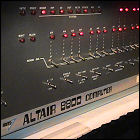
 The January 1975 issue of Popular Electronics Magazine goes on sale days before Christmas 1974, with its cover article heralding the arrival of the MITS Altair 8800 microcomputer. The first open-architecture microcomputer, the Altair is available in kit form or fully assembled, with 4K of RAM built around an Intel 8080 processor. Expecting to sell a few hundred kits, MITS founder Ed Roberts finds himself flooded with so many orders that he has to hire additional workers to start catching up with the backlog of purchases, with the time from order to delivery stretching into months. This is the beginning of the modern computer revolution, with companies other than MITS producing peripherals and software for the Altair. The most notable of these third-party vendors is a newly-formed company called Microsoft – a two-man operation founded by Bill Gates and Paul Allen – which produces a working version of the BASIC language for the Altair.

 The 13th episode of the British comedy series Robert’s Robots airs on ITV licensee Thames Television, starring John Clive (A Clockwork Orange, Yellow Submarine) as eccentric inventor Robert Sommerby and Nigel Pegram as one of his robot creations.
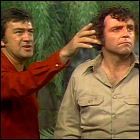
 The 24th episode of The Six Million Dollar Man is broadcast on ABC, starring Lee Majors and Richard Anderson. Farrah Fawcett Majors guest stars.
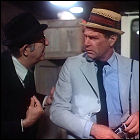 ABC airs the
 The
The 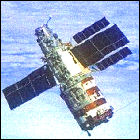 The Soviet Union launches its fourth orbital space station, Salyut 4. Much like Skylab, Salyut 4 is fitted with a solar telescope and X-ray astronomy equipment, which is trained on the X-ray source (and potential black hole) Cygnus X-1 during its flight. Three crews will go on to occupy Salyut 4 before it is deorbited in
  The
The  The
The  The
The  The
The 
 ABC airs the
  The
The  After years of studies into the feasibility of constructing a nationwide disaster alert system, NOAA Weather Radio is officially designated the “sole government operated radio system” for both weather-related disasters and other major emergency announcements (nuclear attacks are specifically mentioned in the declaration from President Ford). This shift in policy toward using the National Weather Service’s radio infrastructure for all potential disaster situations is at least partially inspired by the April 1974 tornado “Super Outbreak” in the midwest. For the first time, Congress approves a budget earmarked specifically for weather radio, topping $3,000,000 for expansion in 1976.
 The
The  ABC airs the
  The
The  The
The 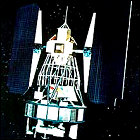 NASA launches its second Landsat satellite, originally named ERTS-2 (Earth Resource Technology Satellite) and still based on the Nimbus experimental weather and Earth-observation satellites. Originally intended to be online for a year, Landsat 2 functions through 1982, carrying a suite of instruments and sensors nearly identical to that of Landsat 1.
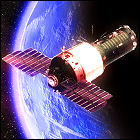 One day before deorbiting the vacant space station for reentry into Earth’s atmosphere, Soviet military space officials fire the anti-aircraft cannon mounted on the exterior of space station Salyut 3 – the first test of spacecraft-to-spacecraft weapons in history (though there is no target on which to test the ammunition rounds). Without a steerable mount, in practice, the entire Salyut 3 station would need to have been pointed at the gun’s target. The station is destroyed by friction upon atmospheric reentry a day later.
 ABC airs the
  The
The  The
The 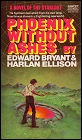 Fawcett publishes the novel
 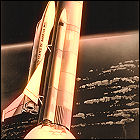 With the final Apollo spacecraft’s flight mere months away, an internal NASA document examining the progress of the Space Shuttle program, approved in