
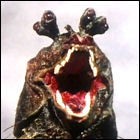
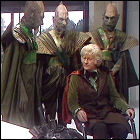
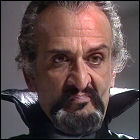
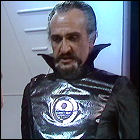
 The 336th episode of Doctor Who airs on BBC1. Jon Pertwee’s “Navy Lark” co-star Tenniel Evans guest stars, and making his first Doctor Who appearance is Ian Marter.
This timeline entry leads to an entry covering this entire Doctor Who serial; there are plans to write new episodic entries in the future. You can support this effort!
Order Earl Green’s book VWORP!1 from theLogBook.com Store
 NBC airs the 17th episode of Leslie Steven’s “spy-fi” series Search, starring Tony Franciosa and Burgess Meredith. Craig Stevens guest stars.
 NBC airs the 20th episode of the supernatural anthology series Circle Of Fear (previously known as Ghost Story). Patty Duke and John Astin star; series producer and horror movie mogul William Castle puts in a cameo appearance.
 The
The  The
The 
 The
The  NBC airs the 41st episode of Night Gallery, an anthology series of original short plays and short story adaptations hosted by Rod Serling. Lesley Ann Warren guest stars in Leonard Nimoy’s directorial debut.
 The
The  The 25th episode of Gerry Anderson’s live-action UFO series airs on ITV, starring Edward Bishop and Michael Billington. Jane Merrow and Patrick Jordan guest star in the curiously long-delayed continuation of the series.
 The
The 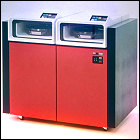 IBM introduces the Model 3340 hard disk drive system for its System/370 mainframe computers. Housed in a large casing similar to a combined washer and dryer, this is the birth of modern hard disk technology, with read and write heads integral to the drive itself rather than being mounted on an arm which reaches into the drive casing. The 3340’s removable modules, each containing drive platters and the read/write heads, can be swapped out with other modules containing other drives. IBM ships the 3340 with two maximum storage capacities: 35 megabytes or 70 megabytes; the unit is internally called a Winchester hard drive, a case of a code name that sticks well beyond development. The 3340 is available through 1984.
 NBC airs the
 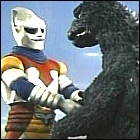 Toho releases
  The
The  CBS premieres the made-for-TV movie
 The
The 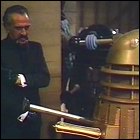 The
The 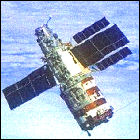 The Soviet Union launches a second space station, and the first station designed exclusively for military tasks in orbit. Salyut 2 is the first station to use the Almaz military space station design devised in the 1960s as a response to the US Air Force’s never-flown Manned Orbiting Laboratory. Within two weeks, however, technical difficulties take their toll: Salyut 2 begins to tumble out of control, and its crew compartment depressurizes. (The redesigned Soyuz vehicle is not ready to fly yet, so no crew ever visits Salyut 2.) The second Soviet space station burns up in the atmosphere less than two months after launch.
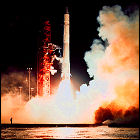 The unmanned space probe Pioneer 11 is launched on a course that will be one of the first real tests of the
  The
The  The
The 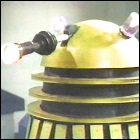 The
The