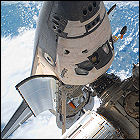
 Space Shuttle Atlantis lifts off on the 132nd shuttle flight, a 12-day resupply and maintenance mission to the International Space Station. A “mini research module” built by the Russian space agency is attached to the station, along with cargo and supplies. Upgrades to the station’s solar power arrays are conducted during spacewalks. Aboard Atlantis for her last planned flight (an additional mission will later be scheduled for Atlantis in 2011) are Commander Ken Ham, Pilot Tony Antonelli, and mission specialists Garrett Reisman, Michael Good, Piers Sellers and Steve Bowen. This is the last shuttle flight for over six months.
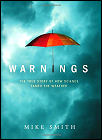 Greenleaf publishes Mike Smith’s book Warnings: The True Story Of How Science Tamed The Weather, serving both as a history of severe weather forecasting in the U.S. and the evolution of the modern-day watch/warning system, and Smith’s memoir about his weather-related business ventures.

 UK cable channel Disney XD airs the
  The Star Trek fan production
  ABC airs the
  UK cable channel Disney XD airs the
 UK cable channel Disney XD airs the
  ABC airs the
  Australia’s Nine Network airs the
 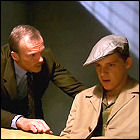 UK cable channel Disney XD airs the
 UK cable channel Disney XD airs the
  ABC airs the
 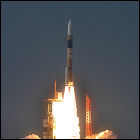 The Japanese space agency, JAXA, launches unmanned space probe AKATSUKI, known more formally as the Venus Climate Orbiter. The spacecraft is expected to reach Venus in seven months and take up orbit around that planet, where it will study Venus’ atmosphere in depth. “Akatsuki” translates to “Dawn”, but is referred to by its Japanese name to avoid confusion with NASA’s asteroid-belt-exploring Dawn spacecraft.
 UK cable channel Disney XD airs the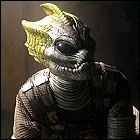
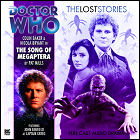 Big Finish Productions
  UK cable channel Disney XD airs the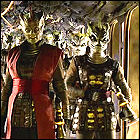
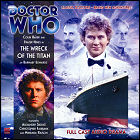 Big Finish Productions
 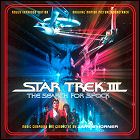 Film Score Monthly releases an expanded 2-CD edition of James Horner’s soundtrack from
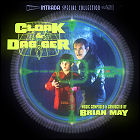 Soundtrack specialty label Intrada releases Australian composer Brian May’s soundtrack from the 1984 movie
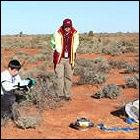 Japan’s Hayabusa unmanned space probe releases a re-entry capsule containing samples of surface material it gathered from asteroid 25143 Itokawa in 2005. The capsule survives a punishing 25G re-entry and is recovered from the Australian outback, as planned, while Hayabusa itself burns up in Earth’s atmosphere. The sample payload – approximately 1500 grains averaging 10 micrometers in diameter – reveals that Itokawa has a composition virtually identical to a chondrite meteorite. A significant achievement in the history of the Japanese space program, the Hayabusa mission inspires no fewer than three movies, and a sequel of its own: the Hayabusa-2 space probe, approved in August 2010 and scheduled for launch in 2014.
 Fantasy Records releases
  Varese Sarabande releases an expanded 2-CD edition of Michael Giacchino’s soundtrack from the
  Warner Bros. Records releases the
 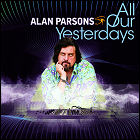 Alan Parsons releases the digital single