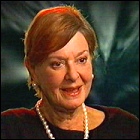
 Verity Lambert, the original producer of Doctor Who when it launched in 1963, dies at the age of 71. When she took the reins of the still-in-development series, she was 28, the youngest BBC producer at that time, and the only female producer at the BBC at the time. Though she frequently butted heads with Doctor Who creator Sydney Newman, including commissioning the first Dalek story over his objections that the show should feature “no bug-eyed monsters,” he ultimately relented and gave her free rein. She remained with the series for a year and a half, going on to produce a string of other shows, including Adam Adamant Lives!, John Cleese’s Clockwise series, and Jonathan Creek. Following stints at the BBC, Thames Television and EMI, she founded her own production company, Cinema Verity, which at various points was again attached to Doctor Who during the abortive attempts to turn the series into a film franchise in the 1980s and early ’90s.

 The direct-to-DVD movie
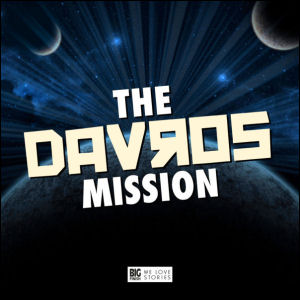 BBC Home Video and Big Finish Productions
 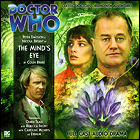 Big Finish Productions
 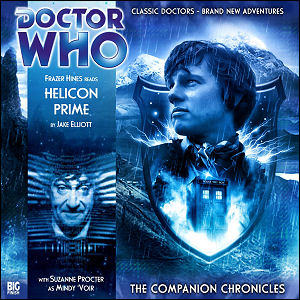 Big Finish Productions
  Sci-Fi Channel airs
 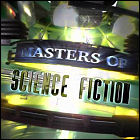 The fifth episode of ABC’s science fiction anthology series Masters Of Science Fiction, drawing on the genre’s literary greats and hosted by Professor Stephen Hawking, is broadcast. Kimberly Elise (Diary Of A Mad Black Woman) stars in a story written specifically for this series by novelist Walter Mosley (Snowfall, Star Trek: Discovery).
 The
The  Sci-Fi Channel airs
 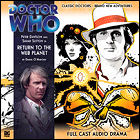 Big Finish Productions
 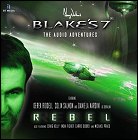 Andrew Mark Sewell’s B7 Media releases
  The Star Trek fan production
 Andrew Mark Sewell’s B7 Media releases
  Big Finish Productions
 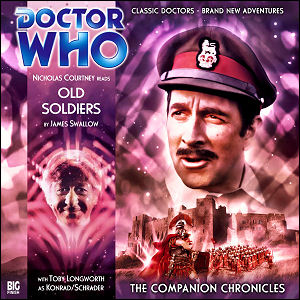 Big Finish Productions
  Sci-Fi Channel airs
 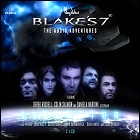 Andrew Mark Sewell’s B7 Media releases
 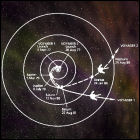 NASA’s Voyager 2 probe, having recently celebrated its 30th anniversary in deep space, sends back observations and instrument readings that lead scientists to a surprising conclusion: the “bubble” of the sun’s solar wind and magnetic influence isn’t spherical or even egg-shaped. Voyager 2′s readings, including the fact that it crossed what should’ve been the boundary of the sun’s outermost influence several times, have revealed that the solar system’s outermost boundary is in flux. Scientists theorize that the “dent” in that bubble is caused by the interstellar magnetic field of the Milky Way galaxy itself. Voyager 2 is now over 10 billion kilometers from the sun – or, to put that in perspective, 80 times further away from the sun than Earth is.
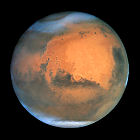 Astronomers put the red planet on red alert after predicting 1-in-75 odds for an asteroid to collide with Mars on or near January 30th. The asteroid, discovered in November 2007, is on a trajectory that poses no threat to Earth but has better-than-usual odds of packing quite a wallop for Mars. The impact, if it does happen, could take place on the equator, near the Opportunity rover’s stomping (or, perhaps, roving) grounds, though NASA says it would pose no risk to Opportunity. A crater as large as Arizona’s Meteor Crater could be carved out of the Martian surface by any direct hit that does happen. Scientists prepare to watch the event with keen interest, as this event would be potentially cataclysmic if Earth was in danger, but provides a once-in-a-lifetime opportunity for observation on Mars.
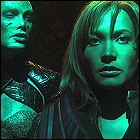 Sci-Fi Channel airs
 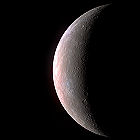 For the first time in over 30 years, a spacecraft from Earth flies past the innermost planet, Mercury. The Messenger space probe, launched in 2004, is due to take up an orbit around Mercury in 2011, but this first close pass – just over 120 miles above Mercury’s surface – is designed to alter its trajectory. Messenger carries little fuel, and has swooped past Earth three times and twice past Venus to use both planets’ gravity to change its heading. Two more close passes of Mercury will be needed before it finally becomes caught in the tiny planet’s orbit, where it will spend roughly a year mapping the planet’s surface and taking dozens of other measurements. The last space probe from Earth to visit Mercury was Mariner 10, which made three close passes in 1974/75. Despite the brief gravity-assist visit, Messenger captures its first 1,200 images of Mercury, including a side of the planet never before seen from Earth.
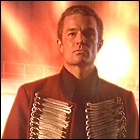 BBC2 airs the
 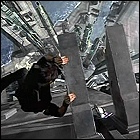 Sci-Fi Channel airs
 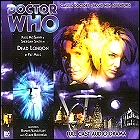 Big Finish Productions releases the
  BBC2 airs the
  Big Finish Productions
  BBC2 airs the
 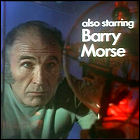 Best known to mainstream audiences as the Lt. Gerard, the relentless cop pursuing The Fugitive in the 1960s, actor Barry Morse dies at the age of 89. London-born, he relocated to Canada in the 1950s, but landed many a part in U.S.-based productions. In SF circles, he remains best remembered for his one-season stint as the unflappable Professor Bergman on Space: 1999, and as a member of the international all-star cast of the 1980 BBC/NBC miniseries rendition of Ray Bradbury’s The Martian Chronicles. He was instrumental in turning around the fortunes of Ontario’s Shaw Theatre Festival in the 1960s and ’70s, a task he took on out of his personal love of the works of playwright George Bernard Shaw.