 CBS airs the 12th episode of a revival of Rod Serling’s The Twilight Zone. Gary Cole (Crusade), Sherman Hemsley (The Jeffersons), and Ron Glass (Firefly, Barney Miller) star in an episode comprised of two short stories, including an adaptation of Joe Haldeman’s short story I Of Newton.
This series is not fully chronicled in the LogBook. You could join theLogBook team and write this guide or support the webmaster’s efforts to expand the site.
More about The Twilight Zone in the LogBook and theLogBook.com Store
 The ninth episode of James D. Parriott’s lighthearted sci-fi series, Misfits Of Science, airs on NBC, starring Dean Paul Martin, Kevin Peter Hall, and Courteney Cox. Joel Polis (The Thing) guest stars. Story credit (but not script credit) for this episode is given to 28-year-old Tim Kring, the future creature of the 21st century superhero series Heroes.
 The 11th episode of Steven Spielberg’s anthology series Amazing Stories airs on NBC. Douglas Seale and Pat Hingle guest star.
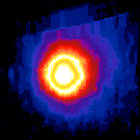 Having already conducted measuresment of Comets Encke and Giacobini-Zinner, the still-functioning Pioneer Venus Orbiter, launched in 1978, becomes the centerpiece of the American effort to gather close-up data on Halley’s Comet. Imaging the comet in ultraviolet light, Pioneer Venus captures Halley from a unique vantage point: both the comet and the planet being orbited by Pioneer are on the opposite side of the sun from Earth, when Halley is at its closest approach to the sun – an event that no other spacecraft is in a position to witness. The Pioneer Venus data will become the most critical data gathered on Halley by an American spacecraft after a planned March 1986 Space Shuttle mission to image the comet from Earth orbit is scrapped in the wake of the Challenger disaster in January.
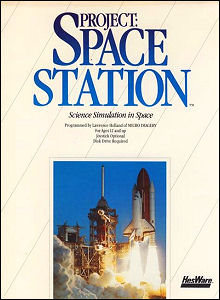 HESware releases the
 MacFarland publishes
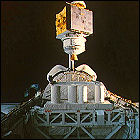 Space Shuttle Columbia lifts off on a six-day satellite deployment mission, and is also the first spaceflight to include a sitting member of the US Congress among its crew. The SATCOM KU-I satellite is launched, but another payload designed to observe Halley’s Comet (which is rapidly approaching its closest approach to Earth) malfunctions and collects no data. Columbia’s crew for this mission consists of Commander Robert Gibson, Pilot Charles Bolden, mission specialists Franklin Chang-Diaz, Steven Hawley, George Nelson, and payload specialists Robert Cenker and Congressman Bill Nelson.
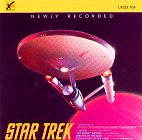 Label X releases two volumes of new recordings of classic Star Trek soundtrack music.
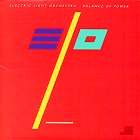 Electric Light Orchestra‘s eleventh album,
 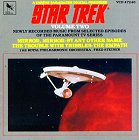 Varese Sarabande releases
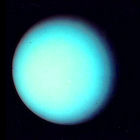 Voyager 2 visits the third planet on its grand tour of the outer solar system, becoming the first and only man-made spacecraft to visit Uranus. Since the blue-green planet and its moon are tipped over, Voyager has fewer opportunities to gather images of the moons of Uranus, but a close pass by its innermost large satellite, Miranda, yields pictures of one of the stranger surfaces in the solar system: a moon that was ripped apart and melted back together in the distant past. The atmosphere of Uranus reveals almost no details to Voyager 2’s cameras in the scant visible light available this far from the sun, but ten new moons are discovered, and the planet’s elusive dark rings are captured in several images. With no other missions to Uranus in the pipeline, Voyager 2’s brief flyby remains the primary source of most of our knowledge of the seventh planet from the sun. It will now take Voyager 2 three years to reach Neptune, its final target.
 73 seconds after liftoff, Space Shuttle Challenger explodes when a rubber O-ring designed to be a tight seal between solid rocket booster segments allows flames from the booster to breach the shuttle’s external fuel tank, causing the tank’s highly flammable contents to ignite. The shuttle is destroyed with all hands aboard. Later analysis reveals that frigid cold temperatures in the nights leading up to the launch allowed the booster’s O-rings to become brittle enough to break – a possibility that NASA had been warned of by engineers at Morton-Thiokol, the contractor responsible for the solid rocket boosters.