
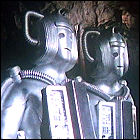
 The 400th episode of Doctor Who airs on BBC1. This story marks the Cybermen’s first story since the Troughton era, and closes out both the series’ 12th season and the “Nerva” plotline.
This timeline entry leads to an entry covering this entire Doctor Who serial; there are plans to write new episodic entries in the future. You can support this effort!
Order Earl Green’s book VWORP!1 from theLogBook.com Store

 The
The 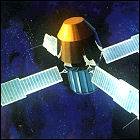 NASA launches Explorer 53, renamed Small Astronomy Satellite C, from an Italian-owned offshore launch platform off the coast of Kenya. SAS-C is a smaller spacecraft than NASA’s larger Orbiting Astronomical Observatory (OAO) series, but can be aimed very precisely at any cosmic X-ray sources that it detects. One of SAS-C’s discoveries is MXB1730-33, a binary star giving off rapid X-ray bursts. SAS-C will remain in orbit and functional until it re-enters Earth’s atmosphere in
  The
The 
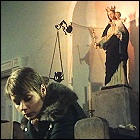 The
The 
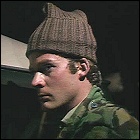 The
The 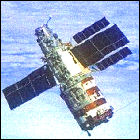 Soyuz 18 is launched toward space station Salyut 4 by the Soviet Union. Cosmonauts Pyotr Klimuk and Vitali Sevastyanov set a new Soviet record for long-duration stays in space, remaining about Salyut 4 for two months. They are also aboard Salyut 4 during the entirety of the Apollo-Soyuz Test Project, and are able to contact that international mission’s Soviet crew in another Soyuz vehicle. (Two mission control centers are used to prevent any confusion between the two Soyuz crews.) At the time the Soyuz 18 crew abandons Salyut 4 in July, the station’s environmental systems are failing, allowing the atmosphere inside the station to become humid enough for mold to begin growing on surfaces in the crew compartment; no further human crews will visit the station.