|
Electric Light Orchestra
ELO Studio Albums
ELO Concert Recordings
ELO Part II
The Move
Videos
Originally intended to be an offshoot of the popular progressive British rock
group The Move, the Electric Light Orchestra was meant to be in existence
alongside its progenitor. As it happens, the enormously ambitious concept for
the Electric Light Orchestra spared little time for other ventures, and the Move
dissolved. And in its wake, ELO itself almost dissolved - not an auspicious
start for a band now commonly cited as the inspiration of the next generation of
pop musicians.
The brainchild of Move co-founder Roy Wood and recent recruit Jeff Lynne
(late of the Idle Race), ELO was an adventurous attempt to bring pop music full
circle with the classics. The 60s saw many a rock group/session orchestra
combination - the Moody Blues' groundbreaking Days Of Future Passed
album, the Beatles' baroque-ish I Am The Walrus and Eleanor Rigby,
and many a one-off tune such as the Lemon Pipers' Green Tambourine. Wood
and Lynne, aside from being intrigued by this sound (especially where the
Beatles were concerned), had each had their own revelations when studio string
players augmented their own songs. Lynne's first experiments occurred with his
first Idle Race album, The Birthday Party, while Wood had been delighted
with the results of such string-overdubbed Move songs as The Girl Outside
and Mist On A Monday Morning. But with ELO, they sought to dispense with
rented musicians and bring full-time string players into the rock group itself,
for both recording and touring purposes. As the Move continued turning out
hard-rock hits, Wood and Lynne were writing and recording material for ELO's
debut effort.
Released in 1971, the Electric Light Orchestra's self-titled album (released
in the US as No Answer thanks to a misunderstood message about phone
calls to ELO's UK label to double-check the album's title) was a bizarre mix of
string-drenched rock songs that wouldn't have sounded out of place on the next
Move album, a Classical Gas-style guitar instrumental, a jazzy piano
instrumental, and something which can best be described as a cross between a
baroque-backed tone poem and a historical spoken word recital about the battle
of Marston Moor. Many of the string instruments on the cello-heavy first album
were actually played by Roy Wood himself, overdubbing repeatedly until the
cumulative result was the sound of eight or ten cellos. Perhaps the most
recognizable glimpse of the group's future comes from Lynne's
slightly-overproduced Mr. Radio, a pop ballad with gorgeous piano and
string work, no bass whatsoever, and all of the vocals filtered as though they
sounded as though they were coming through a scratchy radio speaker. If there
was an early predictor of the group's future sound, Mr. Radio was it.
But as complex as that first album was to realize in the studio, touring with
the densely-layered, richly-orchestrated new material was even more stressful.
The tour was thankfully brief but, according to the band members, frighteningly
stressful due to technical issues. 10538 Overture graced the British
airwaves quite a lot for a debut single from a new band, owing primarily to the
members' association with the Move.
Work began on second album, with Lynne and Wood laying down tracks for some
lengthy hard rock numbers, but before they got very far, an argument erupted in
the studio - and Wood left the group. After a brief pause, Lynne auditioned new
band members, and brought session player Richard Tandy aboard full time for his
keyboard and Moog synthesizer wizardry. Mike de Albuquerque was recruited as
full-time bassist, and the band's full-time roster now included two cellists and
a violinist; now acting as the band's sole producer, Lynne frequently overdubbed
the string players to sound like a larger ensemble. There was still an album to
record, and though Electric Light Orchestra II had only five songs, they
were lengthy, jam-heavy art-rock adventures, the shortest of which was seven
minutes long. It was here that ELO's definitive cover of Chuck Berry's Roll
Over Beethoven emerged, a hard rock take on the classic rockabilly tune
which now incorporated Beethoven's Fifth Symphony into the song at various
points. Roll Over Beethoven, cut down to a more radio-friendly length,
helped ELO to make its first inroads into America, where the mistitled No
Answer had slipped past the radar of both radio programmers and the general
public.
1973 saw the release of On The Third Day, an album which continued
ELO II's established style of string-sweetened heavy metal riffs, though
Richard Tandy's keyboard artistry now came to the fore, especially with
instrumentals like Daybreaker. The culmination of ELO's early hard rock
phase arrived in the single Ma-Ma-Ma Belle, with an uncredited Marc Bolan
from T. Rex matching Jeff Lynne's hard-hitting guitar note for note. Slightly
less heavy, another single, Showdown, previewed the band's future with
its catchy, almost funky clavinet bass line and soaring vocal harmonies in the
chorus. As if trying to find a way to follow up on Roll Over Beethoven,
the band arranged and recorded a heavy metal version of Grieg's In The Hall
Of The Mountain King to close the album. Showdown proved to be
Third Day's hot commodity: it charted in the U.S. and created Stateside
demand for a tour. Some personnel changes occurred in the string section for
touring purposes, with ace violinist Mik Kaminski joining the band on the road.
Though he didn't play on the album, Kaminski appeared on the U.S. release's
cover, joining his new bandmates in staring down the camera and - for no readily
apparent reason - exposing their belly buttons.
Though Third Day had pushed the envelope, Lynne realized that he was
about to hit the ceiling of what could be accomplished by building up layer
after layer of two cellos and one violin. For the band's fourth album,
Eldorado, not only was the epic-length song structure abandoned in favor
of three and four minute pop songs, but the string passages were arranged for a
full orchestra - but Lynne still found himself doubling up, having to play bass
himself after the departure of Mike de Albuquerque. A studio orchestra was
hired for Eldorado, and with the addition of a choir, ELO suddenly gained
an entirely different sound; by the time it was released, Eldorado's
title was augmented with the subtitle "A Symphony by the Electric Light
Orchestra." With densely layered arrangements by Lynne and Louis Clark
(later of Hooked On Classics fame), Eldorado bore the
chart-climbing, Lennonesque ballad Can't Get It Out Of My Head, and
featured several other strong numbers as well, including the outstanding
Laredo Tornado (a song which not only prominently featured the band's
core string players, but continued Jeff Lynne's fascination with the fall of
Native American culture at the hands of European settlers; later songs would
reveal Lynne's fixation on both the wild west and science fiction). Oddly
enough, despite the more lush orchestral sound, ELO's chart fortunes were
greater now in the U.S. than in England, and an exhausting U.S. touring
schedule reflected this, as did the arrival of bassist Kelly Groucutt.
Face The Music, ELO's 1975 entry, ushered in more changes in the
band's touring string section and hailed the start of the band's biggest climb
in popularity. And it was with Face The Music that Lynne and his cohorts
migrated to Germany's Musicland studios for recording duties, ably assisted by
an engineer credited only as Mack (who also worked on many of Queen's albums).
The funky single Evil Woman - the lyrics to which Jeff Lynne wrote in
just five minutes while the band waited in the studio - and the gentle ballad
Strange Magic were the album's two big singles, with Groucutt's falsetto
vocals fitting in perfectly with Lynne's increasingly thick wall of backing
voices. Though a choir was still hired for some tracks on Face The
Music, increasingly the reliance was on several tracks of Lynne and Groucutt
harmonizing different parts. Face The Music was also infamous for its
backward intro, a sinister voice-over intoning "The music is reversible,
but time is not. Turn back! Turn back! Turn back!", as heard in the
creepy intro to the guitar/cello duel of Fire On High. Nightirder
was also released as a single, but it didn't chart as high as either of its
predecessors.
1976's A New World Record scored the band three huge hits,
Telephone Line, Livin' Thing (later used rather memorably in the
movie Boogie Nights) and Rockaria! This album also
established the logo that ELO would use on album covers, tour programs and
advertising for the rest of its career. The album also featured a cover of
Do Ya, a Move song written by Lynne which has since been covered by Ace
Frehley, Todd Rundgren, Jason Falkner, and many other artists, as well as the
moody Mission(A World Record), a sci-fi rock opera chronicling an alien
observer's thoughts while watching urban life on Earth.
1977 saw the release of Out Of The Blue, a double album whose cover
art cemented the fanciful notion of the ELO logo as a spaceship (and if there
was better album art to have during the year that both Star Wars and Close Encounters Of The Third Kind
hit the theater, I haven't seen it). The synth-heavy single Turn To
Stone, followed by the jaunty and Beatlesque Mr. Blue Sky (recently
recorded by Lynne for a Volkswagen advertising campaign) and the catchy Sweet
Talkin' Woman, dominated radio airplay, and a massive international tour saw
the band arriving in a clam-shell-shaped "spaceship" stage, complete
with laser light show and fog machines. A video was recorded of one such tour
stop at Wembley Arena, and most of 1978 was spent on the road. Also in 1978,
Lynne broke out for his first solo project: a decidedly disco single which only
saw release in a later box set consisting of A New World Record, Out Of The
Blue and Discovery. Lynne played and sang everything on Doin'
That Crazy Thing (and its B-side, Goin' Down To Rio) himself, a
slight (but, in all brutal honesty, barely listenable) glimpse of things to come
in his career.
After a year's break for touring, ELO went back into the studio to record the
album Discovery, though it marked the beginning of major changes. There
were the usual flashes of studio strings on the album, but few (if any) hints of
the group's core string trio - and on the album itself, resident cellists Melvyn
Gale and Hugh McDowall were no longer credited, and violinist Mik Kaminski was
listed as a guest artist (not the first time that fate would befall a musician
who had formerly been considered a full-time band member). Some of the album's
strings were, in a first for ELO, synthesized. And the album's biggest single,
Don't Bring Me Down, was practically a Lynne solo concoction. In his
liner notes for the 2001 re-release of Discovery, Lynne says he made a
loop of Bev Bevan's drumming from another song, added "ten grand pianos,
two cement mixers and a crate of Newcastle Brown Ale," essentially putting
the song together by himself late at night - another sign of things to come.
With the new album firmly entrenched in the same disco-fied sound as Lynne's
solo single, keyboardist Richard Tandy coined the album's title,
Disco-very, from his wry assessment of the band's new sound.
ELO's increasingly lush sound had made them a hot prospect for movie
soundtracks, but no one had yet secured the band's services to produce original
music for a specific movie. With 1980's soundtrack to Xanadu, that finally changed as
Lynne composed six new songs just for a movie described in its marketing hype
as "the last great movie musical." Starring Gene Kelly, Olivia
Newton-John and Michael Beck, the song-and-dance-cum-roller-boogie extravaganza
flopped at the box office, but netted ELO its first-ever #1 single,
Xanadu, featuring Olivia Newton-John on lead vocals. There were two
other radio hits, All Over The World and I'm Alive, a lush ballad
accompanying a Don Bluth-directed animated segment (Don't Walk Away), and
an excellent synth-heavy ballad that has gained undeservedly little notice,
The Fall. The sixth song, Love Changes All, wasn't finished for
inclusion in the movie or its best-selling soundtrack album (half of which
featured Olivia Newton-John's songs featuring other guests like the Kinks, Gene
Kelly and Cliff Richard). An ELO instrumental, Drum Dreams, wasn't
included on the album either, and was released only as the B-side to the
Xanadu 45. As one might expect from the title, Drum Dreams is one
of the few ELO tracks to put Bev Bevan in the spotlight.
By this time, Jeff Lynne was ready to leave ELO and go on to greener
pastures, perhaps as a solo artist but more likely as a producer. However, at
the band's birth, a slightly questionable deal was struck between the band's
principals and manager Don Arden, whose reportedly heavy-handed tactics
"persuaded" many of the acts in his roster to keep recording, keep
touring, and keep releasing - or else. Another of Arden's clients, the
seemingly unflappable ex-Black Sabbath frontman Ozzy Osbourne, has been quoted
as saying he was "terrified" of Arden. (It must be noted, however,
that Ozzy was stuck with Arden permanently, and not just as a manager: Osbourne
married Arden's daughter Sharon.) In any event, Arden cracked the whip: under
its contract with him, ELO had to stay together long enough to record three more
albums.
1981's Time arrived with a drastic change in ELO's sound. Though
there were still hints of the four-to-the-bar disco beat, the new album was
awash with synthesizers, electronic drums and processed vocals - and real live
strings were few and far between. Arriving at the height of the new wave
movement, Time generated three radio hits, Twilight, Here Is
The News and Hold On Tight, a straight-ahead rock 'n' roller which
also had the dubious distinction of becoming the jingle for the coffee
industry's "coffee achiever" ad campaign a few years later.
Time was also ELO's first attempt at a true concept album since 1974's
Eldorado, with a time travel/science fiction theme at its core.
In 1982 and 1983, in addition to working on an ambitious new double album
with ELO, Lynne was starting to do some outside production work. He wrote and
produced the song Slipping Away - originally intended to be an ELO number
- for Dave Edmunds, and the result bore so many signature sounds that many
listeners mistook it for ELO itself. Slipping Away and the
Lynne-produced Information stuck out a bit like sore thumbs on Edmunds'
largely rockabilly album Information, but they got Edmunds radio airplay
at a time when he was considered by many to be in a retro rut. Edmunds had
Lynne produce even more tracks on the follow-up album, 1984's Riff
Raff.
But 1983 was also to be the year that ELO released a new double album, the
Out Of The Blue of the band's post-orchestral era. Employing the latest
technology - even early sampling - Secret Messages had a unique sound:
more technology, and at the same time more basic rock 'n' roll guitar work.
Edmunds' influence could perhaps be felt on back-to-basics rockers like Four
Little Diamonds and Rock 'N' Roll Is King, while Lynne waxed
futuristic on songs like Time After Time. As the production period for
the album grew longer, Lynne grew more dissatisfied with some of the songs.
What he finally delivered was Secret Messages as a single LP. Songs like
Buildings Have Eyes, Mandalay and the bluesy No Way Out
would later be released as box set bonus tracks; Endless Lies, a Roy
Orbison-esque ballad with a sped-up chorus, would be held back and reworked for
the next ELO album. And one song, Beatles Forever, would
become the lost ark of the ELO catalogue.
A brief tour for Secret Messages followed the album's release, but
Lynne was growing visibly annoyed with the road. Work on Dave Edmunds' Riff
Raff followed in 1984, as did the return of Jeff Lynne the solo artist on
the soundtrack for the movie Electric Dreams. Lynne wrote and
recorded two songs, Video! and Let It Run, for the movie; as 45s,
the two singles were backed with, respectively, an instrumental version of the
sample-heavy Video! and a bluesy rocker, Sooner Or Later. It
would be 1986 before ELO released another album.
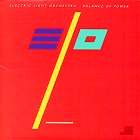
By the time Balance Of Power hit the stores, with Calling
America getting a little airplay an era increasingly dominated by the likes
of Wham, Whitney Houston and hard-rock hair bands, ELO had jettisoned Kelly
Groucutt as bassist. He sued for unpaid royalties, but the response to the suit
stated that Groucutt had been a session player, not a full member of the
Electric Light Orchestra. By the time the matter was settled, there was no
chance of patching up the relationship. Bevan was less than thrilled with the
increasing use of electronic drums and percussion, with Lynne occasionally
adding his own percussion to the Balance Of Power tracks without
consulting his drummer. And when the record was delivered, and a very short
tour was finished (with the band's falling-star status evident as it played
support for Rod Stewart instead of headlining the tour), Lynne had fulfilled
the contract and delivered three more albums. As far as he was concerned, ELO
was through.
After disbanding ELO in 1986, Jeff Lynne immediately went on to produce
ex-Beatle George Harrison's acclaimed 1987 album Cloud Nine, which also
featured songs co-written by Lynne and Harrison (including the hit single
When We Was Fab, a tribute to Harrison's Beatles years). Harrison had
initially approached Dave Edmunds to work on the album, but Edmunds couldn't
participate due to his own busy schedule and recommended Jeff Lynne instead.
Lynne and Harrison collaborated again in a supergroup called the Traveling
Wilburys, featuring Lynne, Harrison, Tom Petty, and rock legends Bob Dylan and
Roy Orbison. This led to Lynne producing and playing on Petty's solo album
Full Moon Fever (the biggest seller in Petty's career) and Orbison's
final album, Mystery Girl. The lead single for the latter was also
co-written by Lynne, and has been covered by several other artists, including
Bonnie Raitt. After Orbison's untimely death, another Wilburys album was made,
and Lynne worked on the next two albums by Tom Petty and the Heartbreakers, as
well as a couple of soundtrack singles with Harrison. In 1990, Lynne released
the brilliant solo album Armchair Theatre (taking its name from an early
British soap opera created by Sydney Newman, who would later create UK science
fiction icon Doctor Who), which made a minor chart
splash with the singles Every Little Thing and Lift Me Up, but
despite the prominence of Lynne's name as a producer and songwriter in recent
years, his profile as an artist seemed to suffer from his self-imposed anonymity
during the ELO years; the album didn't make a dent on the charts or in
sales.
Other one-off production projects occupied Lynne's time in the 1990s,
including albums and singles with Julianna Raye, Joe Cocker, and Miss B Haven (a
band whose drummer, Mette Mathesen, had done amazing session work on Armchair
Theater), but in 1994, as plans were drawn for a definitive Beatles
documentary and new rarities collections on CD, Lynne got an opportunity to work
with his heroes at last. Yoko Ono, the widow of the late John Lennon, allowed
the remaining Beatles to have three demo recordings by Lennon; the other Beatles
would reunite, add their own touches to the songs, and release them as the first
"new" Beatles songs in 25 years. George Martin was naturally the
first person contacted by Paul McCartney, George Harrison and Ringo Starr, but
due to health problems - including issues with his hearing - the producer who
had shepherded the Beatles through their most famous recordings declined.
Harrison suggested Jeff Lynne as the next logical choice, and despite some
reservations on McCartney's part, Lynne got the job. While actually producing
and even participating in the first new Beatles sessions since 1970 (Lynne
provided some backing vocals, thus becoming yet another member of the rarified
pantheon of "fifth Beatles"), cleaning up pops, hiss, electrical hum
and background noises from John Lennon's lo-fi cassette recordings proved to be
an immense technical task, but one which paid off: the Beatles
Anthology's three volumes sold in record numbers, with fans lining up at
some stores for sales which began a minute after midnight, inspiring almost
Star Wars-style frenzies. Originally each 2-disc set was intended
to have one of the "new" songs, but the amount of material on the
third volume - and difficulties in completing the third Lennon song to the other
Beatles' satisfaction - meant that the third song undertaken by Lynne and the
remaining Beatles would never be heard.
Another bonus of the Beatles sessions was that McCartney, initially skeptical
of Lynne's abilities, chose him to produce several songs on his next solo album,
Flaming Pie. Lynne also produced material for Ringo Starr and his
All-Starr Band, and Ringo would later repay the favor by becoming only the third
studio drummer in ELO's history (of which more in a moment).
Lynne was not the only ELO alumnus active after the band folded in the 80s,
however. Former bassist Kelly Groucutt, after issuing his own underrated solo
album and suing over lost ELO royalties in an acrimonious court battle, formed
his own band in a distinctly ELO vein with former violinist Mik Kaminski.
Calling their band OrKestra, they played a collection of ELO staples, originals
by both Groucutt and Kaminski, and new material as well, but once again faced
legal action when nebulous wording in tour posters drew a lawsuit alleging that
OrKestra was trying to pose as ELO itself (though by that time, ELO had
disappeared). The band made a guest appeareance - and played some original
songs - in the teen film Summer Job, but found little success in
the U.S.
In the year leading up to the release of Lynne's solo album Armchair
Theatre, Bev Bevan was also busy, recruiting a new group of musicians,
intending to reform ELO without Lynne. (The band's former leader considered
suing over the use of the name, but ultimately decided that it wasn't worth the
time and money of a court battle.) Bevan rounded up Pete Haycock, Neil
Lockwood, and former commercial jingle-writer (and John Lennon session musician)
Eric Troyer to form ELO Part II. Debuting not long after a three-CD ELO
retrospective box set hastily issued by Epic Records in 1990, Part II divided
the fan community's loyalties; after all, Bevan too was a founding member of the
original ELO. The new band, however, sounded for the most part like a late-80s
"hair" band, drenching slickly-produced hard rock with sweetened
studio strings. (The producer for Part II's first studio venture was Jeff
Glixman, who had worked with such bands as Kansas.) The self-titled debut
album's most authentically ELO moments, however, came not from Bevan but from
Troyer, who broke the hard rock mold to deliver a few real live gems that
weren't at all out of place alongside the songs written by Jeff Lynne;
Thousand Eyes, in fact, featured string work not unlike that which made
ELO distinctive in the late 70s, arranged by Louis Clark. Even with Don Arden
acting as the band's manager, ELO Part II got little respect from radio - and
their album had a hard time landing a label, finally being issued in the U.S. by
Scotti Bros., a label most remembered for being the original home of Weird Al
Yankovic.
In 1991 and '92, ELO Part II embarked on an ambitious world tour, and Bevan
invited OrKestra along as the opening act. In the end, both bands wound up on
stage doing classic ELO encores, and ultimately Groucutt and Kaminski decided
to fold OrKestra into ELO Part II. With Louis Clark having joined Part II on
the road, the question of whether or not the band was truly ELO became hazier -
there were now no fewer than four members of the original band's lineup
from its heyday, and Groucutt quickly emerged as the lead singer, with Troyer
taking over for his own songs. Lockwood and Haycock left after the tour, and
the remaining members recruited Phil Bates, a guitarist/vocalist/songwriter who
had to audition - like everyone else who was up for the part - by presenting the
band with an original song in the classic Jeff Lynne pop-rock mold. The group's
next album, Moment Of Truth, had a sound which more obviously strove for
the late 70s classic ELO vibe, with the occasional hard rock number thrown in,
even opening with a Louis Clark-composed orchestral overture. By this point,
Part II had shed Scotti Bros. as its label home (after a 1992 CD chronicling the
band's Moscow dates with the Moscow Symphony Orchestra tanked in record stores,
heading immediately for the cutout bins) and Arden's management as well.
Another tour ensued, with local orchestras supporting the group in several
venues. (Another live CD, One Night, was released after a successful
collaboration with the Sydney Symphony in Australia.) But as the late 90s
rolled around, Bev Bevan was surprised when the one thing he perhaps least
expected happened. Jeff Lynne was back - and he wanted the ELO name back.
After yet another court settlement, ELO Part II was stripped of its name, and
Bevan - after drumming for the Move or some combination of ELO for almost 40
years - decided to retire from the drum kit. Groucutt took over the group, now
simply renamed The Orchestra, and another drummer (and, after Phil Bates'
departure, a new lead guitarist) had to be recruited. A new album of original
songs was released as an ELO fan club exclusive in 2001, but now the Orchestra
has reportedly found a label to release their self-titled relaunch in 2003, and
a tour will almost certainly follow.
In the meantime, Jeff Lynne had been back in the studio working on his
follow-up to Armchair Theatre for quite some time, and with the ELO name
now back in his possession (and free of the demanding Don Arden contract), he
decided to release the new album under the ELO banner. Some fans argued that
Lynne alone did not constitute ELO, but with keyboardist Richard Tandy sitting
in on at least one song on the album, their fears were allayed somewhat. Late
2000 saw a compilation of remastered ELO classics and rarities - including
Love Changes All from the Xanadu sessions and several lost
Secret Messages tracks - finished in the studio by Lynne during recent
sessions, as well as a new version of Xanadu itself with Lynne handling
all of the vocals. 2001 was to be the comeback year: Lynne's new ELO album,
Zoom, was issued, and a VH-1 Storytellers special was filmed and aired to
publicize the "group's" return. On stage, that meant Lynne, his
girlfriend (and former disco-era diva) Rosie Vela, Richard Tandy, and a handful
of hand-picked but unknown-to-the-public musicians filling in on bass, guitar,
drums and even cello. (In the studio, ELO - for the purposes of Zoom -
consisted of Lynne by himself, with occasional guest appearances by Rosie Vela,
cellist Suzie Katayama, and even Ringo Starr and George Harrison on a couple of
songs.) Two more concerts were filmed in Los Angeles from which videos would be
edited for outlets such as VH1, and a nationwide U.S. tour was planned - and
then cancelled, when the huge venues booked by the band's management failed to
sell out in advance. (It is worth noting, however, that ELO's tour was
cancelled mere weeks before September 11th, 2001, so it seems like that the tour
would have come to a premature end in any event.)
With no tour and very little promotion to back it up, Zoom was an
inauspicious relaunch for ELO. The brief surge in label interest, however,
graced the fans with not only a new album, but four remastered albums from ELO's
70s and 80s catalog, and a UK-only two-disc remastered edition of the group's
very first album. Numerous artists also gathered to pay tribute to Lynne's
songwriting and performance style on a 2-CD collection called Lynne Me Your
Ears, with pop luminaries from Todd Rundgren to Jason Falkner to Sixpence
None The Richer taking part. Press material for Tal Bachman's hit debut album
included an interview in which Bachman referred to ELO's album as "sacred
musical revelations." On his solo album Camera
Obscura, indie artist Paul Melançon pays a slightly humorous
tribute in a song titled Jeff Lynne - sung from the point of view of a
lonely musician (who's trying to "be just like Jeff Lynne" in the
lyrics) who won't leave his studio to spend time with his girlfriend until it's
too late. Once considered a footnote of disco-era history, ELO and Jeff Lynne
are now name-checked by some of pop music's brightest rising stars as a seminal
influence.
Having completed the high-profile task of finishing production on George
Harrison's posthumous Brainwashed album,
Jeff Lynne continues dividing his time between his own musical creations as well
as outside production work. There's often talk of more music or even a
remounted tour by the "revived" (or perhaps, more accurately,
"repopulated") ELO, possibly under a new label run by Lynne himself.
The original ELO's work continues to be remastered, though an ambitious program
of re-releases was stalled when Zoom lost momentum; the remastered
projects now reside entirely in the UK, with a double-disc edition of
Electric Light Orchestra II having just been released.
Elsewhere, Kelly Groucutt, Mik Kaminski and Louis Clark keep their own
portion of the ELO torch lit by playing limited engagements as The Orchestra.
With several years of originals from ELO Part II, OrKestra and the band's
latest incarnation, they've become far more than just a cover band (though there
is, as always, a demand for some classic Lynne-written ELO chestnuts). Even Roy
Wood, after several different bands and solo projects, is still in the music
business, generally regarded as one of England's greatest pop treasures gone
underground. (Lynne produced a 1990 recording session for Wood, including a
demo of an addictively great pop number called You And Me which was
liberally sprinkled with both of their signature sounds, but aside from a
low-quality leaked copy of that demo, nothing else from that session has ever
been heard.)
Despite fans' hopes for a Rock 'N' Roll Hall Of Fame induction (which would
all but force a reunion of the group's original members), it seems unlikely that
ELO's principal players will ever share the stage or studio again. But with so
many of them still actively making music, the band's legacy remains...and
continues to grow.
Electric Light Orchestra
(1971-1986, 2001)
Reissued / Remastered Albums
Electric Light Orchestra
(Live Recordings)
Electric Light Orchestra Part Two
(1990-1996)
The Move (1968-1971)
Electric Light Orchestra
videos
|